-
We detected your language preference as English. Would you like to switch to the English version for a better experience?
Switch to English
Stay here


Thiourea dioxide, a versatile compound with diverse properties, holds significant value in the realm of chemistry. This article delves into its role as a potent reducing agent, emphasizing its mechanism and applications in various fields. Understanding the chemical characteristics of thiourea dioxide is paramount for harnessing its efficacy in reduction reactions, pivotal in organic synthesis and metal processing.
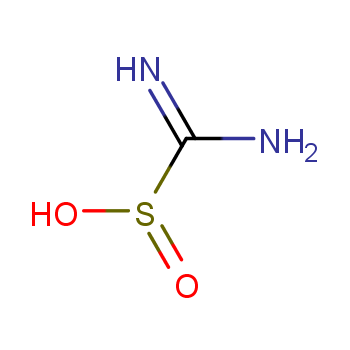
Thiourea dioxide (TD), chemically known as formamidine sulfinic acid (CH4N2SO2), stands as a crystalline substance with odorless properties. Its high reducing potential, thermal stability, and ease of storage and transportation render it indispensable in diverse applications. Widely employed in dye and sulfur dye reduction, wool and silk bleaching, and dispersion dye reduction cleaning, its utility extends to papermaking for pulp bleaching and deinking of waste paper. Additionally, it serves as a catalyst and stabilizer in polymer material industries, fine chemicals like photosensitive materials, pharmaceuticals, and fragrance synthesis, along with precious metal recovery and separation.
As early as 1954, Gore reported the use of thiourea dioxide in alkaline solutions to reduce compounds such as nitro, diazo, oxydiazo, and hydrogenated diazo. From 1972 to 1975, Knnio et al. investigated the reduction of ketone compounds by thiourea dioxide. Although the reduction mechanism was unclear and subject to questioning, foreign reports continued to document the reduction of compounds like α-β-epoxyketones and cyclic nitro compounds by thiourea dioxide. Domestically, methods utilizing thiourea dioxide to reduce graphene oxide and to prepare water-soluble UV absorbers like 2-(2-hydroxy-5-sulfophenyl)benzotriazole through nitro reduction have been reported.
Thiourea dioxide boasts characteristics such as high reduction potential, prolonged reduction time, and stabilization of reduction potential after reaching a certain level, making it increasingly applicable in organic synthesis in recent years. Since most organic compounds are insoluble in water, alcohols like methanol or ethanol are often added as solvents. Notably, high yields are achieved when ketones are reduced to alcohols and nitro compounds to amines. Gu Shangxiang from Lanzhou University utilized thiourea dioxide reduction to reduce compounds such as benzophenone, ortho-nitrophenol, and nitrobenzene, comparing it with other reduction methods. It was found that using an alcohol-water mixture as a solvent under alkaline conditions yielded correspondingly high yields of benzhydrol (98%), ortho-aminophenol (99%), and hydrazo benzene (87.6%).
Thiourea dioxide (SO2NH2) finds widespread applications in both industrial and laboratory settings, with its reduction mechanism being a long-standing focus of researchers. Delving into the reduction mechanism of thiourea dioxide necessitates understanding its stepwise process. This typically involves the generation of thiolate ions (HS-) followed by sulfide ions (S2-), ultimately yielding thiols (RSH). Initially, thiourea dioxide molecules undergo reduction to sulfate groups and sulfinamide groups, further reduced to sulfinamide groups and sulfide ions. These sequential reduction processes occur under suitable environmental conditions, such as alkaline or reducing solutions. A comprehensive understanding of these steps is crucial for elucidating the reaction mechanism of thiourea dioxide in practical applications.
The solubility of thiourea dioxide in water is 26.7 g/L at 20°C, with a pH value of saturated aqueous solution at 5.0. Two isomers, A and B, coexist in thiourea dioxide aqueous solution.

Isomer A is stable and predominant under weakly acidic, neutral, and ambient temperature conditions, exhibiting good stability and resistance to decomposition. Under enhanced alkalinity and elevated temperatures, isomer A can undergo rearrangement to transform into isomer B, which is less stable and prone to decomposition, yielding urea and bisulfite ions. Bisulfite ions possess strong reducing properties capable of reducing nitro, carbonyl, and alkene groups.
The factors influencing reaction kinetics and efficiency are pivotal areas of study. These factors include but are not limited to reactant concentration, temperature, catalysts, and solvent selection. Concerning reaction kinetics, an increase in reactant concentration typically corresponds to an increase in reaction rate; however, as the reaction progresses, the rate may be inhibited by the formation of products. Temperature represents another critical factor, with elevated temperatures generally accelerating reaction rates, albeit extreme temperatures may lead to product instability or side reactions. Optimal catalyst selection significantly enhances reaction rates and selectivity, while solvent choice may influence the stereoselectivity and yield of reactions. Thus, comprehensive consideration of these factors enables better optimization of thiourea dioxide's reduction reaction conditions, thereby enhancing its efficiency in industrial and laboratory applications.
Thiourea dioxide exhibits various reactions, with one of its prominent roles being as a reducing agent. In this capacity, thiourea dioxide is commonly utilized for bleaching purposes in the textile and paper industries, as well as a mild reducing agent in organic synthesis. When employed as a bleaching agent, it effectively reduces chromophores in dyes, facilitating their decolorization.
Furthermore, thiourea dioxide proves to be valuable in the synthesis of various organic compounds, particularly in reducing functional groups such as aldehydes, ketones, and epoxides. Its ability to selectively reduce specific functional groups while preserving others intact renders it a valuable tool in synthetic chemistry. Under specific conditions, thiourea dioxide can undergo oxidation reactions, yielding the corresponding sulfonic acids.
Thiourea dioxide, as a vital organic compound, finds extensive application as a reducing agent. It plays a crucial role in various reduction reactions, making it an indispensable component in many industrial and laboratory settings.
In the field of textile bleaching, thiourea dioxide is widely utilized to remove colorant molecules from dye compounds, thus achieving bleaching and color-changing effects in textiles. Its gentle reducing nature makes it an ideal bleaching agent, effectively removing pigments without harming fibers. Acting as a reducing agent for indigo and other dye compounds, thiourea dioxide serves as an excellent alternative to sodium hydrosulfite in decolorization and stripping. It offers enhanced safety, strength, and longer shelf life compared to hydrosulfite. Thiourea dioxide's application as a reducing agent extends to sulfur dye applications, where it is used in the dyeing process of cellulose fibers with eight commercially available sulfur dyes. These dyes are also applied in dye baths containing sodium sulfide.
Additionally, thiourea dioxide plays a significant role in paper pulp processing by reducing impurities in bleached pulp, thereby improving the quality and gloss of paper.
These applications underscore the diversity and importance of thiourea dioxide in reduction reactions, providing reliable solutions across various industries and driving the development and application of related technologies.
In industrial settings, thiourea dioxide finds extensive use in manufacturing processes, particularly in electronics and chemical industries. It plays a vital role as a reducing agent, facilitating easier processing of metal materials, thus propelling advancements in automotive, electronics, and aerospace sectors. Moreover, it serves as a catalyst in chemical synthesis, promoting reaction efficiency and product quality.
Commercially, thiourea dioxide sees widespread application in the dyeing and organic synthesis industries. In dyeing, it acts as a reducing agent, enhancing product quality and stability, while in organic synthesis, it catalyzes the production of various organic compounds, including pharmaceuticals, pesticides, and plastics.
Thiourea dioxide stands as an indispensable and versatile reducing agent in chemical and industrial applications. Its efficacy and selectivity in various reduction reactions underscore its significance across industries. As elucidated, its diverse applications in textile bleaching, pulp processing, and metal extraction highlight its crucial role in achieving desired results. Encouragement for further research and exploration in this domain is imperative, as it not only deepens our understanding of thiourea dioxide's reactivity but also paves the way for innovative applications and advancements in reduction chemistry.
[1] Sun, D., Li, X., & Liu, X. (2014). Research progress on the reduction of organic compounds by thiourea dioxide. Fine Chemical Intermediates, 44(03), 8-12. DOI:10.19342/j.cnki.issn.1009-9212.2014.03.002.
[2] Thiourea dioxide: A strong reducing agent. (n.d.). Retrieved fromhttps://www.linkedin.com/pulse/thiourea-dioxide-strong-reducing-agent?trk=organization_guest_main-feed-card_feed-article-content
[3] Thiourea dioxide. (n.d.). Retrieved fromhttps://www.atamanchemicals.com/thiourea-dioxide_u25398/
[4] Sciencedirect. (n.d.). Thiourea dioxide: A strong reducing agent. Retrieved fromhttps://www.sciencedirect.com/science/article/abs/pii/0143720894850011
|
 |
 |
|
 |
 EN
EN
 Agricultural News
 Food News
 Industrial News
 Cosmetic News
 Pharmaceutical News
 Science News

 6YRS
6YRS

