-
We detected your language preference as English. Would you like to switch to the English version for a better experience?
Switch to English
Stay here


Oxybutynin is an anticholinergic medication that has been clinically used for nearly fifty years in its hydrochloride salt form to treat bladder overactivity. The chemical abstracts service numbers for the racemic form and its hydrochloride salt are 5633-20-5 and 1508-65-2, respectively.
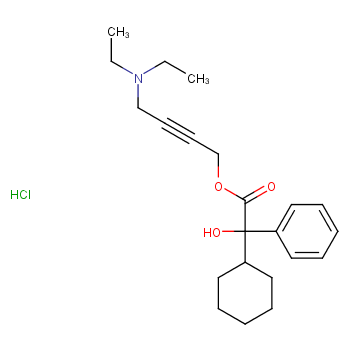
Oxybutynin hydrochloride (oxybutynin, OB) is a tertiary amine aromatic compound, chemically known as α-cyclohexyl-α-hydroxy-β-phenethylacetic acid-4-diethylamino-2-butyne ester hydrochloride, with the molecular formula C22H31NO32HCL and a molecular weight of 393.95. Its structure is illustrated below.

The physicochemical properties of oxybutynin hydrochloride include being a white crystalline powder with no odor. It is readily soluble in methanol and chloroform; it dissolves in water; it is almost insoluble in n-hexane; and it dissolves in glacial acetic acid. The melting point is 129-130°C.
First synthesized in the United States in 1973, oxybutynin was introduced to the market in 1975 and quickly became the preferred alternative to atropine for treating urinary incontinence. Compared to atropine, oxybutynin exhibits a stronger smooth muscle relaxant effect and a relatively weaker anticholinergic effect, selectively targeting the bladder smooth muscle and providing symptomatic relief with fewer side effects. Due to the presence of cholinergic receptors in the salivary glands and the increased xerostomia caused by the metabolite N-desethyl oxybutynin, oral administration of oxybutynin often results in dry mouth. In 1998, JANSSEN PHARMS developed a once-daily extended-release formulation of oxybutynin to reduce contact with the oral mucosa and lower the incidence of dry mouth.
Oxybutynin is available in standard-release capsules, extended-release capsules, or transdermal (topical) forms. All of these are considered safe and effective options for treating bladder overactivity mediated by detrusor muscle. Compared to untreated conditions, extended-release formulations reduce the frequency of incontinence episodes by an average of 90% per week. Some studies have found that transdermal oxybutynin is superior to capsules, noting a decrease in the frequency of urinary incontinence episodes and an increase in average urinary volume.
Urination is primarily controlled by the coordinated actions of the detrusor muscle and the bladder neck muscle. When the bladder fills, the detrusor muscle relaxes while the neck muscle contracts. During urination, the situation is reversed. Abnormal contractions of the detrusor muscle, leading to frequent and urgent urination, are symptoms of what is known as overactive bladder. In brief, these contractions occur when acetylcholine released by the parasympathetic nervous system binds to M3 muscarinic receptors on the detrusor muscle. Thus, blocking these M3 muscarinic receptors becomes a preferred strategy for treating overactive bladder.
Oxybutynin is classified as an anticholinergic drug and serves as a smooth muscle relaxant, particularly for bladder smooth muscle. The active metabolite of oxybutynin is N-desethyl oxybutynin. This drug competitively inhibits postganglionic muscarinic 1, 2, and 3 receptors, thereby blocking the muscarinic effects of acetylcholine and leading to relaxation of the bladder smooth muscle. Consequently, oxybutynin increases bladder capacity and reduces urgency and frequency of urination. It has also been shown to delay the initial urge to urinate.
Oxybutynin works by competitively antagonizing postganglionic muscarinic receptors, leading to relaxation of the bladder smooth muscle. The FDA has approved various formulations of oxybutynin, including oral immediate-release and extended-release tablets, topical gels, and transdermal patches. Oxybutynin can also be used for intravesical instillation and rectal suppositories. Additionally, vaginal formulations are under ongoing development. Each formulation has different efficacy and side effect profiles.
It is worth noting that oxybutynin also exhibits antispasmodic and local anesthetic effects on the bladder smooth muscle. However, these effects are much weaker compared to its anticholinergic action. Reports on antispasmodic effects are contradictory. It is claimed that the (S)-enantiomer exhibits higher or similar antispasmodic effects compared to the (R)-enantiomer. On the other hand, all studies emphasize that the (S)-enantiomer has lower anticholinergic activity compared to the (R)-enantiomer, explaining the better tolerance of the former. However, these characteristics are not yet sufficient to justify the market approval of any single enantiomer.
Studies indicate that the oral bioavailability of oxybutynin is as low as 6%. In fact, the drug is rapidly metabolized in the gut and liver by cytochrome P450 isoenzyme 3A4 to N-desethyl oxybutynin (illustrated below), resulting in serum concentrations of N-desethyl oxybutynin being 4 to 10 times higher than the initial drug. However, this first metabolite also exhibits high affinity for M3 muscarinic receptors, particularly those located in the salivary glands. N-desethyl oxybutynin is considered the main factor responsible for the dry mouth side effect associated with oral oxybutynin.

Silvio Aprile et al. have described a new metabolic scheme for oxybutynin (illustrated below), observing some regional selectivity, with only the tertiary amine and cyclohexyl parts being oxidized. Three different oxidative metabolic pathways were observed: N-deethylation of oxybutynin (M1–M3) and Oxy-DE (M4–M5), N-oxidation (Oxy-NO and Oxy-HA), and aliphatic hydroxylation on the cyclohexane ring. The metabolic pathways of oxybutynin in vitro and in vivo are as follows:

Understanding the mechanism of action of oxybutynin hydrochloride is crucial for optimizing its use and improving therapeutic outcomes. Detailed research into how it works by inhibiting bladder smooth muscle contraction and affecting anticholinergic receptors can help both doctors and patients better understand its efficacy and potential side effects. Therefore, further exploration of the mechanism of oxybutynin hydrochloride is encouraged to fully leverage its therapeutic potential in clinical practice.
 |
|
 |
 |
|
 EN
EN
 Agricultural News
 Food News
 Industrial News
 Cosmetic News
 Pharmaceutical News
 Science News

 3YRS
3YRS


