-
We detected your language preference as English. Would you like to switch to the English version for a better experience?
Switch to English
Stay here


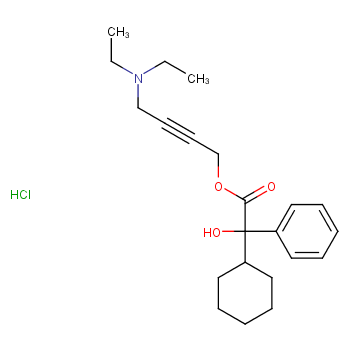
Oxybutynin hydrochloride selectively acts on the cholinergic M1 and M3 receptors and is mainly used for treating overactive bladder syndrome. However, the oral formulation of oxybutynin can directly inhibit the cholinergic receptors in the salivary glands, leading to the production of N-desethyloxybutynin, which has a higher likelihood of causing dry mouth due to its high concentration after gastrointestinal absorption and liver metabolism. This side effect often leads many patients to discontinue the oral formulation. The transdermal patch avoids direct action on oral M receptors and first-pass metabolism, thereby reducing the incidence of dry mouth. Additionally, the patch is convenient to use and offers sustained release through skin absorption, making it suitable for elderly patients. According to the 2012 American Urological Association (AUA) guidelines for the management of incontinence, oxybutynin transdermal patch can be used if the patient cannot tolerate the dry mouth caused by oral anticholinergic medications.
Oxybutynin is an anticholinergic medication approved by the U.S. Food and Drug Administration (FDA) for the treatment of overactive bladder or detrusor overactivity symptoms (such as frequent urination and urgency). Animal studies indicate that its antispasmodic effect is 4 to 10 times stronger than atropine. Oxybutynin is also used for patients with detrusor instability associated with neurogenic bladder disorders (e.g., spina bifida). The medication has been thoroughly studied and is approved for use in patients aged 5 years and older.
In certain cases, oxybutynin may be used to control bladder spasms caused by indwelling ureteral stents or Foley catheters. However, this particular use has not been approved by the FDA. Oxybutynin, when used in conjunction with desmopressin, can treat refractory nocturnal enuresis. Additionally, this medication is used to treat primary focal hyperhidrosis.
According to a case report, oxybutynin seems to be effective in treating hyperhidrosis induced by methadone. Another case report describes successful treatment of hyperhidrosis associated with buprenorphine or naloxone in opioid withdrawal. Research is ongoing on topical formulations of oxybutynin for hyperhidrosis, aiming to minimize systemic adverse effects.
In a 2023 report by Vanden Eynde J J and colleagues, a search using "oxybutynin" in the National Library of Medicine database revealed 69 registered clinical trials. Most of these (50 trials) studied the safety and/or efficacy of oxybutynin for treating bladder dysfunction, with one anecdotal study (NCT03877289) investigating its safety and/or efficacy for treating pediatric cystitis. A Phase II trial analyzed the effect of combining oxybutynin with desloratadine for seasonal allergic rhinitis (NCT00816972; started in 2005), while another Phase II trial examined the effect of combining oxybutynin with clonidine for excessive salivation in Parkinson's disease (NCT01370811; started in 2011).
The remaining trials explored the repositioning of oxybutynin for treating hyperhidrosis (nine trials, though one NCT02099695 was withdrawn) and hot flashes (four trials). The first registered clinical trial specifically investigating the efficacy of oxybutynin for axillary hyperhidrosis began in Brazil in 2007 (NCT01118429). Positive results were published in 2011, with authors claiming that "over 80% of patients experienced improvement in axillary hyperhidrosis with minimal side effects, the most common being dry mouth (73.5%)". Notable other trials include a Phase III trial started in 2013 (NCT01855256) and a Phase IV trial started in 2010 (NCT01310712). Nowadays, physicians might prescribe oxybutynin for treating hyperhidrosis.
Recently, there has been growing interest in using oxybutynin as a therapeutic option for obstructive sleep apnea (four trials).
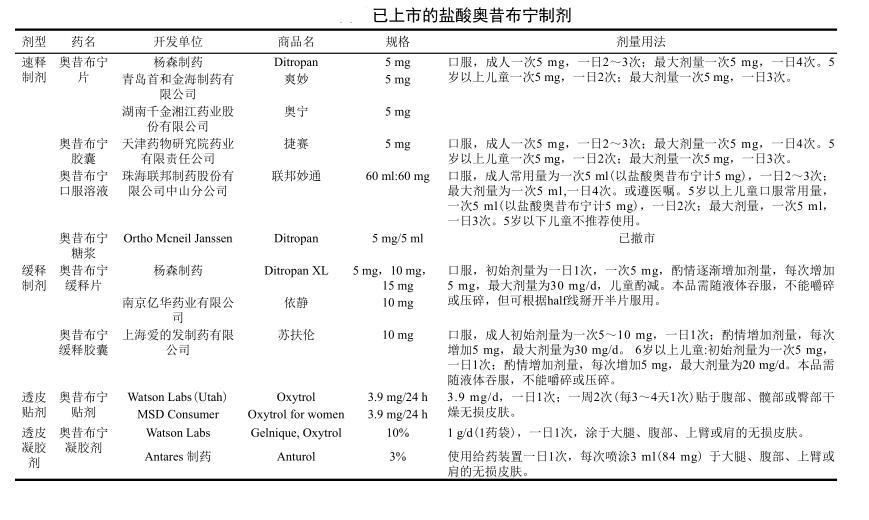
Approved formulations of oxybutynin hydrochloride are used as follows:
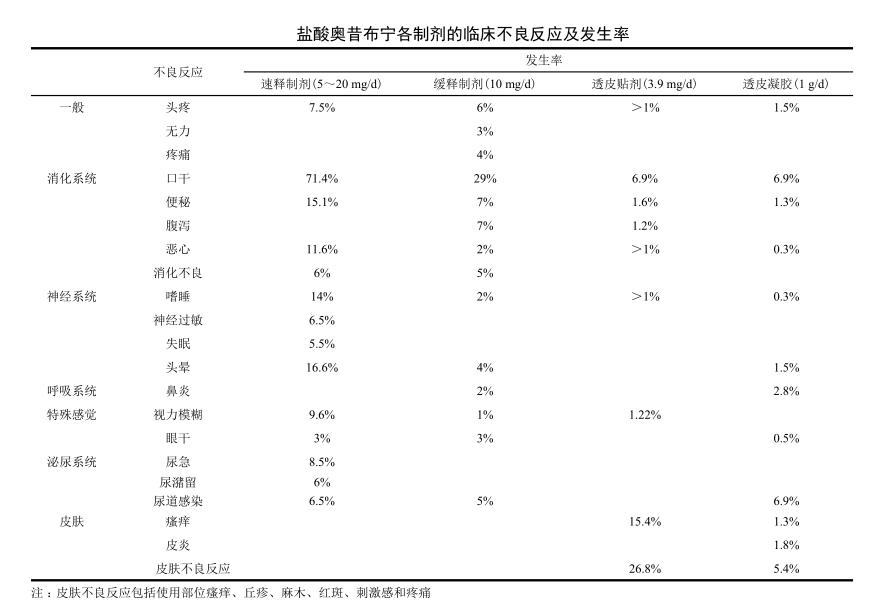
Oxybutynin is one of the most popular anticholinergic agents and has been widely used for overactive bladder syndrome for decades. However, anticholinergic receptors are present in many parts of the body, including the salivary glands, gastrointestinal smooth muscles, eyes, heart, and brain. This explains the range of side effects observed, including the most common dry mouth, reduced sweating, constipation, blurred vision, tachycardia, and nausea. Cognitive impairment has also been reported, likely due to the drug's ability to cross the blood-brain barrier, as it is lipophilic. This adverse effect is particularly noted in elderly patients, as MRI studies show increased permeability of the blood-brain barrier with age. Factors contributing to blood-brain barrier disruption include endothelial cell narrowing and degradation, changes in tight junction proteins, and transport mechanism dysregulation. The clinical adverse reactions and incidence rates of oxybutynin's formulations are as follows:
Oxybutynin is primarily used to alleviate symptoms such as frequent urination, urgency, and incontinence caused by overactive bladder syndrome. However, as each patient's condition and needs vary, it is essential to consult a healthcare provider before using oxybutynin to obtain personalized treatment advice and ensure the safety and effectiveness of the medication.
|
 |
 |
 |
|
 EN
EN
 Agricultural News
 Food News
 Industrial News
 Cosmetic News
 Pharmaceutical News
 Science News

 3YRS
3YRS


