-
We detected your language preference as English. Would you like to switch to the English version for a better experience?
Switch to English
Stay here


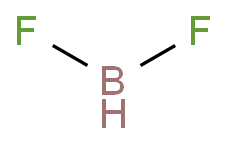
Difluoroborane (BH₂F) is an inorganic molecule consisting of a boron atom bonded to one hydrogen atom and two fluorine atoms. It is a fascinating example of a small, reactive compound in boron chemistry with applications in theoretical and experimental studies. The molecule’s distinct properties arise from its polar nature, primarily influenced by the significant electronegativity differences among its constituent atoms. These differences affect its bonding, geometry, and reactivity, making it an intriguing subject of study in the field of chemistry. But what about the molecule’s polarity? Is bhf2 polar or nonpolar?
Polarity refers to the unequal distribution of electron density in a molecule, resulting in partial positive and negative charges. It occurs when atoms with different electronegativities form bonds, leading to an uneven sharing of electrons.
In polar molecules, the presence of a net dipole moment—a measure of the separation of charges—distinguishes them from nonpolar molecules, where charge distribution is symmetric. Polarity plays a crucial role in determining a compound's solubility, boiling and melting points, and interactions with other molecules. Understanding polarity helps explain many chemical phenomena, including those involving difluoroborane.
Is bhf2 polar or nonpolar? To assess whether difluoroborane (BHF₂) is polar, we consider three key factors: molecular geometry, dipole moment, and electronegativity differences.
Molecular Geometry: The molecular geometry of BHF₂ is bent, with boron at the center, one hydrogen atom, and two fluorine atoms arranged asymmetrically. This shape arises because the lone pairs on the boron atom distort the molecule, preventing a symmetric distribution of charge.

Dipole Moment: Due to the high electronegativity of fluorine (3.98), the B-F bonds are highly polar. Additionally, the hydrogen atom, which is less electronegative (2.20), contributes to the overall asymmetry of the molecule. These factors combine to create a net dipole moment, confirming the molecule’s polar nature.
Electronegativity: The electronegativity difference between boron (2.04) and fluorine is 1.94, which results in significant bond polarity. Moreover, the difference between boron and hydrogen (0.16) further contributes to the uneven electron density, reinforcing the molecule's polar character.
| Element Electronegativity | |
| F | 3.98 |
| H | 2.20 |
| B | 2.04 |

In summary, the bent geometry, significant electronegativity differences, and presence of polar bonds make difluoroborane (BHF₂) a polar molecule.
| Difluoroborane | |
| Molecular Formula | BH₂F |
| Molecular Shape | Bent |
| Polarity | Polar |
| Compound | Polarity | Applications |
| Tetrafluoroborate (BF₄⁻) | Nonpolar due to symmetrical tetrahedral geometry canceling out dipole moments. | Commonly used as a counterion in ionic liquids and salts. |
After exploring the polarity chemistry of BHF₂, have you gained a deeper understanding of whether it is "polar or nonpolar"? While BHF₂ as a molecule is polar, this does not necessarily mean that all of its bonds are polar bonds. If you're interested in similar compounds or related supply chain resources, Guidechem offers a comprehensive list of global Difluoroborane suppliers, where you can find the right procurement plan to meet your research and production needs.
|
 EN
EN
 Agricultural News
 Food News
 Industrial News
 Cosmetic News
 Pharmaceutical News
 Science News