-
We detected your language preference as English. Would you like to switch to the English version for a better experience?
Switch to English
Stay here


Calcium acetate (C₄H₆CaO₄) is a chemical compound composed of calcium, acetate ions, and oxygen. It is commonly used as a dietary supplement and in various industrial applications. The compound is a white, odorless, crystalline solid that is highly soluble in water. Calcium acetate is an important source of calcium, essential for bone health, and is often used in treating conditions like hyperphosphatemia in patients with kidney disease. Additionally, it has various uses in food preservation and the production of other chemicals. The unique properties of calcium acetate make it valuable in both medical and industrial settings. But what exactly are the properties of calcium acetate, and how does it interact in different contexts?
Polarity refers to the distribution of electrical charge around atoms or molecules. It occurs when there is an uneven sharing of electrons between atoms, leading to a separation of charge, resulting in a molecule having partial positive and negative poles. In chemistry, this is often determined by the electronegativity difference between atoms in a bond, which influences how electrons are shared. Molecules with significant polarity tend to have distinctive physical and chemical behaviors, such as solubility in water or higher boiling and melting points. So, is calcium acetate polar or nonpolar? Let’s explore its structure and properties to determine its polarity.
Is calcium acetate polar or nonpolar? To understand whether calcium acetate is polar or nonpolar, we examine its molecular geometry, dipole moment, and the electronegativity of its atoms.
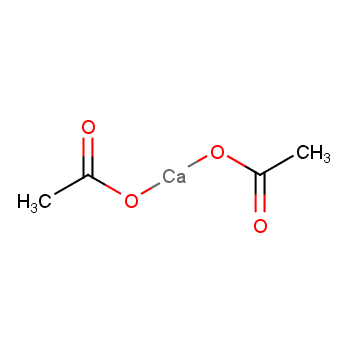
Molecular Geometry: Calcium acetate consists of calcium ions (Ca²⁺) and acetate ions (C₂H₃O₂⁻). The acetate ion has a symmetrical structure, with two oxygen atoms bonded to a central carbon atom, and it carries a negative charge. The calcium ion is a positively charged metal ion that interacts with the negatively charged acetate ions, creating an ionic compound. The geometry of the acetate ion is planar and symmetrical, which means the individual bonds within the ion may cancel out any dipole moments.

Dipole Moment: The dipole moment in calcium acetate is not significant because the molecule primarily involves ionic bonding between the calcium cation and acetate anions. In ionic compounds, the individual ions have full charges, meaning there is no net dipole moment typical of covalently bonded polar molecules. However, the acetate ions themselves are polar due to the difference in electronegativity between carbon and oxygen, but the ionic nature of the compound means that the overall polarity is not defined in the same way as in covalent molecules.
Electronegativity: The electronegativity of calcium is relatively low (about 1.00 on the Pauling scale), and it readily forms ionic bonds with the acetate ions, which are composed of carbon (2.55), hydrogen (2.20), and oxygen (3.44). The oxygen atoms in the acetate ion are more electronegative than the carbon, leading to a polar bond within the acetate ion. However, because of the ionic interaction between calcium and acetate, calcium acetate as a whole is not considered a polar molecule in the traditional sense.

Therefore, while calcium acetate contains polar bonds within the acetate ion, the overall compound is considered ionic and does not exhibit the typical characteristics of a polar covalent molecule. It behaves more like a salt with an ionic structure.
| Calcium Acetate CAS 62-54-4 | |
| Molecular formula | C₄H₆CaO₄ |
| Molecular shape | Planar (Acetate ion), Ionic (Overall structure) |
| Relative molecular mass | 158.17 g/mol |
| Solubility | Soluble in water |
| Compound | Polarity | Applications |
| Sodium Acetate (C₂H₃NaO₂) | Polar due to the ionic bonding between sodium and acetate ions. | Used in heating pads and as a food preservative. |
| Magnesium Acetate (C₄H₆MgO₄) | Ionic | Used as a coagulant and in water treatment. |
| Potassium Acetate (C₂H₃KO₂) | Polar due to ionic interaction. | Used as a food preservative and in de-icing products. |
After exploring the polarity chemistry of C4H6CaO4, have you gained a deeper understanding of whether it is "polar or nonpolar"? C4H6CaO4 contains polar bonds within the acetate ions, but the overall compound is ionic, resembling a salt. If you're interested in similar compounds or related supply chain resources, Guidechem offers a comprehensive list of global calcium acetate suppliers, where you can find the right procurement plan to meet your research and production needs.
|
 |
 |
 |
 EN
EN
 Agricultural News
 Food News
 Industrial News
 Cosmetic News
 Pharmaceutical News
 Science News

 1YR
1YR

