-
We detected your language preference as English. Would you like to switch to the English version for a better experience?
Switch to English
Stay here


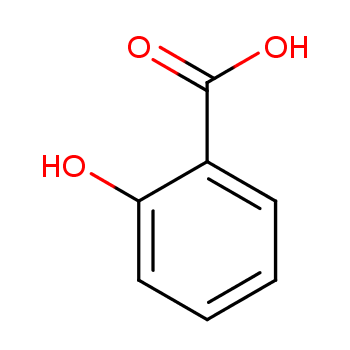
Salicylic acid (C₇H₆O₃) is an organic compound that plays a vital role in various industrial, pharmaceutical, and cosmetic applications. It is a white, odorless, crystalline substance with a slightly bitter taste. Known primarily for its role as a key ingredient in aspirin, salicylic acid is also used in the treatment of skin conditions, particularly acne. Is it true that salicylic acid a polar? It consists of a benzene ring (C₆H₅) bonded to a carboxyl group (-COOH) and a hydroxyl group (-OH), making it both an acid and an alcohol. The combination of these functional groups contributes to its unique chemical properties and wide range of uses.
Polarity refers to the distribution of electrical charge within a molecule. In polar molecules, electrons are not shared equally between atoms, resulting in regions of partial positive and negative charges. This polarity arises from differences in electronegativity between the atoms involved in the bond. The more electronegative atom attracts the electrons more strongly, creating a dipole, or an uneven charge distribution.
The presence of functional groups, such as hydroxyl (-OH) and carboxyl (-COOH), in compounds like salicylic acid further contributes to its polarity. The oxygen atoms in both groups are highly electronegative, pulling electron density towards themselves, which results in partial negative charges on the oxygens and partial positive charges on the hydrogen atoms. Is salicylic acid polar or nonpolar or ionic?
Is salicylic acid polar or nonpolar or ionic? To determine whether salicylic acid (C₇H₆O₃) is polar or nonpolar, we can examine it from three key perspectives: molecular geometry, dipole moment, and electronegativity.
Molecular Geometry: Salicylic acid has a planar molecular geometry with a benzene ring and two functional groups attached to it. The -OH group is slightly bent, and the -COOH group is also planar. The asymmetry in the arrangement of these groups contributes to the molecule’s overall dipole moment.

Dipole Moment: Does salicylic acid have a nonpolar bond? The hydroxyl group (-OH) and carboxyl group (-COOH) both possess polar bonds due to the significant electronegativity difference between oxygen and hydrogen or carbon. These groups pull electron density toward themselves, creating partial negative charges on the oxygen atoms and partial positive charges on the hydrogen or carbon atoms. This dipole moment indicates that salicylic acid is a polar molecule.

Electronegativity: Oxygen is more electronegative than both hydrogen and carbon. In the -OH and -COOH groups, oxygen pulls electron density away from the other atoms, resulting in a distribution of partial charges across the molecule.

| Element Electronegativity | |
| O | 3.44 |
| H | 2.20 |
| C | 2.55 |
The oxygen atoms in the -OH and -COOH groups have a higher electronegativity than both carbon and hydrogen, leading to partial negative charges on the oxygens and partial positive charges on the hydrogen or carbon atoms. This difference in electronegativity further confirms that salicylic acid is a polar molecule.
It is detailed above that is salicylic acid polar non polar or ionic. Therefore, salicylic acid (C₇H₆O₃) is a polar molecule. Its molecular geometry, dipole moment, and differences in electronegativity all contribute to its overall polarity. This polarity explains its solubility in water and its effectiveness in various pharmaceutical and cosmetic applications.
| Salicylic Acid Cas 69-72-7 | |
| Molecular formula | C₇H₆O₃ |
| Molecular shape | Planar |
| Relative molecular mass | 138.12 g/mol |
| Solubility | Slightly soluble in water, soluble in alcohol and ether |
| Melting point | 158.6 °C |
| Boiling point | 211 °C (decomposes) |
| Compound | Polarity | Applications |
| Acetylsalicylic Acid (Aspirin) | Polar due to the ester and carboxyl groups | Pain relief, anti-inflammatory, fever reduction |
| Benzoic Acid | Polar due to the carboxyl group | Used as a preservative and in the manufacture of plasticizers |
After exploring the polarity chemistry of C₇H₆O₃, have you gained a deeper understanding of whether it is "polar or nonpolar"? While C₇H₆O₃ as a molecule is polar, this does not necessarily mean that all of its bonds are polar bonds. If you're interested in similar compounds or related supply chain resources, Guidechem offers a comprehensive list of global Salicylic acid suppliers, where you can find the right procurement plan to meet your research and production needs.
 |
 |
 |
 |
 |
 |
 EN
EN
 Agricultural News
 Food News
 Industrial News
 Cosmetic News
 Pharmaceutical News
 Science News

 3YRS
3YRS

