
Welcome to the intriguing world of molecular structures! Today, we'll explore the Lewis structure S2O, a compound with unique properties and applications. Understanding Lewis structures is key to unveiling how atoms bond in S2O and provides insights into its molecular geometry, hybridization, and polarity.
What is the Lewis Structures?
Lewis structures, devised by Gilbert N. Lewis, visually represent electron arrangements in molecules. By depicting valence electrons as dots and bonds as lines, Lewis structures predict a molecule's shape and properties based on the octet rule. This rule states that atoms tend to achieve stability by having eight electrons in their outer shell. Lewis structures adhere to this rule, offering a clear picture of chemical bonding.
What is Sulfuroxide?
Sulfuroxide (S2O) is a compound comprised of two sulfur atoms bonded to one oxygen atom. It is less commonly encountered compared to other sulfur oxides, but it has interesting properties and serves as an important species in various chemical reactions and studies.
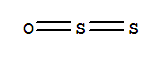
How to draw Lewis structures for S2O?
Let's dive into drawing S2O lewis structure resonance:
Step 1: Identify the Central Atom: In S2O, the central atom can be considered as one of the sulfur atoms.
Step 2: Calculate Total Valence Electrons: Each sulfur atom contributes 6 valence electrons and oxygen contributes 6, giving a total of (2 x 6) + 6 = 18 valence electrons.
Step 3: Arrange Electrons Around Atoms: Connect each sulfur atom to the oxygen atom with a single bond (line) and distribute the remaining electrons as lone pairs to satisfy the octet rule.
Step 4: Fulfill the Octet Rule: Ensure each atom has 8 electrons (either shared or lone pairs).
Step 5: Check for Formal Charges: Adjust the structure to minimize formal charges while satisfying the octet rule.

Molecular geometry of Sulfuroxide
The Lewis structure suggests that S2O adopts a bent or V-shaped geometry around the oxygen atom due to the presence of lone pairs on the oxygen, which causes repulsion and results in a bent structure for the molecule.

Hybridization in Sulfuroxide
In S2O, the central sulfur atom undergoes sp2 hybridization. This involves the mixing of one s orbital and two p orbitals to form three sp2 hybrid orbitals. These orbitals overlap with the orbitals of the other sulfur and oxygen atoms, forming sigma bonds. This hybridization is consistent with the bent geometry of the molecule.
Is Sulfuroxide polar or nonpolar?
Sulfuroxide (S2O) is a polar molecule. The difference in electronegativity between sulfur (2.58) and oxygen (3.44) atoms creates polar covalent bonds. Additionally, the bent geometry of the molecule ensures that the dipole moments do not cancel out, resulting in a molecule with an overall dipole moment.
What are approximate bond angles and Bond length in Sulfuroxide?
The bond angle in S2O is approximately 120 degrees, consistent with its sp2 hybridization and bent molecular geometry. The bond length for the S-O bond in S2O is typically around 148 pm (picometers).
Note: While VSEPR theory provides a good starting point for predicting molecular geometries and bond angles, real molecules can sometimes deviate from the ideal angles due to factors like lone pair repulsion, bond polarity, and molecular interactions.
Highlight of Sulfuroxide
| Sulfuroxide Cas 20901-21-7 |
| Molecular formula |
S2O |
| Molecular shape |
Bent |
| Polarity |
Polar |
| Hybridization |
sp2 hybridization |
| Bond Angle |
120 degrees |
| Bond length |
148 pm |



 EN
EN
 Agricultural News
 Food News
 Industrial News
 Cosmetic News
 Pharmaceutical News
 Science News