-
We detected your language preference as English. Would you like to switch to the English version for a better experience?
Switch to English
Stay here


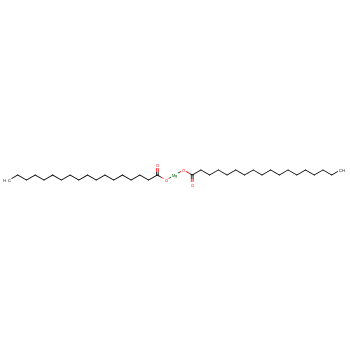
Magnesium stearate is a white, powdery metal salt of magnesium and stearic acid, widely added to cosmetic, pharmaceutical and food products to improve consistency, texture and stability. It is valued for preventing ingredients from sticking and clumping, delivering a smooth, silky feel, and acting as a lubricant and release agent in pressed and tabletted formats.
For product developers, the key technical questions are not simply whether magnesium stearate improves texture, but how its lubricity, insolubility and reactivity interact with the rest of the formula, and how it behaves in pressed powders, emulsions and solid dosage forms alike. This guide consolidates those considerations into a practical B2B formulation framework.
| Function | Suitable Users | Core Technical Indicators | Compliance Framework |
|---|---|---|---|
| Lubricant & texturizing agent | Color cosmetic and skin care developers building pressed powders, lipsticks and emulsions that need slip, adhesion and a smooth feel | CAS 557-04-0; molecular weight 593.29 g/mol; light white powder; improves adhesion and lubrication; typical pressed-powder level about 2.5% | GRAS-listed by the US FDA; accepted as a safe food additive in Europe, the UK and Canada |
| Anti-caking agent | Formulators of talc-based and mineral powders where free-flowing behavior and resistance to clumping are essential to filling and wear | Prevents ingredients from sticking together and clumping; widely used in color cosmetics, talcum powders and other powder systems | Listed on the US TSCA inventory and included in the FDA Inactive Ingredients Database |
| Pharmaceutical lubricant | Tablet and capsule manufacturers who require a die-wall lubricant that does not compromise dissolution at typical use levels | Used at 0.25% to 5.0% w/w in capsule and tablet manufacture; melting range 130–145 °C supports warm processing | Included in the FDA Inactive Ingredients Database for oral capsules, powders, tablets and topical preparations |
| Bulking & binding agent | Developers of food, nutraceutical and cosmetic solids where volume control and cohesive structure are required without adding water | Adds bulk; acts as binder and release agent; derived from edible vegetable or animal fatty acid sources | Included in the Food Chemicals Codex (FCC) specification for purity and identity |
Magnesium stearate is a compound of magnesium with a mixture of solid organic acids, consisting primarily of variable proportions of magnesium stearate and magnesium palmitate. The fatty acids are derived from edible sources, and the material contains not less than 4.0% and not more than 5.0% of magnesium calculated on a dried basis. It is a fatty-acid salt type anionic surfactant that appears as a white powder with a slight smell and a characteristic creamy feel.
Chemically, it is a soap comprising a salt that contains two equivalents of stearate — the anion of stearic acid — and one magnesium cation (Mg2+). That structure explains its properties: it is soluble in hot aliphatic hydrocarbons, hot arenes and hot grease, but insoluble in alcohol and water, and it decomposes into stearic acid and the corresponding magnesium salts in the presence of acid. Its applications exploit this softness, its insolubility in many solvents and its low toxicity.
In practice, magnesium stearate has excellent adhesion to the skin together with strong lubrication properties, which is why it is applied to powder products to improve adhesion and slip. The term should not be read as a single-function label, however, because the same material can act at once as a lubricant, an anti-caking agent, a texturizing agent, a bulking agent and a binder, and those combined functions shape how a formula must be built.
Explore the magnesium stearate technical encyclopedia for additional chemical and application information.
| Parameter | Specification / Description |
|---|---|
| Chemical name | Magnesium octadecanoate |
| Common names | Magnesium stearate, magnesium distearate, octadecanoic acid magnesium salt |
| Molecular formula | C36H70MgO4 |
| Molecular weight | 593.29 g/mol |
| CAS Number | 557-04-0 |
| EC number | 209-150-3 |
| Appearance at 25 °C | Light white powder |
Magnesium stearate is not primarily used because it dissolves or reacts within a formulation. Its value is interfacial: the fatty-acid chains create a low-friction, water-repellent coating on particles and surfaces, and that coating is what delivers lubrication, anti-caking behavior and a soft skin feel across a very wide range of products.
Because magnesium stearate is insoluble in water and most common solvents but plates readily onto solids, it forms a thin boundary layer on pigment and filler particles. This layer reduces inter-particle friction and adhesion between the powder mass and metal tooling, which is why it functions simultaneously as a die-wall lubricant in tabletting and as a slip agent that gives pressed powders their smooth, silky payoff.
In powder systems the same hydrophobic coating prevents particles from sticking together and clumping, keeping the bulk free-flowing during filling and giving a more consistent texture in the finished compact. This anti-caking function is especially important in color cosmetics, talcum powders and other mineral-based systems where humidity and compaction would otherwise cause caking.
Magnesium stearate also has excellent adhesion to the skin, which improves wear and helps a product stay where it is applied. In lotions and creams, its ability to prevent separation of ingredients over time stabilizes the formulation, an effect that is essential for products containing oils that are prone to separation, and it contributes a smoother, more velvety feel by reducing the greasy or oily sensation some products leave behind.
Magnesium stearate is prepared either by the interaction of aqueous solutions of magnesium chloride with sodium stearate, or by the interaction of magnesium oxide, hydroxide or carbonate with stearic acid at elevated temperatures. A further route proceeds through the reaction of sodium stearate with magnesium sulfate. All of these routes are essentially precipitation or salt-exchange reactions that yield the insoluble magnesium salt, which is then filtered, washed and dried.
Magnesium stearate is manufactured from both animal and vegetable oils. Some nutritional supplements specify that the magnesium stearate used is sourced from vegetables, and that sourcing declaration matters to buyers seeking vegan or vegetarian certification. Because the commercial material is a mixture of variable proportions of magnesium stearate and magnesium palmitate, the fatty-acid profile of the feedstock influences the melting behaviour and the magnesium content of the finished grade, so sourcing and composition are commercially meaningful rather than interchangeable.
For formulators, the qualification points are identity, assay, appearance, magnesium content and particle-size distribution, since these determine flow and compressibility. Suppliers typically specify loss on drying, heavy-metal limits and sieve analysis, and buyers should verify that the grade offered matches the intended use.
From a formulation perspective, the most relevant comparison is among magnesium stearate and the other metal soaps and lubricants it is commonly substituted for or blended with, rather than among unrelated chemical families. The three commonly discussed categories are alkaline-earth metal stearates, fatty-acid salt surfactants, and the powder-flow additives used alongside them.
Magnesium stearate belongs to the metal stearate family and is most often compared with calcium stearate and zinc stearate. Its softness, low density and characteristic creamy feel distinguish it from the harder, denser stearates, and those differences determine whether it is selected for a pressed powder, an emulsion or a tabletting application. The choice among stearates is driven by feel, compatibility and the reactivity of the surrounding formula.
It is simultaneously classified as a fatty-acid salt type anionic surfactant, which explains its surface activity and its ability to modify texture and adhesion. This dual classification is important when checking ingredient lists and functional claims, because a single substance can be described in more than one functional category and may trigger more than one labelling consideration.
Functionally, magnesium stearate sits in the processing-aid category and is used alongside other anti-caking and flow agents such as silicon dioxide and zinc stearate. In pressed formats it is frequently combined with mica, boron nitride and starches to balance adhesion, slip and pay-off. These co-agents should be evaluated as part of the powder system rather than as independent ingredients, since their ratio determines the final texture.
| Parameter | Magnesium Stearate | Calcium Stearate | Zinc Stearate |
|---|---|---|---|
| CAS number | 557-04-0 | 1592-23-0 | 557-05-1 |
| Chemical type | Magnesium salt of stearic acid; light powder, negligible water solubility | Calcium salt of stearic acid; denser and harder powder | Zinc salt of stearic acid; fine, soft, water-repellent powder |
| Primary function | Lubricant, anti-caking agent, texturizer and binder | Lubricant and water repellent in powders and tablets | Lubricant, binder and dusting agent in cosmetics and rubber |
| Typical use level | About 2.5% in pressed powders; 0.25–5.0% w/w in tablets | Similar range, often selected for denser compacts | Low levels for slip and water repellency |
| Feel and texture | Smooth, creamy, silky; improves skin adhesion | Less creamy, drier character | Light, slippery, slightly astringent |
| Regulatory profile | GRAS and approved as a food additive; listed on TSCA | Broadly accepted in foods and cosmetics | Accepted topically; soluble zinc must be controlled in some uses |
| Formulation advantage | Combines lubrication with texture and adhesion in one material | Good opacity and body in pressed formats | Strong water repellency and adhesion properties |
| Key limitation | Incompatible with strong acids, alkalis, iron salts and oxidizing solids | Higher density can change pay-off and adhesion | Zinc load must be justified for the intended category |
| Property | Typical Description |
|---|---|
| Appearance at 25 °C | Light white powder with a characteristic creamy feel |
| Odor | Faint, characteristic odor |
| pH (10% aqueous) | 5–8.2 |
| Molecular weight | 593.29 g/mol |
| Density at 25 °C | 1.026 g/cm3 |
| Bulk density | 0.22 to 0.35 g/mL, a light and airy powder |
| Melting point | 130.00–145.00 °C |
| Solubility | Negligible in water, ether and alcohol; slightly soluble in benzene |
| Sieve analysis (200 mesh) | Not less than 90% passing |
| Shelf life | 12–18 months in well-filled, tightly sealed containers in a cool, dry place |
| Function | Typical Applications | Key Formulation Objective |
|---|---|---|
| Texturizing agent | Pressed powder makeup, lipstick, eyeshadow and blush where a smooth, silky feel and reduced greasiness are required | Deliver a smooth payoff and reduce the oily sensation some pigments leave behind |
| Anti-caking agent | Color cosmetics, talcum powders and other powder systems prone to caking under humidity or compaction | Keep the bulk free-flowing and prevent ingredients from sticking together |
| Lubricant / binder | Capsules and tablets at 0.25–5.0% w/w, and solid food formats including chewing gum and dry mixes | Reduce die-wall friction and provide cohesive structure without adding water |
| Bulking agent | Artificial sweeteners, seasoning blends and powder cosmetics where volume control is needed | Increase bulk and volume without compromising the active ingredient level |
Products that frequently contain magnesium stearate include cosmetics such as pressed powder makeup, lipstick, eyeshadow, blush, facial moisturizer, body lotion and sunscreen; foods such as chewing gum, artificial sweeteners, dry mixes and seasoning blends; and pharmaceutical formats such as oral capsules, powders, tablets and topical preparations.
Start with the product format and its processing demands. Decide whether magnesium stearate is present as a lubricant, an anti-caking agent, a texturizer or a combination, and set the target level accordingly. In pressed powders a level of about 2.5% is typical, while in tablet manufacture the working range is 0.25% to 5.0% w/w; the concentration should be justified by the specific process rather than copied from an unrelated product.
Before batching, confirm identity, magnesium content, appearance, bulk density and sieve analysis against the approved purchasing specification. A certificate of analysis should be matched against that specification rather than accepted solely on the strength of the supplier's name, and vegetable-sourced grades should be documented where the product claims require them.
Magnesium stearate is typically blended into the powder phase before the liquid or binder phase is added, as shown in the worked formulation below, so that it can coat the particles uniformly. Premature addition to the liquid phase or poor dispersion can leave agglomerates that appear as lumps in the finished compact.
Because reactivity and lubricity depend on the surrounding formula, compatibility and compaction behaviour should be demonstrated on the finished blend rather than inferred from the use level. Systems containing strong acids, alkalis, iron salts or oxidizing solids require particular attention, and the pressing parameters must be tuned to the actual lubricant level.
The following formulation, a satin pearl eyeshadow built around rice starch and magnesium stearate, is an illustrative technical example rather than a universal commercial recipe. Actual ingredient levels must be recalculated according to the stability, sensory and pressing requirements of each project.
| Ingredient | Illustrative Quantity | Technical Role |
|---|---|---|
| Talc | 49.5% | Principal filler providing bulk, smoothness and a soft skin feel |
| Rice starch | 4.0% | Texture modifier improving creaminess and sebum absorption |
| Mica | 5.0% | Pearlizing base that contributes slip and a silky finish |
| Magnesium stearate | 2.5% | Lubricant and anti-caking agent improving adhesion and pressability |
| Boron nitride | 3.0% | Soft-focus texturizer contributing a smooth, cushiony feel |
| Mica, titanium dioxide and tin oxide (pearl pigments) | 30.0% | Color and pearl effect delivered by coated effect pigments |
| Ethylhexyl palmitate | 6.0% | Binder and emollient improving adhesion and reducing dustiness |
The processing sequence mixes the powders of phase A, adds the liquid phase B, stirs until uniform, and presses the eyeshadow at 150 bar for 30 seconds.
Regulatory treatment of magnesium stearate reflects its status as a widely accepted processing aid rather than a restricted active. A supplier's statement that a material is "food grade" or "cosmetic grade" does not by itself establish compliance in every destination market, so the intended use and destination should be checked explicitly.
| Market / Framework | Technical Relevance | Compliance Action |
|---|---|---|
| United States FDA | Magnesium stearate is considered non-toxic and is Generally Recognized As Safe (GRAS), listed on the TSCA inventory and included in the FDA Inactive Ingredients Database. | Confirm the intended use is covered by the applicable database entry and that label declarations are accurate. |
| European Union | Magnesium stearate is accepted as a safe food additive, and there is no specific restriction preventing its cosmetic use at ordinary levels. | Apply the general EU cosmetic safety requirements and confirm the food-additive status for edible applications. |
| Canada and the United Kingdom | Accepted as a safe food additive, and included in the Canadian List of Acceptable Non-medicinal Ingredients and in nonparenteral medicines licensed in the UK. | Verify the current listing status against the national ingredient list before finalizing the formulation. |
| JECFA | The Joint FAO/WHO Expert Committee on Food Additives conducted a safety assessment in 2015 and found no concerns regarding its continued use or safety. | Use the JECFA assessment as supporting evidence in the safety dossier while applying the applicable national limits. |
| Food Chemicals Codex (FCC) | A specification for magnesium stearate is included in the FCC, a collection of internationally recognized standards for the purity and identity of food ingredients. | Purchase against an FCC-compliant specification and retain certificates of analysis for traceability. |
| ECHA substance information | Substance information is available for magnesium stearate under the corresponding CAS and EC numbers, supporting hazard and identity checks. | Monitor regulatory updates, as scientific positions and listing status can evolve over time. |
One of magnesium stearate's principal advantages is its low toxicity. According to the FDA, no evidence suggests that it causes adverse effects when used at levels that are current and in the manner now practiced, or which might reasonably be expected in the future. Its use is supported by repeated safety assessments across food, cosmetic and pharmaceutical applications.
Animal research shows that orally administered magnesium stearate is non-toxic far beyond the commonly used amounts, and as recently as 2015 the Joint FAO/WHO Expert Committee on Food Additives found no concerns regarding its continued use or safety. Nevertheless, oral consumption of large quantities may produce a laxative effect or mucosal irritation, so high-dose ingestion is not without a physiological effect and should be considered in the context of the intended exposure.
For product developers, the most important safety principle is to keep the material within its established category and to separate processing function from any therapeutic claim. Magnesium stearate is a formulation aid, not an active, and any safety statement should be traceable to a current regulatory or expert-panel position rather than to a marketing narrative.
The following reference framework summarises the principal use levels reported for magnesium stearate and should be read as general guidance rather than as a fixed specification. Actual levels depend on the product format, the process and the other ingredients present.
| Application | Typical Level | Functional Basis |
|---|---|---|
| Pressed powder cosmetics | About 2.5% | Provides lubrication, adhesion and anti-caking behavior in the compact |
| Tablets and capsules | 0.25–5.0% w/w | Acts as a die-wall lubricant to prevent sticking during compression |
| Food and dietary supplements | Levels consistent with good manufacturing practice | Functions as lubricant, release agent, binder, thickener and anti-caking agent |
Note: The figures above are indicative and should be confirmed against the applicable pharmacopoeial or food-code specification and the requirements of the specific manufacturing process.
Not strictly. Despite its name, magnesium stearate is a magnesium salt of stearic acid, and the commercial material is a mixture consisting primarily of variable proportions of magnesium stearate and magnesium palmitate. That mixture is why the melting range and magnesium content vary between grades, and why purchasing specifications must define the composition.
Yes, it is a significant contributor to "bathtub rings". When soaps react with hard water, magnesium stearate and calcium stearate form a white solid known as soap scum. This behaviour reflects the very low water solubility that also underlies the material's usefulness as a water-repellent lubricant.
Magnesium stearate is manufactured from both animal and vegetable oils, and some nutritional supplements specify that the magnesium stearate used is sourced from vegetables. That declaration matters to buyers seeking vegan or vegetarian certification and is a normal part of purchasing documentation.
It can be used, but not freely. It is primarily used as a lubricant in capsule and tablet manufacture at concentrations between 0.25% and 5.0% w/w, and excessive levels can reduce tablet hardness and slow dissolution. The lubricant level should therefore be optimized against compaction and dissolution data for the specific formulation.
| Identifier | Value | Resource |
|---|---|---|
| Chemical name | Magnesium octadecanoate | Technical encyclopedia |
| CAS Number | 557-04-0 | Chemical dictionary |
| CAS product lookup | 557-04-0 | Supply search |
| Supplier / trade search | 557-04-0 | Supplier search |
1. U.S. Food and Drug Administration. Inactive Ingredient Database and GRAS status for magnesium stearate.
2. Joint FAO/WHO Expert Committee on Food Additives. Safety evaluation of magnesium stearate, 2015.
3. European Chemicals Agency. Substance information for magnesium stearate, EC 209-150-3, CAS 557-04-0.
4. United States Pharmacopeia and National Formulary. Magnesium stearate monograph.
5. Food Chemicals Codex. Specification for magnesium stearate identity and purity.
6. U.S. Environmental Protection Agency. TSCA Inventory listing for magnesium stearate.
7. Health Canada. List of Acceptable Non-medicinal Ingredients.
8. National Center for Biotechnology Information. PubChem compound summary for magnesium stearate.
|
 |
 |
 |
 |
 |
 EN
EN
 Agricultural News
 Food News
 Industrial News
 Cosmetic News
 Pharmaceutical News
 Science News

 13YRS
13YRS

