-
We detected your language preference as English. Would you like to switch to the English version for a better experience?
Switch to English
Stay here


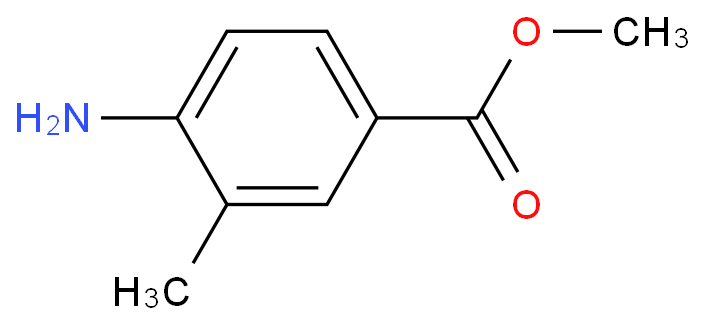
Methyl 4-amino-3-methylbenzoate is an intermediate in the preparation of angiotensin II receptor antagonist telmisartan, which plays a crucial role in combating obesity and associated metabolic disorders in diet-induced obese mice (Ries et al., 1993). Telmisartan is utilized as a therapeutic tool for metabolic syndrome, including visceral obesity.
Non-peptide angiotensin II receptor antagonists selectively and irreversibly block ATI receptors without affecting other receptor systems, making them suitable for treating mild to moderate hypertension. Telmisartan, as a novel antihypertensive drug, specifically targets angiotensin II receptors (ATⅠ type) for the treatment of primary hypertension, demonstrating high affinity for ATⅠ subtype receptors.

Methyl 4-amino-3-methylbenzoate plays a crucial role in research and industrial applications. It has the potential to serve as a precursor for synthesizing various pharmaceuticals, including anti-cancer and anti-inflammatory drugs. Additionally, it can be used in the synthesis of various agrochemicals, such as herbicides and insecticides.
Neuroprotection: Methyl 4-amino-3-methylbenzoate is an important intermediate in the synthesis of neuroprotective hydrazones used in the treatment of Alzheimer’s disease, offering new approaches for treating neurodegenerative diseases.
Anti-inflammatory and Antioxidant: Its anti-inflammatory and antioxidant properties make it a potential candidate in the development of anti-inflammatory drugs and antioxidants.
Antitumor: Research indicates that this compound may have the potential to inhibit cancer cell growth, providing a new target for antitumor drug design.
Pharmaceutical Intermediates: Beyond neuroprotective hydrazones, this compound can serve as a starting material for synthesizing other pharmaceutical molecular frameworks.
Materials Synthesis: In material science, it can be used to synthesize novel materials with specific optical or electrical properties.
Organic Synthesis Research: As a structurally unique compound, it is frequently used as a model compound in studies of organic reaction mechanisms and synthesis methods. Methyl 4-amino-3-methylbenzoate is also involved in the development of diphenylamine-based retinoids.
Structure-Activity Relationship Studies: Systematic studies of the relationship between its structure and biological activity can provide theoretical guidance for drug design.
Drug Screening: This compound and its derivatives can serve as potential lead compounds for high-throughput screening to discover new therapeutic drugs.
Methyl 4-amino-3-methylbenzoate is widely used in scientific experiments to synthesize various compounds and to study their biological properties. Additionally, it is a key component in synthesizing other chemicals, including pharmaceuticals and agrochemicals.
Despite its wide-ranging applications, Methyl 4-amino-3-methylbenzoate has limitations in terms of toxicity and water solubility. Future research should focus on the following areas:
Performance Optimization: Improve solubility, stability, and biological activity by introducing functional groups or modifying the molecular structure.
Green Synthesis Processes: Develop more environmentally friendly and efficient synthesis methods to reduce environmental impact while improving product purity and yield.
Materials Science: Utilize it as a monomer or functional molecule to construct new polymeric materials, such as polymers with biocompatibility, conductivity, or optical properties.
Nanomaterials: Explore its application in the preparation of nanomaterials, such as constructing nanoparticles with specific morphologies and functions.
Catalytic Applications: Investigate its catalytic performance in organic synthesis reactions, such as asymmetric catalysis and heterogeneous catalysis.
Biomedical: Develop fluorescent probes, drug carriers, and bioimaging agents based on Methyl 4-amino-3-methylbenzoate.
|
 |
 |
|
|
 EN
EN
 Agricultural News
 Food News
 Industrial News
 Cosmetic News
 Pharmaceutical News
 Science News

 5YRS
5YRS

