-
We detected your language preference as English. Would you like to switch to the English version for a better experience?
Switch to English
Stay here


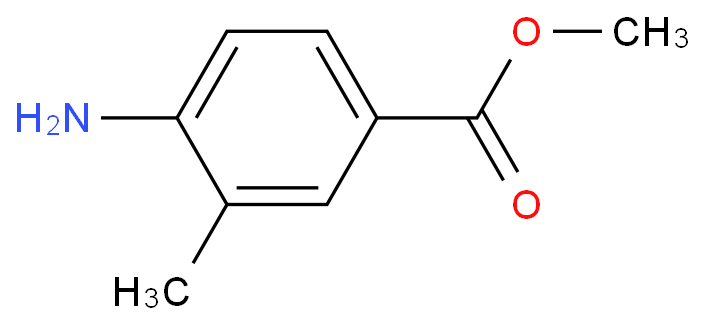
Methyl 4-amino-3-methylbenzoate, CAS: 18595-14-7, with the molecular formula C9H11NO2, is used in the synthesis of hydrazone compounds with neuroprotective effects for Alzheimer's disease treatment. It is also used in research and development of vitamin A-like compounds based on diphenylamine. This compound is a white crystalline powder with a melting point range of 93 to 96 degrees Celsius.

Methyl 4-amino-3-methylbenzoate, CAS: 18595-14-7,Methyl 4 amino 3 methylbenzoate formula: C9H11NO2. The structure analysis is as follows:
Methyl 4-amino-3-methylbenzoate can be synthesized through various methods, one common approach being the reaction of 4-nitrotoluene with methylamine. The process involves first reducing 4-nitrotoluene to 4-amino-3-methylbenzoic acid and then esterifying with methanol under sulfuric acid catalysis to obtain methyl 4-amino-3-methylbenzoate.
Methyl 4 amino 3 methylbenzoate preparation are reported as follows: To a 100 mL MeOH solution of 3-methyl-4-nitrobenzoic acid (6.50 g, 33.3 mmol), add 700 mg of 5% Pd/C. Hydrogenate the mixture under 48 psi H2 for 24 hours, filter off the catalyst, and concentrate the filtrate under reduced pressure to obtain white solid (99%) of methyl 4-amino-3-methylbenzoate. 1H NMR (CDCl3) δ: 2.19 (s, 3H), 3.85 (s, 3H), 4.20 (br s, 2H), 6.65 (d, 2H, J= 8.1Hz), 7.72 (d, 2H, J = 8.1Hz), 7.76 (s, 1H).
Methyl 4 amino 3 methylbenzoate toxicity
Methyl 4-amino-3-methylbenzoate, like many chemicals, may pose potential hazards if not handled properly. Exposure can occur through inhalation, ingestion, or skin contact. Specific toxic effects may vary depending on the route of exposure and duration. Potential health risks include irritation to eyes, skin, and respiratory tract. In severe cases, systemic effects such as organ damage cannot be ruled out. Caution and adherence to recommended safety procedures are necessary when handling this compound.
Research indicates that methyl 4-amino-3-methylbenzoate is relatively safe at low concentrations. However, high concentration exposure may lead to toxic reactions, such as liver damage and inflammation.
When handling this chemical, appropriate personal protective equipment (PPE) such as gloves, goggles, and lab coats should be worn. Work in well-ventilated areas to minimize inhalation exposure. Follow good laboratory practices to avoid skin contact and ingestion. In case of accidental contact or exposure, immediately wash the affected area with water and seek medical attention if necessary. The work area should be equipped with emergency eyewash stations and safety showers.
Proper storage and disposal of methyl 4-amino-3-methylbenzoate are crucial to prevent accidents and protect the environment. Store the chemical in a sealed container, away from incompatible substances, in a cool, dry, well-ventilated area. Minimize exposure to heat, light, and moisture. Dispose of methyl 4-amino-3-methylbenzoate according to local, state, and federal regulations, which may involve neutralization, dilution, or specialized waste disposal services. Never pour this chemical down the drain or into the environment. Proper disposal methods help protect public health and ecosystems.
 |
|
 |
|
|
 EN
EN
 Agricultural News
 Food News
 Industrial News
 Cosmetic News
 Pharmaceutical News
 Science News

 5YRS
5YRS

