-
We detected your language preference as English. Would you like to switch to the English version for a better experience?
Switch to English
Stay here


Methyl anisate, also known by its English name Methyl anisate,Methyl 4-methoxybenzoate, also known as methyl p-anisate, CAS number 121-98-2, has the molecular formula C9H10O3. Methyl p-anisate synonyms include anise methyl ester, para-anisic acid methyl ester, and 4-Methoxybenzoate. Methyl anisate is the methyl ester of para-anisic acid. It is found in star anise and is a commonly used organic compound in the food industry. It is also frequently used as a fragrance in certain perfumes. The compound can be directly synthesized by the condensation reaction of methanol and 4-Methoxybenzoic acid.
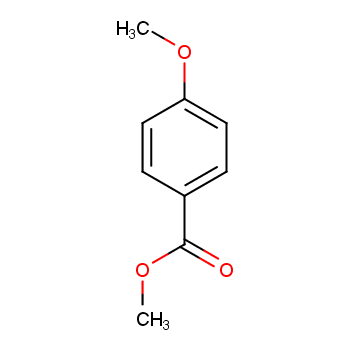
The chemical formula for methyl p-anisate is CH3OC6H4CO2CH3. This compound consists of a benzene ring with a methoxy group (OCH3) substituted at the 4th position and a methyl group (CH3) connected to the carboxylic acid group (COOH) via an ester bond (COO). This structural characteristic gives it unique properties, including an aromatic benzene ring, an electron-donating methoxy group, and an ester functional group.
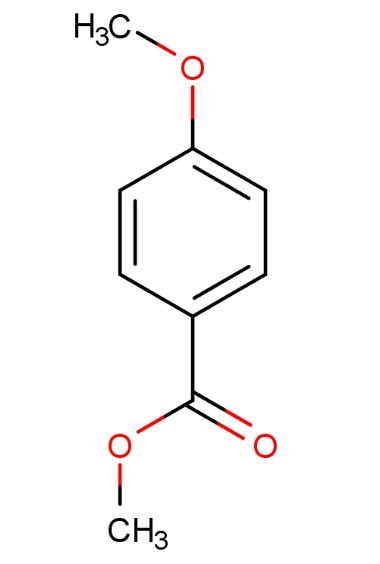
Methyl p-anisate chemical formula
Methyl anisate, also known as anise methyl ester, is commonly used as an intermediate in pharmaceuticals and in many organic syntheses. It is also used as a flavoring agent in food. Additionally, it can be found as a volatile component in many plants and mushrooms.
Methyl anisate is widely used in the fragrance industry. It has a scent similar to the fruit of the feijoa tree, making it a floral fragrance. It is used as a fragrance in certain perfumes and personal care products.
Due to its pleasant aroma, Methyl anisate is used as a flavoring agent in food and beverages.
Methyl anisate is mainly used as an intermediate in the pharmaceutical industry. Due to its specific chemical properties, it plays a vital role in the synthesis of various drugs and is suitable for subsequent chemical conversion processes.
This compound plays a key role in many organic synthesis reactions. Its good reactivity makes it an effective tool for building complex organic molecules, crucial for the development of new materials and chemicals.
Specific toxicity data for Methyl anisate is not fully available, but it is generally considered to have low to moderate toxicity. This compound is a flammable liquid with a flash point of 93°C. Methyl anisate may cause skin irritation, severe eye irritation, and respiratory tract irritation. It is recommended to avoid generating dust, inhaling fumes, gases, or vapors, and direct contact with skin and eyes. When handling, personal protective equipment, including chemical-resistant gloves, should be worn.
Methyl anisate is a compound with a pleasant scent and is commonly known by various names. Common synonyms include para-anisic acid methyl ester and 4-Methoxybenzoate. Understanding these different names is crucial for accurately identifying and using this compound. Additionally, understanding the context in which these names are used provides insight into the compound's applications and characteristics.
Distinguishing Methyl anisate from structurally similar compounds is crucial for scientific accuracy and practical applications. By understanding the differences between Methyl anisate and related substances, researchers and industry professionals can avoid confusion and ensure the correct use of this compound in various fields. A clear understanding of these differences is essential for developing new products, conducting experiments, and maintaining product quality and safety.
|
 |
 |
|
 EN
EN
 Agricultural News
 Food News
 Industrial News
 Cosmetic News
 Pharmaceutical News
 Science News

 15YRS
15YRS

