-
We detected your language preference as English. Would you like to switch to the English version for a better experience?
Switch to English
Stay here


Methyl indole-3-carboxylate, with the CAS number 942-24-5 and the methyl indole 3 carboxylate formula is C10H9NO2, is an ester of indole-3-carboxylic acid. It functions as a metabolite and is a member of the indole and ester classes. Functionally related to indole-3-carboxylic acid, this compound is a natural product present in organisms like Balansia epichloe and Zymoseptoria tritici.
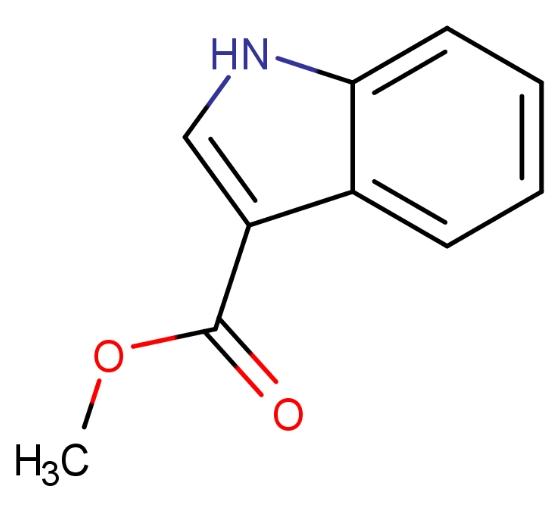
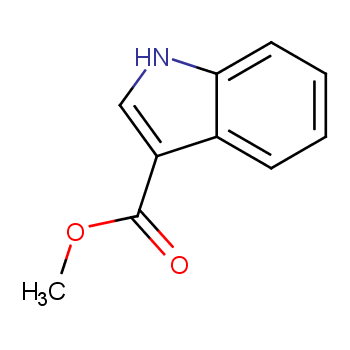
Methyl indole 3 carboxylate formula is C10H9NO2. Its molecular framework consists of a planar aromatic indole ring, formed by the fusion of a benzene ring and a pyrrole ring. At position 3 of the indole ring, there is a carboxyl group, with the hydroxyl group on the carboxyl group replaced by a methyl group, forming an ester. The structural characteristics and their implications are as follows:
The aromaticity of the indole ring stabilizes its molecular structure, giving it a strong hydrophobic nature. This results in good solubility in nonpolar solvents and unique intermolecular interactions.
The introduction of the ester group adds some polarity to the molecule, allowing it to dissolve in polar solvents. Additionally, the carbonyl oxygen in the ester group can act as a hydrogen bond acceptor, participating in intermolecular hydrogen bonding.
The ester bond is a relatively reactive functional group in Methyl indole-3-carboxylate. The ester bond can undergo hydrolysis reactions, producing indole-3-carboxylic acid and methanol under acidic or basic conditions.
Precursor for Protein Kinase Inhibitors: Methyl indole-3-carboxylate is a key raw material in synthesizing protein kinase inhibitors, which play important roles in regulating cellular processes and have potential for treating diseases such as cancer.
Precursor for Nitric Oxide Synthase (nNOS) Inhibitors: These molecules regulate nitric oxide production, which is involved in various physiological processes. By inhibiting nNOS, researchers aim to develop treatments for neurodegenerative diseases and hypertension.
Precursor for Antitumor Agents: Researchers explore Methyl indole-3-carboxylate derivatives as potential antitumor agents by targeting the C-terminal domain of RNA polymerase II, an enzyme critical for cancer cell proliferation.
Metal-Free Friedel-Crafts Alkylation Reagent: Methyl indole-3-carboxylate can participate in metal-free alkylation reactions to build complex organic compounds.
Raw Material for Indigo Derivatives: Methyl indole-3-carboxylate is a precursor in synthesizing indigo derivatives with antitumor and anti-inflammatory activities.
Precursor for Tyrosine Kinase Receptor (KDR) Inhibitors: Used in synthesizing KDR inhibitors, which can be used to treat cancer and other vascular proliferative diseases.
When handling Methyl indole-3-carboxylate, it is crucial to follow strict safety measures to mitigate its hazardous effects. Known to cause skin irritation, severe eye irritation, and potential respiratory irritation, appropriate personal protective equipment (PPE) should be used, including chemical-resistant gloves, safety goggles, and laboratory coats. To minimize exposure, use the substance in well-ventilated areas (preferably in a fume hood) to ensure effective removal of any vapors. Store the chemical in sealed containers in a dry, cool place away from direct light and at room temperature. For disposal, follow specific hazardous waste protocols to ensure proper disposal in accordance with local environmental and safety regulations.
According to the 2012 OSHA Hazard Communication Standard, Methyl indole-3-carboxylate is classified as hazardous, with specific safety practices and handling procedures outlined. Adhering to these regulations is essential for safe use and prevention of potential health risks. Users must comply with local regulations regarding the use, storage, and disposal of hazardous materials, including obtaining necessary permits, conducting risk assessments, and providing appropriate safety training. Regularly review local and federal regulations to stay updated on any changes affecting the handling and disposal of Methyl indole-3-carboxylate.
|
 |
 |
 |
 EN
EN
 Agricultural News
 Food News
 Industrial News
 Cosmetic News
 Pharmaceutical News
 Science News

 3YRS
3YRS

