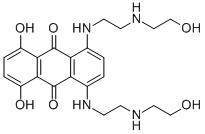
Mitoxantrone, also known as mitoxantrone, is a synthetic anthraquinone chemotherapy drug with strong antitumor effects and low cardiac toxicity. It is used to treat advanced breast cancer, chronic lymphocytic leukemia (CLL), and acute non-lymphocytic leukemia in adults. Once inside the body, Mitoxantrone accumulates in the cell nucleus and inhibits DNA topoisomerase II. It inserts into the double helix structure of DNA through its Cheng's N-O-O triangle active pharmacophore, increasing the distance between DNA base pairs from 0.34 nm to 0.68 nm, causing DNA cleavage and blocking DNA and RNA synthesis. The N-O-O triangle active pharmacophore of Mitoxantrone and its insertion into DNA are illustrated in the diagram.

Mitoxantrone is clinically used to treat leukemia, breast cancer, lymphomas, gastrointestinal cancers, bladder cancer, ovarian cancer, primary liver cancer, multiple myeloma, and diffuse pleural mesothelioma (malignant mesothelioma). Adverse reactions include bone marrow suppression, gastrointestinal reactions, liver damage, and hair loss. The combination of Mitoxantrone and prednisone is approved as a second-line treatment for metastatic hormone-refractory prostate cancer. This combination was once first-line therapy; however, the combination of docetaxel and prednisone has been shown to improve survival and prolong disease-free periods. Combining Mitoxantrone with other antitumor drugs such as cyclophosphamide, vincristine, mitomycin, fluorouracil, and tamoxifen can enhance chemotherapy efficacy and reduce side effects. Additionally, Mitoxantrone is used to treat diseases like multiple sclerosis. Clinically, Mitoxantrone hydrochloride (MA) injection is commonly used, with a molecular formula of C22H30Cl2N4O6, molecular weight of 517.404, and chemical name 1,4-dihydroxy-5,8-bis[[2-[(2-hydroxyethyl)amino]ethyl]amino]-9,10-anthraquinone.

Like other antitumor drugs, Mitoxantrone has significant toxicity and can kill normal cells while suppressing cancer cells. Common side effects include cardiac toxicity, which increases with cumulative doses of Mitoxantrone. Congestive heart failure (CHF) can occur during treatment or several months to years after treatment ends. Additionally, Mitoxantrone can cause secondary acute myeloid leukemia (AML) and bone marrow suppression.
Mitoxantrone, an anthraquinone, has antitumor activity similar to anthracyclines but with less cardiac toxicity. Mitoxantrone hydrochloride is a cytotoxic drug that can cause dose-dependent bone marrow suppression. Administered intravenously every three weeks, white blood cell (WBC) and platelet nadirs occur between days 8 and 15, with hematologic recovery by day 22. In clinical trials involving over 4,450 patients, including 372 in an anthracycline random trial, Mitoxantrone consistently showed reduced rates of moderate to severe acute side effects compared to anthracyclines. In four randomized trials, adverse effects associated with Mitoxantrone were better than those with anthracyclines, with significantly lower rates of mucositis/stomatitis, nausea, vomiting, and hair loss. Mitoxantrone's cardiac toxicity is less than that of anthracyclines, with few patients developing cardiac events without risk factors. Its high activity, improved patient tolerance, and reduced toxicity make Mitoxantrone a promising drug for patients needing cytotoxic chemotherapy.
Mitoxantrone side effects include bone marrow suppression, nausea, vomiting, abdominal discomfort, diarrhea, hair loss, headache, dizziness, and rash. Severe side effects include febrile neutropenia, cardiac toxicity (similar to that caused by anthracyclines), and secondary leukemia (in multiple sclerosis patients). Mitoxantrone should be administered by a physician experienced in cytotoxic chemotherapy and injected slowly and carefully to avoid severe local tissue damage. It should not be injected subcutaneously, intramuscularly, or intrathecally.
Due to the risk of cardiomyopathy, there is a lifetime dose limit for Mitoxantrone in multiple sclerosis patients based on body surface area.
Mitoxantrone was approved for use in the U.S. in 1987, with indications including acute non-lymphocytic leukemia and advanced prostate cancer. Mitoxantrone was later approved for treating secondary progressive multiple sclerosis, progressive-relapsing multiple sclerosis, and worsening relapsing-remitting multiple sclerosis. Mitoxantrone is available in several generic formulations, typically as an intravenous solution (usually 2 mg/mL). It is administered intravenously at a dose usually ranging from 12 to 14 mg/m2 every 3 months (for multiple sclerosis) or every month (for prostate cancer and leukemia). Before starting Mitoxantrone and each time medication is refilled, review the medication guide provided by your pharmacist. Consult your doctor with any questions.
Mitoxantrone side effects may include nausea, vomiting, bone marrow suppression, hair loss, and cardiac issues, which can vary between individuals. Due to the potential significant impact of these side effects, it is crucial to understand and monitor potential health risks during Mitoxantrone use. It is recommended to discuss possible side effects in detail with your doctor before starting the medication and throughout the treatment, following their guidance to ensure the safety and effectiveness of the therapy.
|
 |



 15YRS
15YRS


