-
We detected your language preference as English. Would you like to switch to the English version for a better experience?
Switch to English
Stay here


As global demand for Nicotinamide Mononucleotide (NMN) continues to expand across nutraceutical, healthy-aging, and functional ingredient markets in 2026, supply chain transparency has become a critical procurement priority. This guide examines adulteration risks, endotoxin control, industrial-grade specifications, third-party laboratory verification standards, and supplier qualification frameworks to help procurement managers establish robust quality benchmarks when sourcing Nicotinamide Mononucleotide for sale.

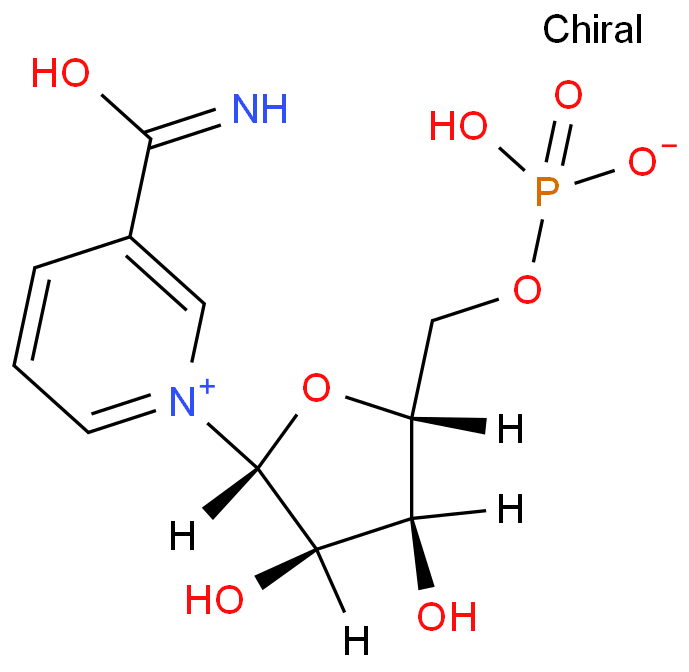
The rapid commercialization of NMN has attracted a growing number of suppliers worldwide, but not all materials entering the global B2B market meet pharmaceutical-grade expectations. One of the most common fraud patterns observed in bulk ingredient trading is the intentional dilution or substitution of β-Nicotinamide Mononucleotide (β-NMN) with lower-cost vitamin B3 derivatives, including Nicotinamide (NAM) and Nicotinic Acid (NA).
While these compounds share structural similarities, they differ significantly in molecular weight, pharmacological functionality, and analytical fingerprints. FT-IR analysis remains one of the fastest screening tools for identifying suspicious raw materials. Authentic β-NMN exhibits characteristic phosphate-group absorption bands around 1240–1260 cm⁻¹ and 970–1080 cm⁻¹, whereas Nicotinamide lacks these phosphate-associated peaks. A discrepancy between FT-IR and HPLC assay data should immediately trigger further investigation.
Beyond deliberate adulteration, manufacturing route selection introduces additional quality risks. Chemical synthesis processes may leave trace residues of reactive reagents and organic solvents, including phosphorus oxychloride (POCl₃), acetonitrile, methanol, or dimethylformamide. Without validated purification procedures, these contaminants can accumulate across production batches and create regulatory exposure during international audits.
Enzymatic synthesis is generally considered cleaner and more sustainable; however, incomplete downstream purification may introduce a different class of impurities. Residual host-cell proteins, microbial DNA fragments, and endotoxins derived from fermentation organisms can severely compromise product consistency. Recent analytical reviews have highlighted the increasing need for advanced impurity profiling as enzymatic NMN production scales industrially. Modern biosynthetic systems can achieve production titers of approximately 40–46 g/L, but higher productivity must be matched by equally rigorous purification controls.
Among all microbiological contaminants, endotoxins represent one of the most underestimated procurement risks. Endotoxins are lipopolysaccharides originating from Gram-negative bacterial cell walls and cannot be detected through standard HPLC purity testing. For high-quality NMN ingredients intended for premium nutraceutical formulations, many quality teams adopt internal specifications requiring endotoxin levels below 2.0 EU/mg, verified through Limulus Amebocyte Lysate (LAL) testing. Failure to control endotoxins can result in batch instability, formulation incompatibility, and elevated regulatory scrutiny.
Within the global nutraceutical and pharmaceutical ingredient supply chain, the most widely accepted industrial specification for NMN is API-grade β-Nicotinamide Mononucleotide with a minimum assay of ≥99.0%, supplied as a white to off-white crystalline lyophilized powder. Industry surveys and commercial specification sheets consistently identify ≥99% HPLC purity as the baseline benchmark for premium-grade NMN materials.
For procurement managers drafting purchase specifications, assay values alone are insufficient. A complete quality specification should define both chemical identity and physicochemical performance characteristics that directly influence formulation stability and shelf life.
An often-overlooked parameter is aqueous stability. For a 1% NMN solution, the recommended pH range should remain between 3.0 and 4.5. Deviations beyond this range may accelerate hydrolysis and degradation pathways, particularly in beverage systems, stick packs, and powdered drink mixes. Maintaining a controlled pH profile improves long-term potency retention and reduces the risk of NAD+ precursor degradation during storage.
"The future of NMN commercialization depends not only on production yield but on standardization of quality attributes and analytical verification across global supply chains."— Authors, Journal of Food Composition and Analysis, 2026
A manufacturer-issued Certificate of Analysis (COA) is an important quality document, but it cannot independently satisfy the compliance expectations of multinational nutraceutical brands. Internal laboratories may face risks associated with instrument calibration drift, sampling bias, or batch mix-ups. Consequently, global procurement teams increasingly require third-party verification to establish objective quality assurance and allocate liability across the supply chain.
Industry best practices require independent testing laboratories operating under ISO/IEC 17025 accreditation. Such laboratories provide traceable analytical procedures, documented uncertainty measurements, and validated quality management systems. Independent batch testing also strengthens legal defensibility in the event of consumer complaints or regulatory investigations.
For high-value NMN procurement, third-party testing should include the following analytical framework:
Recent analytical research has further emphasized the importance of stereospecific testing because α-NMN and β-NMN isomers can coexist in commercial materials. Advanced LC-MS/MS methods now enable baseline separation and quantification of these isomers, reducing the risk of misidentification and ensuring authenticity verification.
"Modern NMN authentication requires orthogonal analytical confirmation. HPLC alone is no longer sufficient where stereochemical integrity and supply-chain traceability are critical."— Dr. Analytical Science Team, Food Quality and Safety, 2025/2026
Expert Commentary: A growing compliance trend in 2026 is the migration from single-method testing toward orthogonal verification. Leading supplement brands increasingly require HPLC + NMR + LC-MS validation before approving new NMN suppliers. This approach dramatically reduces the likelihood of isomer substitution, adulteration, and analytical misidentification while providing stronger protection against future regulatory challenges and product liability claims.
Even when suppliers claim "third-party tested," procurement teams should conduct a structured audit before approving a source. Guidechem users can significantly reduce sourcing risks by prioritizing suppliers that publicly disclose independent laboratory reports and maintain transparent batch traceability records.
When reviewing a third-party laboratory report, verify the following elements:
A practical supplier qualification workflow on Guidechem should combine technical filtering with document auditing. Buyers should prioritize suppliers offering downloadable analytical packages, complete batch traceability, and independently validated reports rather than relying solely on marketing claims.
Organizations adopting this audit checklist typically achieve faster supplier qualification cycles, improved compliance outcomes, and reduced procurement risk during international product registrations.
FAQs
Q1: What purity level is considered acceptable for industrial NMN procurement?
For API-grade and premium nutraceutical applications, the industry benchmark is ≥99.0% β-NMN purity verified by HPLC, supported by structural confirmation using NMR and LC-MS.
Q2: Why is endotoxin testing important if purity already exceeds 99%?
Purity testing measures chemical composition, whereas endotoxin testing evaluates biological contamination. A material can achieve 99% purity yet still fail microbiological safety requirements.
Q3: Can a supplier's internal COA replace third-party testing?
No. Independent ISO/IEC 17025-accredited testing provides objective verification and significantly strengthens supply-chain compliance and legal defensibility.
Q4: Which analytical methods are considered gold standards for NMN verification?
The most widely accepted combination is HPLC-DAD for assay, ¹H-NMR for structural confirmation, LC-MS/MS for molecular identification, ICP-MS for heavy metals, and LAL testing for endotoxins.
References
[1] Zhang Y. et al. Unraveling Nicotinamide Mononucleotide (NMN): A Critical Review of Health Implications, Synthesis Pathways, and Analytical Techniques. Journal of Food Composition and Analysis, 2026, Volume 152, Article 109027.
[2] Wang X. et al. Aqueous LC-MS/MS Quantification of α-/β-Nicotinamide Mononucleotide in Dietary Supplements Using a Pentabromophenyl Column. Analytica Chimica Acta, 2026, Volume 1386, Article 345027.
[3] Food Quality and Safety. Quality Evaluation of NMN Produced via Different Synthesis Methods: A Multi-Technique Analysis Using NMR, IR, GC-TCD, and HPLC-UV. Oxford Academic, 2025/2026.
[4] Wang S. et al. Green Manufacturing Synthesis of Nicotinamide Mononucleotide: Pathways, Catalysts, and Prospects. Bioorganic Chemistry, 2026, Volume 174, 109683.
[5] ISO/IEC 17025:2017. General Requirements for the Competence of Testing and Calibration Laboratories.
[6] Yaku K. et al. Size Exclusion Chromatography Method for Purification of Nicotinamide Mononucleotide from Bacterial Cells. Scientific Reports, 2018.
[7] PubChem Compound Database. Nicotinamide Mononucleotide (CID 14180), National Center for Biotechnology Information.
Looking for stable, high-purity Nicotinamide Mononucleotide with comprehensive analytical documentation, third-party testing support, and global supply-chain compliance? Partner with verified manufacturers and sourcing specialists trusted by leading nutraceutical brands worldwide.
|
 |
 |
 |
 |
 EN
EN
 Agricultural News
 Food News
 Industrial News
 Cosmetic News
 Pharmaceutical News
 Science News

 2YRS
2YRS


Expert Commentary: In today's NMN market, purity alone is no longer a sufficient procurement criterion. Many buyers focus exclusively on HPLC assay values above 99%, while overlooking endotoxin testing and residual solvent analysis. From a supply-chain risk perspective, endotoxin contamination poses a greater downstream formulation threat than a 0.2–0.3% variation in assay. Procurement teams should therefore require a multi-panel quality package including HPLC, LC-MS, residual solvent GC analysis, heavy metal screening, and LAL endotoxin testing before approving any commercial supplier.