-
We detected your language preference as English. Would you like to switch to the English version for a better experience?
Switch to English
Stay here


Alpha vs Beta Nicotinamide Mononucleotide (NMN) has become a critical quality-control topic for formulation developers, contract manufacturers, and nutraceutical brands. This technical review clarifies NMN’s position within the vitamin B3 family, compares NMN with niacin and nicotinamide through quantitative NAD+ biosynthesis pathways, and explains why β-NMN stereochemical purity has emerged as a decisive purchasing criterion in 2026.

One of the most common misconceptions in the nutraceutical and longevity sectors is the assumption that Nicotinamide Mononucleotide (NMN, CAS 1094-61-7) is simply another form of Vitamin B3. From a biochemical perspective, this classification is incomplete.
Traditional Vitamin B3 refers primarily to niacin (nicotinic acid, CAS 59-67-6) and nicotinamide (niacinamide, CAS 98-92-0). NMN is a downstream phosphorylated nucleotide intermediate generated when nicotinamide combines with phosphoribosyl pyrophosphate (PRPP) through the NAMPT-mediated salvage pathway. Therefore, NMN should be considered a bioactive NAD+ precursor rather than a classical free vitamin.
This distinction becomes commercially important because niacin and NMN exhibit fundamentally different pharmacokinetic behaviors. Niacin must first activate the G-protein-coupled receptor GPR109A. Clinical literature reports that flushing can occur at oral doses as low as 50–100 mg due to prostaglandin-mediated vasodilation. In contrast, NMN does not directly activate GPR109A, explaining its superior tolerability profile in high-dose formulations. This difference has become a major driver of premium positioning in advanced healthy-aging products.
Although both niacin and NMN ultimately contribute to NAD+ biosynthesis, their metabolic routes differ substantially.
Niacin enters the Preiss-Handler pathway and requires multiple enzymatic conversions involving NAPRT, NMNAT, and NADS before generating NAD+. Each reaction consumes metabolic resources and introduces potential rate limitations.
NMN enters much closer to the endpoint. Once intracellularly available, NMN requires only NMNAT-mediated adenylation to produce NAD+. This biochemical shortcut explains why NMN has become attractive in premium formulations targeting mitochondrial bioenergetics and healthy aging.
"The major unwanted effect of pharmacologically active nicotinic acid remains flushing, which can appear even at relatively low oral doses."
— Nicholas B. Pike, Journal of Clinical Investigation
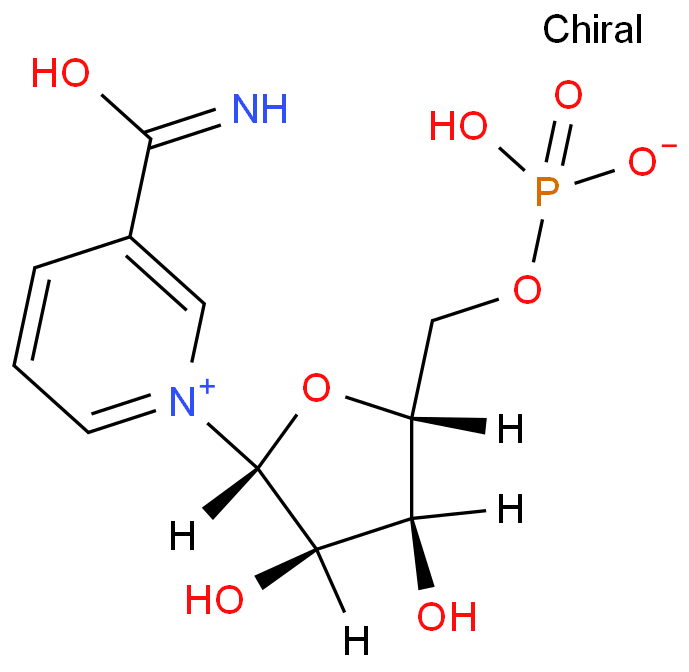
Nicotinamide consists primarily of a pyridine carboxamide scaffold with a molecular weight of 122.12 g/mol. NMN contains this same nicotinamide moiety but additionally incorporates a ribose sugar and a phosphate group, increasing molecular weight to 334.22 g/mol.
The most important metabolic consequence is the NAMPT bottleneck. Nicotinamide must first be converted into NMN through NAMPT, which is widely recognized as the rate-limiting enzyme of the NAD salvage pathway. Aging, inflammation, and metabolic dysfunction are associated with reduced NAMPT activity.
By supplying NMN directly, formulators effectively bypass this metabolic restriction. This has become one of the strongest scientific arguments supporting NMN-based formulations in aging-related applications.
An additional concern involves feedback inhibition. High intracellular nicotinamide concentrations can inhibit sirtuin enzymes, potentially reducing deacetylation activity. NMN does not exert this inhibitory effect and instead supports NAD+-dependent sirtuin activation through substrate replenishment.
The Chiral Purity Frontier: Structural Disruption and the Alpha vs Beta Isomeric Trap
The greatest quality-control challenge in NMN procurement is no longer overall purity but stereochemical purity.
NMN exists as two anomeric configurations at the C1 glycosidic carbon: α-NMN and β-NMN. The naturally occurring and biologically active form is β-NMN. Human NMNAT enzymes and transport systems recognize this specific stereochemical arrangement with high selectivity.
In β-NMN, the nicotinamide moiety and phosphate-bearing ribose structure adopt the spatial orientation required for efficient enzymatic conversion into NAD+. By contrast, α-NMN exhibits a different glycosidic configuration and is generally considered a metabolically inactive or severely impaired isomer.
From a sourcing perspective, chemical synthesis routes may generate detectable α-NMN impurities if stereoselective control is incomplete. Enzymatic manufacturing processes generally demonstrate superior stereochemical specificity and produce substantially higher β-isomer purity.
A critical procurement risk is the "99% purity illusion." Conventional HPLC methods frequently report total NMN purity without distinguishing between α- and β-isomers. Consequently, a material labeled as ≥99% NMN may still contain unacceptable levels of α-NMN.
For pharmaceutical-grade and premium nutraceutical applications, procurement contracts should explicitly require:
Expert Commentary: According to Dr. Shin-ichiro Imai, a pioneer in NAD biology research, the future competitiveness of NAD precursor ingredients will increasingly depend on molecular quality rather than label claims alone. For B2B buyers, the most important purchasing question in 2026 is no longer "What is the total purity?" but rather "What percentage is biologically active β-NMN?" Companies that fail to audit stereochemical purity risk paying premium prices for material with substantially reduced biological utility.
FAQs
Q1: Is NMN officially considered Vitamin B3?
No. NMN is best classified as a phosphorylated nucleotide derivative and an NAD+ biosynthetic intermediate derived from Vitamin B3 metabolism rather than a classical vitamin itself.
Q2: Why does niacin cause flushing while NMN generally does not?
Niacin activates the GPR109A receptor, triggering prostaglandin-mediated vasodilation. NMN bypasses this receptor mechanism and therefore exhibits significantly lower flushing potential.
Q3: Why is β-NMN purity important?
Only β-NMN efficiently interacts with human NMNAT enzymes and NAD+ biosynthetic machinery. α-NMN is considered an undesirable stereochemical impurity that can reduce effective biological activity.
Q4: What analytical method should buyers require?
Chiral stationary-phase HPLC combined with specific optical rotation testing remains the preferred approach for verifying β-NMN stereochemical purity in commercial supply chains.
References
[1]. Pike NB. Flushing out the role of GPR109A (HM74A) in the clinical efficacy of nicotinic acid. Journal of Clinical Investigation. 2005;115(12):3400–3403.
[2]. Hanson J, et al. GPR109A (PUMA-G/HM74A) mediates nicotinic acid-induced flushing. Journal of Clinical Investigation. 2005;115(12):3634–3640.
[3]. Maccubbin D, et al. The mechanism and mitigation of niacin-induced flushing. International Journal of Clinical Practice. 2010;64(10):1369–1377.
[4]. Chen F, et al. Effects of Nicotinamide Mononucleotide on Glucose and Lipid Metabolism in Adults: A Systematic Review and Meta-analysis of Randomized Controlled Trials. Current Diabetes Reports. 2024.
[5]. Imai SI, Guarente L. NAD+ and sirtuins in aging and disease. Trends in Cell Biology. Multiple editions and updates.
[6]. CAS Registry: Nicotinamide Mononucleotide (CAS 1094-61-7); Nicotinamide (CAS 98-92-0); Nicotinic Acid (CAS 59-67-6).
[7]. United States Pharmacopeia (USP) General Chapter <621> Chromatography; Chiral HPLC analytical guidance.
[8]. ISO 17025:2017. General requirements for the competence of testing and calibration laboratories.
Looking for high-purity β-Nicotinamide Mononucleotide with verified stereochemical identity, full batch traceability, and regulatory documentation support? Discover why leading global nutraceutical and healthy-aging brands rely on premium-grade β-NMN supply solutions.
 |
|
 |
 |
 |
 EN
EN
 Agricultural News
 Food News
 Industrial News
 Cosmetic News
 Pharmaceutical News
 Science News

 2YRS
2YRS


Expert Commentary: Dr. Charles Brenner, a leading NAD metabolism researcher, has repeatedly emphasized that NAD precursors should not be treated as interchangeable vitamin ingredients. For formulation developers, the critical evaluation criterion is not merely precursor identity but the efficiency of conversion into intracellular NAD+ pools. As the longevity ingredient market matures in 2026, brands capable of demonstrating mechanistic differentiation rather than generic “Vitamin B3” claims are expected to command significantly higher market premiums.