-
We detected your language preference as English. Would you like to switch to the English version for a better experience?
Switch to English
Stay here


Ask a design engineer whether to specify nylon 6 or nylon 66 and you will rarely get a short answer. Both are workhorse polyamides with similar chemistry, similar mechanical profiles on a data sheet, and overlapping price ranges — yet the wrong choice can double your scrap rate, shorten service life in an under-hood environment, or blow up a molding cycle time. This guide expands that selection framework into a practical engineering reference for automotive, electrical, film, fiber and industrial programs.
| Function | Target Applications | Key Specifications | Compliance Status |
|---|---|---|---|
| Nylon 6 (PA6) — general-purpose workhorse resin favoring toughness, fatigue resistance and processability | Film and flexible packaging, carpet and textile fiber, gears, bearings, fasteners, general industrial parts, cable ties | Melting point ~220 °C; melt processing 230–260 °C; mold shrinkage ~1.0–1.5% (unfilled); excellent surface finish; lower monomer cost | ISO 1874 grades; UL 94 V-2 to V-0 (with FR packages); FDA 21 CFR 177.1500 food-contact grades available; RoHS/REACH compliant grades |
| Nylon 66 (PA66) — higher-heat, higher-stiffness resin for demanding structural and electrical duty | Automotive under-hood components (intake manifolds, connectors, radiator end tanks), electrical connectors, industrial parts | Melting point ~255–265 °C; melt processing 270–295 °C; mold shrinkage ~1.5–2.0% (unfilled); higher heat deflection and creep resistance | UL 94 V-0 at thin wall (FR grades); UL 746B RTI ratings up to ~130–150 °C; FDA 21 CFR 177.1500 grades; RoHS/REACH compliant grades |
Both resins are aliphatic polyamides built around the amide linkage, and it is that amide group — with its hydrogen-bond donor N–H and acceptor carbonyl — that gives the nylon family its strength. Hydrogen bonds between adjacent chains act as physical cross-links, while moisture absorbed by those same amide groups acts as an internal plasticizer. The practical difference between nylon 6 and nylon 66 comes down to chain architecture and symmetry: how many methylene groups separate the amide groups, and how regularly those groups repeat along the chain.
Nylon 6 is produced by the hydrolytic ring-opening polymerization of caprolactam (CAS 105-60-2), a seven-membered cyclic amide derived historically from cyclohexane. Water opens a small fraction of the lactam rings to aminocaproic acid, which then initiates chain growth by stepwise addition of further caprolactam units at 250–270 °C under pressure. Because every repeat unit is identical, the polymer is technically a homopolyamide designated PA6.
The polymerization is an equilibrium reaction, which is why commercial nylon 6 typically retains 1–2% residual monomer and oligomers that are removed (or deliberately left in film and fiber grades, where they act as plasticizers). This monomer economics matters to procurement teams: caprolactam is a large-volume commodity chemical, and its price tracks benzene/cyclohexane markets, which historically keeps PA6 resin cheaper than PA66.
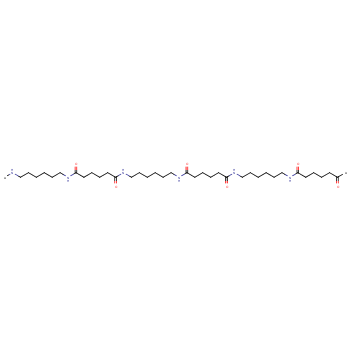
Nylon 66 is made by reacting hexamethylenediamine (CAS 124-09-4) with adipic acid (CAS 124-04-9). The two monomers are first combined in equimolar proportion as the crystalline "66 salt," which locks in the exact 1:1 stoichiometry that high molecular weight step-growth polymerization demands. The salt solution is concentrated and polymerized under pressure, then finish-melt-polymerized at ~275–285 °C with water removed under vacuum.
Because nylon 66 repeats every twelve atoms with amide groups at symmetrical positions, adjacent chains can pack into a more regular crystalline lattice than nylon 6. That slightly higher crystallinity and better interchain alignment translate directly into the properties that drive nylon 66 selection: a melting point roughly 40 °C higher, better creep resistance under sustained load, and better retention of stiffness at elevated temperature — the exact attributes needed for under-hood and electrical-connector duty.
Both polyamides are hygroscopic. At 50% relative humidity nylon 6 equilibrates near 2.5–3.0% moisture and nylon 66 near 2.0–2.5%; at saturation in water both can hold substantially more. Absorbed water hydrogen-bonds to the amide groups, disrupting chain-to-chain hydrogen bonding — so tensile strength and modulus drop while elongation and impact strength rise from the "dry as molded" (DAM) values printed on data sheets. For a deeper treatment of conditioned-vs-dry property shifts, see our companion article on dry versus conditioned polyamide properties. For selection purposes the key point is this: nylon 6 absorbs moisture slightly faster and slightly more than nylon 66, so dimensionally critical parts in humid service favor PA66 by a small margin.
Neither resin is bought as a single material — both are purchased as grade families, and selection happens twice: first nylon 6 versus nylon 66 at the base-polymer level, then the right modifier package within that family. The main commercial classes are shared by both polymers.
Pure PA6 and PA66 with heat stabilizers. These deliver maximum toughness and elongation, and they are the standard choice for living hinges, snap fits, fasteners, cable ties and machined stock shapes. Nylon 6 unfilled grades generally offer slightly better impact resistance and lower mold shrinkage; nylon 66 unfilled grades offer better creep performance at temperature. Limitations: low stiffness, high moisture-driven dimensional change, and no intrinsic flame retardancy (typically UL 94 HB or V-2 at best).
Glass fiber reinforcement is the single most common modification and largely dominates under-hood and connector selection. At 30% glass (PA6-GF30, PA66-GF30), tensile strength roughly doubles, heat deflection temperature (HDT) rises dramatically — in nylon 66 it can approach 250 °C at 1.8 MPa, close to the crystalline melting point — and mold shrinkage falls to roughly 0.2–0.8%. The trade-offs are brittleness, abrasive wear on machine and tooling, anisotropic shrinkage (warping risk), and loss of the smooth surface finish that unfilled nylon is known for. A glass-fiber-reinforced polyamide should always be specified with the fiber percentage and any coupling package, because "30% GF" from two suppliers can behave very differently in weld-line strength.
Rubber-toughened nylons (typically with maleic-anhydride-grafted elastomers) trade some stiffness and HDT for a large gain in notched impact strength, especially in the cold, dry state. These grades are used for clips, brackets, sporting goods, power-tool housings and cold-climate industrial components. Both PA6 and PA66 toughened grades exist; PA6 versions are generally preferred where low-temperature impact is the dominant requirement.
Halogenated (legacy) and halogen-free phosphorus-based FR packages bring both resins to UL 94 V-0, often at wall thicknesses down to 0.4 mm. Electrical connector and bobbin design lives in this class. FR nylon 66 dominates thin-wall connectors because its higher thermal margin survives surface-mount reflow and soldering environments; FR nylon 6 competes on cost where thermal exposure is milder. Limitations: FR additives can plate out on tooling, depress impact strength, and complicate recycling streams.
Long-term heat aging (LTHA) packages — typically copper-based antioxidant systems — protect the polymer against thermal-oxidative embrittlement and underpin the UL 746B Relative Temperature Index (RTI) ratings that automotive engineers specify for 3,000+ hour under-hood exposure. Other specialty families include nucleated fast-cycle grades (which cut injection cycle time substantially), low-friction/internally lubricated bearing grades, and blow-film and fiber extrusion grades with controlled residual monomer content.
The matrix below is the short version of the selection decision: it places the two nylons against the engineering thermoplastics most often on the same shortlist, using the parameters that actually drive the choice.
| Material (CAS) | Melting Point | Moisture Uptake / Stability | Processing Window | Sweet-Spot Applications |
|---|---|---|---|---|
| Nylon 6 (PA6) — CAS 25038-54-4 | ~220 °C | High (up to ~9% at saturation); properties change noticeably as moisture is absorbed | Melt 230–260 °C; wide window; mold shrinkage ~1.0–1.5% unfilled / 0.3–0.7% GF30 | Film, carpet/textile fiber, gears, bearings, general industrial parts, cost-sensitive structural parts |
| Nylon 66 (PA66) — CAS 32131-17-2 | ~255–265 °C | High but slightly lower and slower than PA6; better creep and heat resistance | Melt 270–295 °C; narrower window; mold shrinkage ~1.5–2.0% unfilled / 0.3–0.8% GF30 | Under-hood automotive, electrical connectors, high-temperature structural and long-term-heat parts |
| Nylon 46 (PA46) — CAS 50327-22-5 | ~295 °C | Higher moisture uptake than PA66; excellent fatigue and wear at temperature | Melt 295–320 °C; tight drying discipline; low crystallization lag allows very fast cycling | Connectors exposed to reflow soldering, chain tensioners, high-temperature gears |
| PBT (polybutylene terephthalate) — CAS 24967-26-6 | ~225 °C | Very low moisture absorption; excellent dimensional stability and electricals | Melt 240–260 °C; low shrinkage, fast crystallization | Connectors and coil bobbins in humid environments where dimensional stability beats toughness |
| POM (acetal) — CAS 9002-81-7 | ~165–175 °C | Very low; excellent lubricity, fatigue and creep at moderate temperature | Melt 190–210 °C; thermally sensitive (formaldehyde release if overheated) | Precision gears, latches, fuel-system and plumbing components |
| PET (polyethylene terephthalate) — CAS 25038-59-9 | ~250–260 °C | Very low moisture uptake; excellent stiffness and barrier properties | Melt 265–285 °C; requires hot molds to crystallize in injection molding | Barrier film layers, beverage bottles, electrical and automotive parts needing low warp |
| PP (polypropylene) — CAS 9003-07-0 | ~160–165 °C | None (non-hygroscopic); poor low-temperature impact, degrades under UV and heat | Melt 200–250 °C; cheapest and easiest to process | Non-structural, temperature-mild housings, packaging, textiles where cost rules |
This is the heart of the webinar's message: pick the resin the way a program team does — application duty first, processing reality second, cost of ownership third.
| Application Segment | Recommended Base Resin | Why |
|---|---|---|
| Automotive under-hood (intake manifolds, engine covers, radiator end tanks, cooling fans, fuel lines) | Nylon 66, typically GF30–GF35, heat-stabilized (and PA6 for cost-reduced or lower-temperature zones) | Continuous service to 120–150 °C plus transient spikes; PA66's higher melting point, creep resistance and UL 746B RTI ratings carry sustained thermal load. PA6-GF is increasingly used in turbocharged-engine zones redesigned around lower continuous temperatures, where its cost advantage wins. |
| Electrical connectors, bobbins, breakers | Nylon 66, FR V-0, GF-reinforced for thin walls | Reflow soldering and terminal-insertion heat demand a higher melting point; PA66 maintains CTI and dielectric performance in thin sections. PA6-FR is chosen for cost-sensitive connectors with milder thermal exposure. |
| Flexible and rigid packaging film | Nylon 6 (BOPA and cast film); PA6/66 copolymer for deep-draw thermoforming | Lower melting point eases coextrusion with PE and ionomers; outstanding oxygen barrier, puncture and flex-crack resistance; higher moisture uptake is tolerable in packaging. PA66's cost premium buys nothing here. |
| Fiber and textile (carpet, apparel, industrial yarn, tire cord) | Nylon 6 (carpet/textile staple and filament); PA66 for tire cord and high-tenacity yarn | PA6 dyes more easily with a broader color palette and better elastic recovery for carpet; PA66 fiber's higher melting point and abrasion resistance suit tire reinforcement and premium technical yarns. |
| Industrial machinery (gears, bearings, rollers, sliders, pump parts) | Nylon 6 (cast or extruded stock), PA66 where hot service or creep under load dominates | PA6's fatigue resistance, damping and lubricity excel in cyclic-duty gears; cast PA6 enables very large parts. PA66 holds tight tolerances better under sustained load and heat. |
The two resins are close enough that molders switch between them, but the windows differ enough to change cycle times, tooling wear and scrap:
The webinar's cost message deserves emphasis: the invoice price of the pellet is only the first of four cost lines.
| Cost Element | Nylon 6 | Nylon 66 |
|---|---|---|
| Resin price (typical, GF30 stabilized grades) | Lower — single-commodity caprolactam feedstock, historically 10–20% below PA66 | Higher — two monomers (adipic acid + hexamethylenediamine) and salt-stage chemistry add cost |
| Processing energy | Lower melt temperature = less energy per kg melted; often shorter cycle time | ~30–40 °C hotter melt and often hotter molds = higher energy per part |
| Tooling and machine wear | Comparable in unfilled grades; both equally abrasive when glass-filled | Comparable; higher melt temperatures demand more from heater bands, screws and check rings |
| In-service durability / warranty | Excellent up to ~100–120 °C continuous; replacing PA66 in redesigned, cooler zones | Superior long-term heat aging and creep resistance — lower failure/warranty risk in hot zones, longer service life |
Both resins enjoy mature regulatory acceptance worldwide, but the specific rating you must cite depends on the end use — flame ratings for electrical, RTI for automotive thermal life, and food-contact compliance for film. The table below summarizes the key statuses.
| Jurisdiction / Body | Standard or Regulation | Status for Nylon 6 / Nylon 66 |
|---|---|---|
| United States — UL (product safety) | UL 94 (flammability); UL 746A/746B (short- and long-term properties, RTI) | Unfilled grades typically HB to V-2; FR grades reach V-0 at 0.4–1.5 mm. Heat-stabilized PA66 grades carry RTI (electrical/mechanical) commonly up to ~125–150 °C; PA6 grades generally ~105–130 °C. |
| United States — FDA (food contact) | 21 CFR 177.1500 (nylon resins); 21 CFR 177.1520 for olefin layers | Both PA6 and PA66 listed for food-contact use, subject to extractives limits and grade-specific FDA compliance letters; widely used in BOPA film and meat/cheese packaging. |
| European Union | Regulation (EC) No 1935/2004 and Regulation (EU) No 10/2011 (food contact plastics); REACH (EC) No 1907/2006; RoHS 2011/65/EU | Polyamide grades compliant with EU food-contact migration limits are commercial; both resins are REACH-registered as polymers (exempt from registration, monomers registered); RoHS-compliant (including halogen-free FR) grades available for electronics. |
| International — ISO | ISO 1874-1/-2 (PA molding materials designation and testing); ISO 527 (tensile); ISO 75 (HDT); ISO 62 (water absorption) | PA6 and PA66 are standardized families under ISO 1874 with formal grade designation codes; datasheets for global programs increasingly quote ISO methods alongside ASTM. |
| United States — ASTM | ASTM D638 (tensile); ASTM D648 (deflection temperature); ASTM D570 (water absorption); ASTM D2863 (LOI) | Standard property basis for North American datasheets; DAM versus 50% RH conditioned values both reported per ASTM practice. |
| Automotive | FMVSS 302 (interior flammability); OEM specs (e.g., GMW, WSK, ES-M material standards); US CAR / CATARC protocols | Both resins meet FMVSS 302 in interior grades; heat-stabilized PA6/PA66 GF grades are mainstays of OEM powertrain and chassis material specifications. |
| Electrical / IEC | IEC 60112 (comparative tracking index, CTI); IEC 60695 (fire hazard) | FR PA6 and PA66 grades achieve CTI 400–600 in halogen-free formulations, supporting miniaturized connector design at low wall thickness. |
Nylon 66 remains the default for classic under-hood duty — intake manifolds, radiator end tanks, engine covers and turbo-adjacent parts — because its ~40 °C higher melting point, superior creep resistance and higher UL 746B RTI ratings carry continuous service at 120–150 °C with transient spikes. However, modern engine compartments redesigned around lower continuous temperatures have opened large share for PA6-GF, which delivers comparable stiffness at 10–20% lower resin cost and lower processing energy. The correct decision rule is duty temperature: map the component's actual thermal environment over the vehicle life, then choose the cheapest resin that meets it with margin. Programs that skip the thermal mapping either overpay (PA66 where PA6 suffices) or court warranty claims (the reverse).
Nylon 6 melts at ~220 °C and is typically processed at 230–260 °C with mold temperatures of 60–90 °C; nylon 66 melts at ~255–265 °C and needs 270–295 °C melt with 70–110 °C molds. The practical consequences: PA66 costs more energy per kilogram melted, degrades faster if held molten at the top of its range, and demands more careful residence-time management, while PA6 usually cycles faster and is more forgiving. Both must be dried to below ~0.1–0.2% moisture — drying failures in either resin cause hydrolysis and permanent toughness loss, not just cosmetic splay. Mold shrinkage also differs: unfilled PA66 at ~1.5–2.0% shrinks more than PA6 at ~1.0–1.5%, so a tool cut for one resin will not run on-spec parts in the other without adjustment.
Because "performance" is application-specific. In biaxially oriented and cast film, nylon 6's lower melting point allows easier coextrusion with polyethylene and sealant layers, and its balance of oxygen barrier, puncture resistance and flex-crack endurance is excellent — attributes PA66 does not improve enough to justify its price premium. In carpet and textile fiber, nylon 6 dyes more readily with a wider color palette, has better elastic recovery under foot traffic, and is more economical to spin. Nylon 66 fiber does retain the edge where abrasion resistance and a higher softening point matter, such as tire cord and high-tenacity technical yarns. The lesson is the core of material selection: buy the properties your application needs, not the biggest datasheet numbers.
They are not drop-in interchangeable: melt temperature, shrinkage, crystallization behavior and moisture uptake all differ enough that a tool, drying setup or process validated for one will generally not run the other at first-pass quality. Physical blends and copolymers do exist commercially — PA6/66 copolymers deliberately disrupt crystallinity to lower the melting point and widen the processing window, which is why they are used in deep-draw film and extrusion-coating applications requiring lower sealing temperatures. If you must substitute resins mid-program, treat it as a requalification: run a molding trial, re-verify dimensions against the conditioned tolerance band, and reconfirm flame/RTI ratings for the specific replacement grade. Also note both resins are recyclable via mechanical regrind (subject to moisture and contamination control), and PA6 additionally has an established depolymerization route back to caprolactam, which increasingly matters in TCO and sustainability assessments.
 |
 |
|
 EN
EN
 Agricultural News
 Food News
 Industrial News
 Cosmetic News
 Pharmaceutical News
 Science News

 1YR
1YR


