
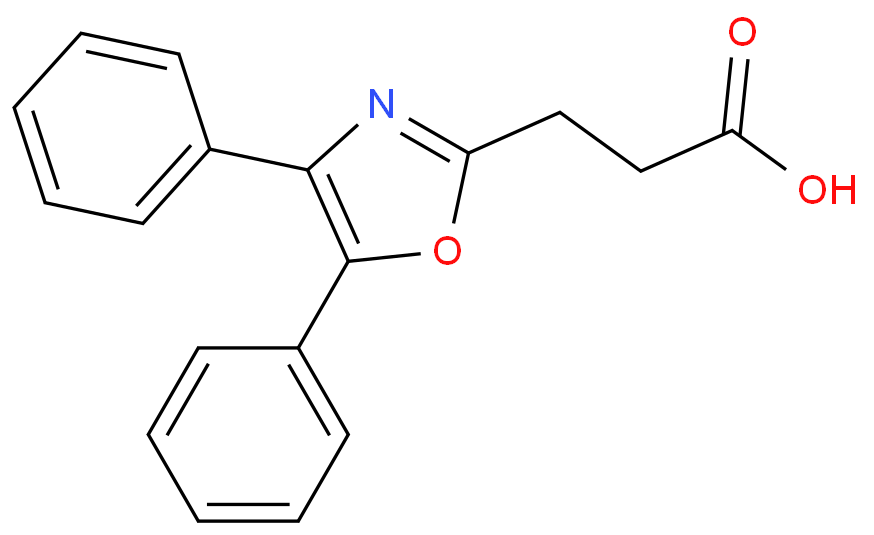
Numerous studies have evaluated the two propionic acid derivative NSAIDs, oxaprozin and ibuprofen. Introduced in the United States in 1974, ibuprofen is likely the most widely used propionic acid derivative, with anti-inflammatory effects similar to aspirin but with less gastrointestinal toxicity. Like aspirin, ibuprofen must be taken multiple times a day due to its plasma half-life of about 2 hours. Oxaprozin (4,5-diphenyl-2-oxazolepropionic acid) is a newer NSAID with a plasma half-life of approximately 50 hours, allowing for once or twice daily dosing. In several multicenter clinical trials, oxaprozin has been shown to be at least as effective as aspirin in treating rheumatoid arthritis (RA), with better tolerability.
Common side effects of oxaprozin include constipation, diarrhea, nausea, rash, and dyspepsia. Oxaprozin may trigger allergic reactions, including a specific type called DRESS (Drug Reaction with Eosinophilia and Systemic Symptoms). DRESS, also known as multi-organ hypersensitivity reaction, can affect multiple organ systems, including the liver, kidneys, and heart. Oxaprozin may increase the risk of heart attack or stroke, potentially leading to death. This risk is elevated in individuals with heart disease and those using the drug for extended periods or at higher doses.
Common side effects include heartburn, nausea, dyspepsia, and abdominal pain. Compared to other NSAIDs, ibuprofen may have additional side effects, such as gastrointestinal bleeding. Long-term use is associated with kidney failure, rarely with liver failure, and can exacerbate heart failure. At low doses, it does not seem to increase the risk of heart attack; however, this risk may be present at higher doses. Ibuprofen may also worsen asthma. While its safety in early pregnancy is unclear, it appears to be harmful in late pregnancy, and thus, its use during this period is not recommended.
Comparison of Once-Daily Dose of Oxaprozin vs Multiple-Dose Ibuprofen for Treating Rheumatoid Arthritis
A 1-year multicenter, double-blind study compared the efficacy and safety of oxaprozin and ibuprofen in 159 patients with active rheumatoid arthritis (RA). Patients took 1,200 mg of oxaprozin daily or 1,200 to 1,800 mg of ibuprofen divided into four doses daily. Approximately 13% of patients in each treatment group discontinued due to adverse effects, with gastrointestinal reactions being the most common. Both treatment groups maintained the improvements observed during the second 6 months of treatment. No statistically significant difference in the incidence of specific adverse effects was observed between the groups from months 7 to 12. The study indicated that oxaprozin (1,200 mg, once daily) is as safe and effective as ibuprofen (1,200 to 1,800 mg).
Comparison of Twice-Daily Dose of Oxaprozin vs Multiple-Dose Ibuprofen for Treating Rheumatoid Arthritis
197 patients with established or classic rheumatoid arthritis (RA) participated in a 12-month, double-blind, multicenter comparison of oxaprozin (600 mg twice daily) and ibuprofen (300 mg four times daily). During the first 6 months of the study, the starting dose of ibuprofen was increased from 1,200 mg/day to 1,800 mg/day, while the oxaprozin dose remained unchanged (1,200 mg/day). At months 7 through 12. The daily dose could be increased to a maximum of 1,800 mg oxaprozin and 2,400 mg ibuprofen. In most assessments, patients in both treatment groups had comparable significant changes from baseline values for the four primary efficacy measures (observer opinion, patient opinion, number of tender joints, and number of swollen joints). Means for efficacy measures during the 6-month treatment period and median morning stiffness at the final assessment compared to baseline values were as follows:

Significant improvements in time to walk 50 feet, duration of morning stiffness, and left- and right-hand grip strength were documented in more evaluation periods in patients treated with oxaprozin than in those treated with ibuprofen (P < .05). According to observer opinion, 61% to 87% of patients in the oxaprozin group and 48% to 89% of patients in the ibuprofen group showed improvement at each visit. The most common adverse reactions in both treatment groups were gastrointestinal symptoms. The incidence of adverse reactions was similar in both groups. These results suggest that oxaprozin, at the doses administered, is comparable to ibuprofen in the long-term treatment of RA.

Extensive clinical trials have demonstrated the clinical efficacy of oxaprozin compared to placebo and/or other NSAIDs. These trials suggest that oxaprozin is equally or more effective in different pathologies compared to commonly used anti-rheumatic drugs such as aspirin, diclofenac, ibuprofen, and indomethacin at standard doses. The drug also shows good tolerability in healthy human subjects and patients with inflammatory diseases. As with other NSAIDs, mild gastrointestinal discomfort (e.g., nausea, diarrhea, constipation, and occasional vomiting) is the most common adverse event (AE) associated with oxaprozin. The daily dose of 1,200 mg can be increased to 1,800 mg/day under specific pathological conditions.
Avoid using oxaprozin with other NSAIDs, such as ibuprofen, as this significantly increases the risk of gastric bleeding. NSAIDs are widely present in over-the-counter pain relievers and cold medications. If you are unsure whether you are taking these medications, consult your healthcare provider or pharmacist.
When comparing the effects of oxaprozin and ibuprofen, it is essential to consider their pharmacological properties and differences in indications. While oxaprozin may be more effective than ibuprofen in certain cases, the specific treatment regimen should be determined based on individual health conditions and needs. Therefore, it is recommended to consult a doctor before choosing and using these medications to ensure safety and therapeutic efficacy.
[1] https://en.wikipedia.org/wiki/Ibuprofen
[2] https://www.webmd.com/drugs/2/drug-6747/oxaprozin-oral/details
[3] https://www.sciencedirect.com/topics/pharmacology-toxicology-and-pharmaceutical-science/oxaprozin
[4] Kean W F, Kean R, Buchanan W W. A critical assessment of oxaprozin clinical profile in rheumatic diseases[J]. Inflammopharmacology, 2002, 10: 241-284.
[5] Appelrouth D J, Chodock A L, Miller J L, et al. A comparison of single daily doses of oxaprozin with multiple daily doses of ibuprofen for the treatment of rheumatoid arthritis[C]//Seminars in Arthritis and Rheumatism. WB Saunders, 1986, 15(3): 54-58.
[6] Poiley J E, Spindler J S, Clarke J P, et al. Nonsteroidal antiinflammatory drug therapy in rheumatoid arthritis: a comparison of oxaprozin and ibuprofen[C]//Seminars in Arthritis and Rheumatism. WB Saunders, 1986, 15(3): 59-65.
[7] Kean W F. Oxaprozin: kinetic and dynamic profile in the treatment of pain[J]. Current medical research and opinion, 2004, 20(8): 1275-1277
 |
 |
|



 3YRS
3YRS


