EN
EN


Feeling overwhelmed by stress from work, family, or studies? Stress can lead to adverse physical reactions, including joint pain. If you're experiencing joint pain or other discomforts, paeoniflorin might be able to help you.
Paeoniflorin is a natural compound derived from the roots of Paeonia lactiflora, commonly known as white peony, which contains abundant flavonoids and phenolic compounds. Paeoniflorin benefits: as a natural analgesic, it can alleviate pain by activating opioid receptors in the central nervous system. Additionally, paeoniflorin has various other effects such as anti-anxiety, antidepressant, and anti-allergic properties, which can relieve stress and depressive symptoms, regulate the cardiovascular system, prevent inflammatory and cardiovascular diseases, and regulate the nervous system.
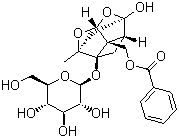
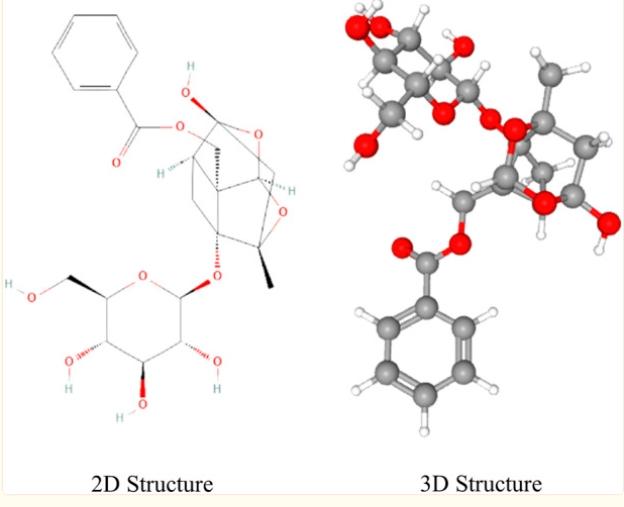
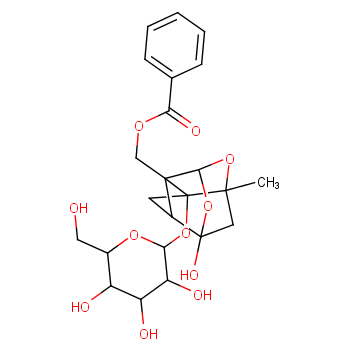
Paeoniflorin (C23H28O11, PubChem CID: 442534), chemically known as 5beta-[(benzoyloxy)methyl] -5-hydroxy-2-methyl-2,5-dihydrofuran-2-methyl-4-(3-methyl-2-butenyl)-2H-pyran-2-one, is a monoterpene glucoside found in the roots of plants in the Paeonia L. family. Paeoniflorin is primarily derived from plants in the Paeonia family (a monotypic family). In 1963, paeoniflorin was first isolated from the roots of white peony and named by Shibata and Nakahara (1963). Further research revealed that the basic skeleton of paeoniflorin is a monoterpene derivative, stable in chemical properties, and a water-soluble monoterpene glucoside. As shown in the diagram below, the β-d-pyran glucoside, benzoyl group, and semialdehyde moiety are connected to the skeleton, forming the complete chemical structure of paeoniflorin.
Studies have shown that paeoniflorin can regulate glucose and lipid metabolism, exhibit anti-inflammatory, antioxidative stress, and anti-atherosclerosis activities, improve cardiac function, inhibit cardiac remodeling, making it a promising candidate for treating cardiovascular diseases and protecting the cardiovascular system.
Paeoniflorin has significant anti-inflammatory effects and is valuable in the treatment of inflammatory diseases. It has been reported that paeoniflorin can downregulate the expression levels of inflammatory factors by inhibiting the NF-κB signaling pathway and NLRP3 inflammasome activation, reduce the expression levels of eosinophil-related chemokines and eosinophil infiltration. Moreover, paeoniflorin can reduce the infiltration of gram-positive bacteria in the intestines, inhibit the MDA/NOD2 pathway dependent on gram-positive bacteria, thereby improving colitis symptoms. Furthermore, paeoniflorin can selectively inhibit the current action of calcium-activated chloride channel TMEM16A, further reducing NF-κB phosphorylation, thus treating acute pancreatitis.
Paeoniflorin's anti-inflammatory properties provide potential for controlling pain associated with conditions such as arthritis, helping to alleviate pain and inflammation. Additionally, by inhibiting cell apoptosis, paeoniflorin can promote the body's recovery, achieving the effect of disease treatment. With ongoing research and exploration of the mechanisms of paeoniflorin action, this traditional Chinese medicine ingredient is expected to play a greater role in disease treatment in the future.
ZHANG Y et al. found through in vivo and in vitro experiments that paeoniflorin can protect neurons by inhibiting excessive activation of astrocytes and apoptosis of neurons, upregulating the expression of neuron-specific markers NeuN, MAP-2, and B-cell lymphoma-2, and downregulating the expression of Bax. HU et al. found that JD-30, a paeoniflorin-rich active component of traditional Chinese medicine, significantly improves cognitive dysfunction induced by β-amyloid injection in lateral ventricle mice, improves spatial learning and memory in rapid aging model mice, reduces Aβ content and deposition, improves neural activity and synaptic plasticity. The study also found that paeoniflorin can affect neurotransmitters and neuronal function in the central nervous system, thus improving cognitive function. These studies suggest that paeoniflorin may play an important role in supporting cognitive health and neuroprotection.
Paeoniflorin has extensive antioxidant effects, effectively scavenging free radicals in the body, which are positive for skin health and beauty. When used in skincare, ingesting ingredients containing paeoniflorin can effectively prevent premature aging of the skin.
According to scientific literature, paeoniflorin can effectively prevent skin oxidative damage by scavenging free radicals. Additionally, it can stimulate the production of plasma fibronectin, helping to improve skin elasticity and resilience, improving skin texture and quality. Several studies have found that paeoniflorin, when applied topically, can effectively prevent skin aging, reduce the formation of wrinkles and fine lines, and increase skin moisture content, making the skin smoother and more delicate.
Neuroprotection is considered one of the mechanisms of action of antidepressants. Paeoniflorin has shown good antidepressant effects in animal depression models. In corticosterone-induced neurotoxicity in PC12 cells of rat pheochromocytoma, paeoniflorin can increase cell viability, reduce intracellular reactive oxygen species and malondialdehyde levels, and reverse the decrease in nerve growth factor levels. Paeoniflorin has neuroprotective effects on corticosterone-induced PC12 cell neurotoxicity, at least to some extent, by inhibiting oxidative stress and enhancing the regulation of NGF expression. This neuroprotective effect may be one of the pathways for paeoniflorin to resist depression.
Paeoniflorin has a certain effect on the treatment and alleviation of mood disorders. Paeoniflorin does not affect the expression of CACNA1C protein in the hippocampus but affects the CaM/CaMKII signaling pathway mediated by Cav1.2. Paeoniflorin significantly inhibits the increase in intracellular Ca2+ concentration and Cav1.2 current density induced by KCl. WANG Jingxia et al. found that paeoniflorin has good antidepressant effects in both the chronic unpredictable mild stress (CUMS) rat model and the olfactory bulbectomy-induced depression rat model. Its mechanism is related to the regulation of neurotransmitters in the brain cortex and the NO/cGMP pathway.
Post-marketing adverse reaction reports of paeoniflorin show its good safety and tolerability in patients, with fewer adverse reactions.
However, before using paeoniflorin supplements, we still need to understand the possible side effects and drug interactions. These adverse reactions include symptoms such as nausea, vomiting, bloating, mild diarrhea, and rarely rash, itching, etc. It should be particularly avoided by those who are allergic. Excessive or prolonged use can increase the frequency and severity of adverse reactions. Therefore, to ensure safe use, we should consult a doctor or pharmacist to understand and avoid potential risks.
We also need to follow the recommended dosage to ensure safe consumption. Some paeoniflorin supplements have high concentrations, and excessive use may lead to adverse reactions. When using paeoniflorin supplements, avoid concurrent use of other drugs to avoid increasing the risk of drug interactions.
In recent years, research on the potential benefits of paeoniflorin for health conditions has received increasing attention. Paeoniflorin, a natural ingredient extracted from plants of the Paeonia family, has outstanding anti-inflammatory, cardiovascular system regulating, and antioxidative properties, and is believed to have the effect of preventing inflammatory and cardiovascular diseases. These studies have played an important role in the field of modern medicine, providing new treatment ideas and solutions for many traditional health problems.
Although the benefits of paeoniflorin have been widely recognized, its safety and efficacy in practical application still need further research. In addition, comprehensive studies on the effects of paeoniflorin on different health conditions have not been fully determined. To better utilize the health benefits of paeoniflorin, more in-depth research and clinical trials are needed.
Paeoniflorin is an important active ingredient in traditional Chinese medicine, with potential benefits in many aspects, including enhancing the immune system, reducing inflammation, anti-depression, anti-arthritis, anti-thrombosis, anti-tumor, and liver protection. Additionally, paeoniflorin can improve sleep quality, alleviate pain, enhance memory, prevent cardiovascular diseases, and even promote proliferation and migration of bone marrow mesenchymal stem cells. Specifically, paeoniflorin can stimulate neuronal growth in the brain, prevent memory decline, prevent Alzheimer's disease, regulate the nervous system, help alleviate anxiety, depression, and stress. Moreover, paeoniflorin can enhance the immune system, prevent colds, flu, and other diseases, and enhance the body's resistance. However, not everyone is suitable for paeoniflorin, especially pregnant women, the elderly, those with compromised immune systems, or those using other medications. Therefore, before using paeoniflorin, it is essential to consult healthcare professionals for personalized guidance.
Here, we encourage you to explore the potential of paeoniflorin with your doctor to see if it's right for you, and together with your doctor, explore the benefits of paeoniflorin for a healthier and more vibrant life!
[1] https://www.ncbi.nlm.nih.gov/pmc/articles/PMC10267833/
[2] https://pubs.rsc.org/en/content/articlelanding/2019/ra/c8ra09060b
[3] LIU Ping, ZHAO Junchao, LI Riguang. Research Progress on Pharmacological Effects and Mechanisms of Paeoniflorin [J]. China Journal of Chinese Materia Medica, 2023, 29 (08): 84-88. DOI: 10.13862/j.cn43-1446/r.2023.08.018.
[4] MENG Shengxi, HUO Qingping. Research on the effect and mechanism of paeoniflorin on the nervous system [J]. Journal of Western Chinese Medicine, 2020, 33 (04): 150-153.
[5] WANG Bing, SUN Yi. Research Progress on the Analgesic Mechanism of Paeoniflorin [J]. World Latest Medical Information Digest, 2019, 19 (72): 239-240. DOI: 10.19613/j.cnki.1671-3141.2019.72.149.
[6] KONG Xue, SHI Dongmei. Application and Mechanism of Paeoniflorin in Dermatology [J]. Chinese Journal of Integrated Traditional and Western Medicine for Skin Diseases, 2018, 17 (05): 473-476.
 |
|
 Agricultural News
 Food News
 Industrial News
 Cosmetic News
 Pharmaceutical News
 Science News

 2YRS
2YRS