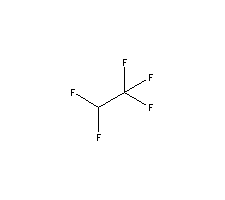
Pentafluoroethane (HFC-125) is a non-flammable gas at room temperature and pressure. It has an ozone depletion potential (ODP) of zero and a global warming potential (GWP) of 0.84, making it an ideal substitute. It is primarily used as a refrigerant; commonly employed as a blower and propellant; used in semiconductor manufacturing as an etchant for oxides; employed as a fire suppressant; and as a substitute for foam blowing agents.
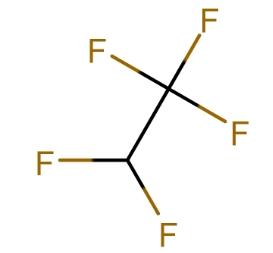
Due to its zero ODP and low GWP, Pentafluoroethane (HFC-125) is an ideal replacement in the refrigeration market, particularly in cold storage and air conditioners. Mixtures like R507, R404A, R407c, and R410, which contain this product, are ideal green refrigerants for replacing R-502 and HCFC-22. Pentafluoroethane can also serve as a substitute for Halon fire extinguishers and can replace Halon 1211 and Halon 1301 in single or mixed formulations. Due to its excellent physicochemical properties, it has become a mainstream product for replacing ODS substances.
Studies by T. Kawano and others have conducted acute, subacute, and subchronic inhalation toxicity studies, developmental toxicity research, cardiac sensitization evaluations, and mutagenicity tests on Pentafluoroethane (HFC-125). In acute studies, rats were exposed to a concentration of 800,000 ppm for four hours. Ataxic gait and abnormal breathing were observed during exposure, but not afterward. There were no deaths or other signs of toxicity. Repeated exposure of rats to a concentration of 50,000 ppm for 6 hours per day, 5 days a week, for 4 or 13 weeks had no effect on body weight, food consumption, clinical symptoms, hematology, biochemistry, urinalysis, organ weight, or tissue morphology. At concentrations of 100,000 ppm and above, dogs showed positive evidence of cardiac sensitization to intravenous epinephrine, though no effects were observed at 75,000 ppm. HFC-125 concentrations ranging from 20 to 100% (v/v) did not exhibit mutagenic activity against strains of Salmonella typhimurium and Escherichia coli under both activated and non-activated conditions. Under prolonged exposure of 48 hours at 60% concentration, chromosomal aberrations were observed in CHO cells. The biological significance of this effect is doubtful due to signs of severe toxicity. In vivo, exposure to HFC-125 concentrations up to 600,000 ppm did not induce micronuclei in mouse bone marrow, and embryotoxicity or teratogenic effects were not observed in rats or rabbits exposed to concentrations up to 50,000 ppm.
Pentafluoroethane is generally regarded as a low-toxicity substance with extremely low acute inhalation toxicity. However, high concentration exposure may trigger several health concerns.
Respiratory System: High concentration inhalation may cause symptoms such as headaches, dizziness, and drowsiness.
Respiratory Tract: Animal studies suggest Pentafluoroethane has no significant irritation effects on the respiratory tract.
Skin and Eyes: Liquid Pentafluoroethane may cause localized frostbite.
Cardiac Sensitization: At high concentrations, dogs may experience cardiac sensitization reactions.
Long-term repeated exposure studies indicate no significant toxicity in animals.
Both in vitro and in vivo experiments did not show evidence of Pentafluoroethane's genotoxicity.
Due to a lack of sufficient subchronic toxicity and genetic toxicity data, the carcinogenic potential of Pentafluoroethane cannot currently be assessed.
Animal studies suggest that Pentafluoroethane has no significant adverse effects on reproductive capacity, embryonic development, or maternal health.
General Advice: Consult a doctor and show the Safety Data Sheet (SDS) to the attending physician.
Inhalation: If inhaled, move the patient to fresh air. If breathing stops, perform artificial respiration and consult a doctor.
Skin Contact: Wash off with soap and plenty of water. Consult a doctor.
Eye Contact: Rinse thoroughly with plenty of water for at least 15 minutes and consult a doctor.
Ingestion: Never give anything by mouth to an unconscious person. Rinse mouth with water. Consult a doctor.
Most Important Symptoms/Effects, Acute and Delayed: According to ERG Guide 126 [gases - Compressed or Liquefied (Including Refrigerant Gases)], vapors may cause dizziness or suffocation without warning. Liquefied gas vapors initially tend to stay closer to the ground and spread. Contact with gas or liquefied gas may cause burns, severe injuries, and/or frostbite. Fires may produce irritating, corrosive, and/or toxic gases. (ERG, 2016)
If necessary, seek immediate medical attention and receive special treatment: Measures can be taken to reduce the risk of arrhythmias in persons poisoned by fluorocarbons. Patients should be advised to avoid strenuous exercise before hospital evaluation. At the hospital, patients can be placed in a quiet, non-threatening environment and sedated as necessary. If hypoxia is present, oxygen should be administered and metabolic abnormalities corrected. Sympathomimetic agents should be avoided. Ventricular arrhythmias are best treated with beta-blockers.
Precautions for Safe Handling: Avoid contact with skin and eyes. Avoid the formation of dust and aerosols. Avoid exposure - obtain special instructions before use. Provide appropriate exhaust ventilation in areas where dust is formed.
Conditions for Safe Storage, Including Any Incompatibilities: Store in a cool place. Keep the container tightly closed in a dry, well-ventilated area.
Eye/Face Protection: Safety glasses with side-shields conforming to EN166. Use equipment for eye protection tested and approved under appropriate government standards, such as NIOSH (US) or EN 166 (EU).
Skin Protection: Wear impervious clothing. The type of protective equipment must be selected according to the concentration and amount of the hazardous substance in the specific workplace. Gloves must be inspected prior to use. Use proper glove removal techniques to avoid skin contact with this product. Dispose of contaminated gloves according to applicable laws and good laboratory practices. Wash and dry hands. Selected protective gloves must meet the specifications of EU Directive 89/686/EEC and EN 374 standards.
Respiratory Protection: For large amounts of material, wear a dust mask.
[1]https://pubmed.ncbi.nlm.nih.gov/8835232/
[2]https://baike.baidu.com/item/%E4%BA%94%E6%B0%9F%E4%B9%99%E7%83%B7
[3]Wang Junxiang, Liu Jianpeng, Yuan Jian. Current status of research on the application of 1,1,1,2,2-pentafluoroethane [J]. Zhejiang Chemical Industry, 2011, 42 (07): 1-4.
[4]Wang Junxiang, Liu Jianpeng, Yuan Jian. Research progress in the preparation process of 1,1,1,2,2-pentafluoroethane [J]. Chemical Production and Technology, 2011, 18 (01): 10-12+7.
[5]https://pubmed.ncbi.nlm.nih.gov/10630582/
[6]https://www.guidechem.com/msds/354-33-6.html
 |
 |
|


 6YRS
6YRS