-
We detected your language preference as English. Would you like to switch to the English version for a better experience?
Switch to English
Stay here


Phytochemicals are plant compounds, a subclass of polyphenols. They naturally occur in various plant-based dietary sources such as grapes, blueberries, red wine, and some other plants. Among the notable phytochemicals, resveratrol was the first discovered and perhaps the most famous, while pterostilbene, discovered later, has shown improvements over resveratrol. Both pterostilbene and resveratrol are common ingredients in supplements and skincare products, widely believed to be beneficial to human health. However, many people may confuse the differences and efficacy between them. In this article, we will explore the structure, dosage, and efficacy of pterostilbene and resveratrol to help readers better understand the differences between these two ingredients and make informed decisions when choosing products.
Resveratrol is a phytochemical compound, a compound produced by plants. Plants are believed to use phytochemicals to defend against substances like fungi and microbes. Indeed, this is one of the reasons why resveratrol is primarily found in the skins of fruits like grapes, blueberries, and raspberries – it's part of the plant's defense system. Resveratrol has many health benefits, especially for the heart and mitochondrial function. It also promotes healthy insulin sensitivity, supports a healthy inflammatory response, and is studied for its potential in promoting cognitive function and as a key liver health supplement.
Pterostilbene (trans-3,5-dimethoxy-4-hydroxystilbene) is a stilbenoid chemically related to resveratrol, known for its antioxidant and anti-inflammatory properties. In plants, it acts as a defensive phytoalexin. Pterostilbene is found in almonds, various berries (including blueberries), grape leaves and vines, and in the heartwood of Pterocarpus marsupium. Pterostilbene may activate SIRT1, an enzyme involved in DNA repair and cellular health. Pterostilbene has anti-inflammatory properties and may help reduce chronic inflammation. Some studies suggest that pterostilbene may help improve blood sugar control.
Pterostilbene and resveratrol are both stilbenoids, a class of natural compounds with similar structures. However, some key molecular differences affect their properties.
The core structure of pterostilbene (trans-3,5-dimethoxy-4'-hydroxystilbene) consists of two phenyl rings connected by a double bond. One hydroxyl (OH) group is attached to one phenyl ring (Ring B), while two methoxy (OCH3) groups are attached to the other phenyl ring (Ring A).
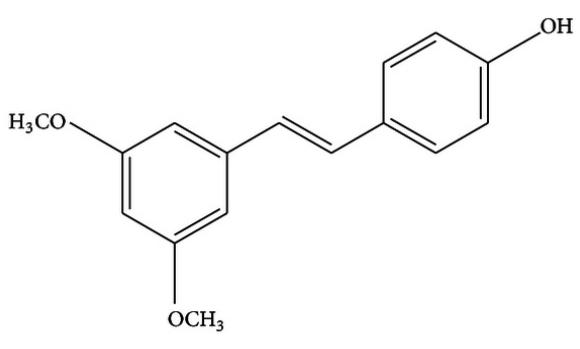
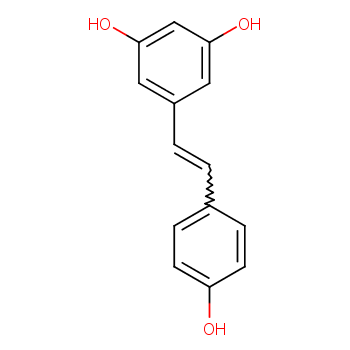
Resveratrol (trans-3,4',5-trihydroxystilbene) shares the same core structure as pterostilbene. However, unlike pterostilbene, it has three hydroxyl (OH) groups attached to the phenyl rings – one on each ring (Rings A and B) and an additional one on Ring B.
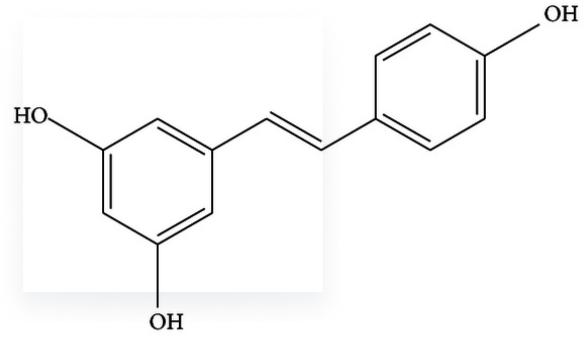
Both resveratrol and pterostilbene have very similar chemical structures, consisting of two aromatic rings with hydroxyl (-OH) groups. However, the key difference between them is that resveratrol has three hydroxyl groups, while pterostilbene has only one. The three hydroxyl groups in resveratrol accelerate the removal of the molecule, making it challenging to achieve and maintain significant levels of resveratrol in the bloodstream. In pterostilbene, the other two hydroxyl groups are replaced by methoxy groups (O-CH3). This difference is crucial as it affects the rate at which the compounds are metabolized and eliminated from the body.
Due to its structural properties, pterostilbene is more lipophilic and exhibits better bioavailability and greater biological activity compared to resveratrol.
Extensive research has been conducted on resveratrol, demonstrating its potential health benefits, including preventing several adverse processes such as oxidative stress, inflammation, cancer, and diabetes. However, due to its low bioavailability, the potential biological effects of resveratrol may be limited. Consequently, many products on the market contain high doses of this compound, up to 1.5 grams of resveratrol per dose.
For a stilbenoid to be effective, it must be absorbed in sufficient amounts and maintained in the body for a long enough time to achieve its intended effects. However, resveratrol is rapidly metabolized, resulting in minimal levels of unchanged resveratrol in the blood after ingestion.
Pterostilbene is an emerging stilbenoid that exhibits properties similar to resveratrol but without the barrier of low bioavailability, making it a promising alternative to resveratrol. Compared to resveratrol, pterostilbene is more resistant to metabolic modification, allowing a higher proportion of pterostilbene to reach its targets and exhibit biological activity.
While resveratrol has many potential health benefits, its low bioavailability has been a limiting factor requiring high doses to achieve the desired effects. Pterostilbene has better bioavailability and activity (ORAC value of 28 μmol Trolox equivalents/g for resveratrol, 64 μmol Trolox equivalents/g for pterostilbene) and may be a more effective formulation alternative. In animal studies, pterostilbene has a bioavailability of 80%, compared to 20% for resveratrol, indicating potential advantages as a therapeutic agent.
Both pterostilbene and resveratrol act as antioxidants, neutralizing harmful free radicals that damage cells. Studies suggest that pterostilbene may have slightly superior activity due to its structure, but both provide significant protection against oxidative stress.
Traditionally, resveratrol has been thought to benefit heart health, but recent research indicates that pterostilbene may be more effective. Pterostilbene enhances bioavailability, allowing it to more effectively reach and impact vascular function and cholesterol levels.
Currently, research is underway to explore the potential of both compounds in protecting brain function. Studies suggest they may aid in memory and learning and even offer some neuroprotective effects. However, more research is needed to confirm these benefits and understand their mechanisms.
Chronic inflammation is associated with various health issues. Both pterostilbene and resveratrol possess anti-inflammatory properties. Pterostilbene, due to its better absorption, may provide stronger effects in reducing inflammation and related health risks.
Research on both compounds in cell and animal models shows promise in preventing cancer development and metastasis. Pterostilbene, with its higher bioavailability, may be more effective in this regard. However, human trials are needed to confirm these findings and determine optimal dosages.
It is worth noting that most research on these compounds is still in its early stages. While they show promise, more studies are needed to fully understand their effects and determine safe and effective dosages for humans. Before taking any supplements containing these compounds, be sure to consult a healthcare professional.
Pterostilbene does not have a single recommended dosage, as studies have used various doses. It is considered safe, with no reports of adverse reactions, at doses of 250 milligrams per day. However, some individuals may experience elevated low-density lipoprotein cholesterol when using it. Given that this compound is common in foods, dietary levels of pterostilbene are presumed to be safe. That said, human studies on pterostilbene are limited compared to resveratrol, and it may interact with other drugs in ways that are not yet understood. Caution is advised with supplements providing higher doses, as these doses far exceed typical dietary intake. If you decide to take it and experience any adverse reactions, discontinue use immediately and consult your doctor.
Resveratrol also does not have a single recommended dosage, as studies have used different doses. Studies on its safety in humans indicate that resveratrol is a safe compound, with quite good tolerance at doses up to 5g/d. One study suggests that resveratrol intake in the range of 700-1000 mg/kg (body weight) per day is well-tolerated and has no toxic effects, and concentrations ≤2 g/d are harmless in the short term. Some studies indicate that resveratrol may have lower bioavailability compared to pterostilbene (being absorbed by the body). Resveratrol is generally well-tolerated, but minor side effects like stomach discomfort or diarrhea may occur. So far, no serious adverse effects have been found even with large doses of resveratrol. When you get resveratrol naturally occurring in foods, it is generally considered safe. It may cause reactions in those allergic to grapes or wine. People with bleeding disorders and other health conditions should not take resveratrol without consulting a doctor beforehand.
If you have any underlying health issues or are taking medications, consult a healthcare professional before taking pterostilbene or resveratrol supplements. These supplements may interact with certain drugs, such as blood thinners. Pregnant or lactating women should avoid taking these supplements due to a lack of safety data.
Both pterostilbene and resveratrol are stilbenes known for their antioxidant properties. Some studies suggest that using both together may be more effective than using them separately.
While they are generally safe, research on the long-term effects of taking both together is limited. Here are some things to consider:
Determining the safe and appropriate dosage for each supplement is crucial. This may require consultation with healthcare professionals to avoid exceeding recommended limits.
Both pterostilbene and resveratrol can interact with certain drugs. Let your doctor know about any medications you are taking before starting these supplements.
If you have any underlying health issues, consult a doctor before taking these supplements.
In conclusion, pterostilbene and resveratrol are two common ingredients in health and skincare products with different sources, structures, and effects. When choosing products, we should understand the differences between these two ingredients based on our needs and health conditions. Hopefully, this discussion will help readers better understand pterostilbene and resveratrol, make informed choices, and enjoy a healthy and beautiful life. Please remember that this information is for educational purposes only and should not replace professional medical advice. It's best to consult a doctor before starting any new supplements.
[1] https://www.webmd.com/heart-disease/resveratrol-supplements
[2] https://www.lifeextension.com/wellness/aging/resveratrol-best-form-supplement-vs-wine
[3] https://www.ncbi.nlm.nih.gov/pmc/articles/PMC4942868/
[4] https://www.circescientific.com/resveratrol-or-pterostilbene/
[5] https://www.ncbi.nlm.nih.gov/pmc/articles/PMC3649683/
[6] https://www.lifespan.io/topic/pterostilbene-benefits-side-effects/
 |
|
 |
 EN
EN
 Agricultural News
 Food News
 Industrial News
 Cosmetic News
 Pharmaceutical News
 Science News


 1YR
1YR