-
We detected your language preference as English. Would you like to switch to the English version for a better experience?
Switch to English
Stay here


Quercetin is widely available as quercetin dihydrate, anhydrous quercetin, and advanced phospholipid-complexed phytosome formulations. For formulators, the key challenge is balancing solid-state stability, moisture content, dissolution performance, and bioavailability. This article compares quercetin dihydrate, quercetin anhydrous, and quercetin phytosome using current scientific evidence and 2026 market trends to support formulation and sourcing decisions.

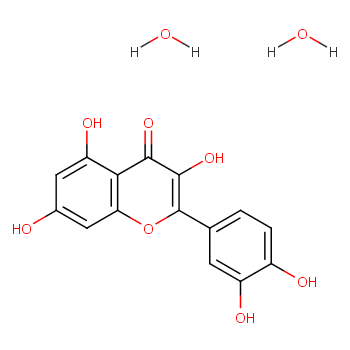
One of the most common questions among formulators and purchasing managers is: "Is quercetin dihydrate the same as quercetin?" From a chemical perspective, both materials contain the same active flavonoid molecule, quercetin (CAS No. 117-39-5). The distinction lies in the crystal structure. Quercetin dihydrate contains two molecules of crystalline water incorporated into its lattice, while quercetin anhydrous contains little or no bound water.
In commercial dietary supplement and nutraceutical markets, the term "quercetin" often refers to quercetin dihydrate because it is the most stable and widely manufactured crystalline form. Industry reviews indicate that many product labels and even scientific publications simply use the term "quercetin" while actually employing the dihydrate form.
This explains why searches such as quercetin dihydrate vs quercetin, quercetin vs quercetin dihydrate, and quercetin aglycone vs dihydrate frequently create confusion. In practice, the active aglycone remains identical, but the physical properties differ substantially.
For formulation scientists, the comparison between quercetin anhydrous vs dihydrate is primarily a solid-state chemistry issue rather than a pharmacological one.
Thermodynamic studies show that quercetin exhibits a strong tendency to form hydrates because its molecular structure contains multiple hydrogen-bonding sites. The dihydrate crystal typically contains approximately 10.6% crystalline water, closely matching theoretical values reported for quercetin dihydrate polymorphs.
The major challenge with anhydrous quercetin is hygroscopic transformation. During storage and processing, anhydrous crystals can absorb atmospheric moisture and gradually convert into hydrated forms. This phase transition may alter powder flowability, tablet hardness, capsule shell integrity, and dissolution behavior.
Consequently, most commercial manufacturers prefer quercetin dihydrate powder for standard tablets, capsules, sachets, and powdered beverage formulations because it offers superior crystal stability during transportation and shelf-life testing.
The dominance of powder-grade quercetin dihydrate is driven by manufacturing practicality. Quercetin exhibits extremely poor aqueous solubility, generally reported in the microgram-per-milliliter range at room temperature. Consequently, bulk powder enables easier incorporation into capsules, tablets, stick packs, and premixes.
Powder processing also minimizes unnecessary thermal stress that could affect crystal integrity. Because quercetin dihydrate possesses a relatively stable crystalline lattice, it tolerates industrial milling and encapsulation better than many amorphous botanical actives.
From a supply-chain perspective, powder forms also simplify quality control testing for particle size distribution, loss on drying (LOD), heavy metals, microbial limits, and assay specifications, which are critical parameters for global nutraceutical compliance.
While quercetin dihydrate remains the industry standard, its greatest limitation is poor oral bioavailability. The high crystal lattice energy and low water solubility significantly restrict gastrointestinal absorption.
This challenge has accelerated demand for quercetin phytosome, a phospholipid-complex technology that associates quercetin molecules with lecithin-derived phospholipids. The resulting complex improves membrane affinity and enhances gastrointestinal transport.
A randomized human pharmacokinetic study led by Antonella Riva and colleagues demonstrated that Quercetin Phytosome® achieved plasma exposure levels up to 20 times higher than conventional quercetin preparations. More recently, a 2025 systematic review analyzing 31 human intervention studies reported that lecithin phytosome technology produced approximately 20.1-fold greater bioavailability compared with quercetin aglycone.
Expert Commentary: The 2026 nutraceutical market is increasingly shifting toward bioavailability-enhanced flavonoids. Premium brands targeting healthy aging, immune support, and active nutrition categories are rapidly adopting phytosome technology. However, for large-volume products where cost-per-serving remains critical, quercetin dihydrate continues to offer the best balance between stability, manufacturability, and commercial scalability.
2026 Decision Matrix: Which Quercetin Form Should Formulators Choose?
Selecting the optimal quercetin specification depends on product positioning:
Current market intelligence indicates that enhanced-delivery systems such as phytosomes, liposomes, and self-emulsifying technologies represent the fastest-growing segment within the quercetin supplement category. Brands increasingly compete on absorption efficiency rather than simply increasing dosage strength.
FAQs
Q1: Is quercetin dihydrate the same as quercetin?
In most commercial supplements, yes. The term "quercetin" commonly refers to quercetin dihydrate unless another solid-state form is specifically identified.
Q2: Why is quercetin dihydrate more commonly sold than anhydrous quercetin?
Because the dihydrate crystal structure is generally more stable during manufacturing, transportation, and long-term storage.
Q3: Is quercetin phytosome worth the higher cost?
For formulations where absorption efficiency is critical, clinical studies indicate that phytosome technology can deliver up to 20-fold greater bioavailability than conventional quercetin preparations.
References
[1]. Riva A., Ronchi M., Petrangolini G., et al. Improved Oral Absorption of Quercetin from Quercetin Phytosome®, European Journal of Drug Metabolism and Pharmacokinetics, 2019.
[2]. Liu L., Barber E., Kellow N.J., Williamson G. Improving Quercetin Bioavailability: A Systematic Review and Meta-analysis of Human Intervention Studies. Food Chemistry, 2025, 477:143630.
[3]. Ait Oubahou A., et al. Thermodynamic Study of Anhydrous and Hydrated Quercetin. Journal of Chemical Sciences, 2024.
[4]. CAS Registry Number: Quercetin (117-39-5); Quercetin Dihydrate (6151-25-3).
[5]. ISO 22000:2018 Food Safety Management Systems — Requirements for Organizations in the Food Chain.
Looking for stable, high-purity Quercetin Dihydrate, Quercetin Anhydrous, or advanced Quercetin ingredients with complete quality documentation and global supply support? Compare qualified suppliers, specifications, and bulk sourcing options through Guidechem's professional ingredient marketplace.
 |
 |
|
 |
 |
|
 EN
EN
 Agricultural News
 Food News
 Industrial News
 Cosmetic News
 Pharmaceutical News
 Science News

 2YRS
2YRS


Expert Commentary: In commercial nutraceutical manufacturing, formulators often overestimate the value of ultra-low moisture ingredients. Unless a formula contains highly moisture-sensitive actives, quercetin dihydrate typically delivers superior process robustness. Over the last decade, many stability failures have resulted not from excessive water content but from uncontrolled hydrate–anhydrate transitions during blending, compression, and storage.