-
We detected your language preference as English. Would you like to switch to the English version for a better experience?
Switch to English
Stay here


Sodium lignosulfonate, as an important derivative of lignin, has garnered significant attention in the fields of chemical and bioengineering. Its unique structure and properties endow it with extensive application value, including in the papermaking industry, dye industry, pharmaceuticals, and more. This article will delve into the definition, properties, and major applications of sodium lignosulfonate, aiming to provide readers with a deeper understanding of this compound.
Sodium lignosulfonate (lignosulfonic acid, sodium salt) serves as a defoamer in papermaking production in the food industry and as a binder for items in contact with food. It possesses preservative properties and is used as a component in animal feed. It's also employed in construction, ceramics, mineral powders, chemical, textile (leather), metallurgical, petroleum, flame retardant materials, rubber vulcanization, and organic polymerization.
Sodium lignosulfonate is a water-soluble sulfonated derivative of lignin, produced during the sulfite pulping process of wood. In this process, lignin is extracted from wood chips and then sulfonated using sulfurous acid. The sulfonation process introduces sulfonic acid groups into the lignin structure, resulting in water-soluble polymers usable for various industrial applications.
There are various types of lignosulfonates available on the market, such as calcium, sodium, ammonium, and magnesium lignosulfonates. It's worth noting that different manufacturers may offer lignosulfonate products with varying characteristics and applications based on manufacturing processes and intended uses. Lignosulfonates are typically sold in powder or liquid form, making them easy to handle and store. By selecting the appropriate type of lignosulfonate for a given application, manufacturers can enhance the performance and efficiency of their products while minimizing costs and environmental impact.
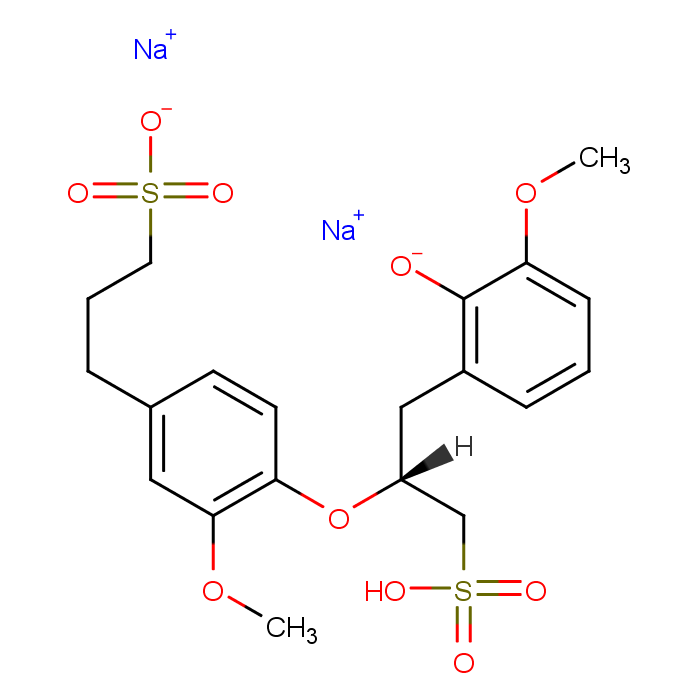
Lignin and its sulfonate salts are natural complex polymers. Despite years of research on lignin, the specific structure remains somewhat unclear. Currently, lignin can only be represented by structural models, and all models describe assumed structural conformations based on actual measurement results (see figure below). Due to the abundance of activating functional groups in lignin, its structure exhibits theoretical chemical instability, and there are differences in the physicochemical structural parameters of various lignin products due to differences in extraction processes among different manufacturers.

Sodium lignosulfonate, fundamentally, is a high molecular weight anionic surfactant. Presently, it serves as a surface dispersant in lead-acid batteries, primarily functioning as a surface dispersant in negative electrode active materials, and the particle size distribution of sodium lignosulfonate significantly influences its dispersibility. Furthermore, lignosulfonate has no defined melting point, but as a thermoplastic organic polymer, sodium lignosulfonate possesses typical polymer characteristics, thus exhibiting a certain glass transition temperature, which is relatively high.
Contrary to common misconceptions, pure sodium lignosulfonate itself actually has no odor. The confusion may arise from impurities introduced during its industrial manufacturing process, emitting a faint odor similar to sulfur. Additionally, when sodium lignosulfonate is used with other chemicals in various products, the resulting mixtures may have distinct odors.
Even when using pure sodium lignosulfonate, subtle variations during manufacturing or the presence of contaminants can affect the intensity or perceptibility of any inherent odor. Manufacturers employ techniques to reduce or mask any unpleasant odors during production. This may involve deodorization during manufacturing or even adding fragrances to the final products.
Sodium lignosulfonate exhibits strong biodegradability. Microorganisms readily decompose it, minimizing its presence in the environment compared to non-biodegradable alternatives. This biodegradation also reduces waste accumulation in landfills. Additionally, sodium lignosulfonate serves as a dispersant, preventing pollutants from aggregating and harming aquatic life.
Lignosulfonates are renewable, inherently biodegradable, and non-toxic, making them sustainable alternatives to many synthetic polymers in various industrial applications. Their carbon footprint is lower compared to fossil-based chemicals since they originate from natural sources and require less energy for production. When compared to traditional chemicals used for similar purposes, sodium lignosulfonate emerges as a more environmentally friendly choice. The production process of sodium lignosulfonate typically generates fewer harmful by-products, and the substance itself has lower toxicity. This means a reduced environmental footprint throughout its lifecycle.
Efforts toward the sustainable development of sodium lignosulfonate are increasing. Manufacturers are striving to minimize production waste and incorporate renewable resources into manufacturing processes. Research is also underway to develop new applications that leverage the beneficial environmental properties of sodium lignosulfonate. These efforts bring hope for a greener future for this versatile material.
Sodium lignosulfonate, as a multifunctional compound, demonstrates significant potential and application value across various industries. Its antioxidant and anti-inflammatory properties in the pharmaceutical field, along with its advantages in environmental protection, underscore its importance in various sectors. Readers are encouraged to further explore and implement the applications of sodium lignosulfonate, driving its development and innovation in more fields. Let's work together to fully harness the multifunctionality of sodium lignosulfonate, contributing to social and environmental sustainability.
[1] https://en.wikipedia.org/wiki/Sodium_lignosulfonate
[2] https://pubchem.ncbi.nlm.nih.gov/compound/Sodium-lignosulfonate
[3] https://www.borregaard.com/product-areas/lignin/your-guide-to-lignin-and-lignosulfonates/
[4] Zhang Xing. A Review of the Influence of Sodium Lignosulfonate on the Electrochemical Performance of AGM Valve-Regulated Lead-Acid Batteries [J]. Batteries, 2017, 54 (02): 96-100. DOI:10.16679/j.cnki.21-1121.2017.02.011.
 |
|
 |
 |
 |
 EN
EN
 Agricultural News
 Food News
 Industrial News
 Cosmetic News
 Pharmaceutical News
 Science News

 3YRS
3YRS

