-
We detected your language preference as English. Would you like to switch to the English version for a better experience?
Switch to English
Stay here


Tetrazole is a class of nitrogen-containing heterocyclic compounds with multifunctionality and significance, playing important roles in various industries. Tetrazole uses include its stable structure and diverse chemical properties, widely applied in pharmaceuticals, agrochemicals, materials science, and more. In the pharmaceutical field, tetrazole compounds are extensively used in the research and development of anti-tumor drugs, antibiotics, etc. In agriculture, tetrazole compounds serve as the main components of insecticides and herbicides. In materials science, tetrazole compounds are utilized for the preparation of high-performance and functional materials. This article introduces the properties and common uses of tetrazole, encouraging readers to explore detailed guides to discover the full potential of tetrazole compounds. Let's explore the versatility and importance of tetrazole together, contributing to the development and innovation of various industries.
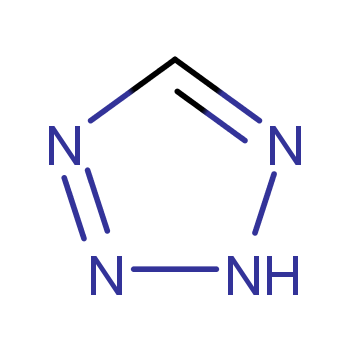
Tetrazole is a heterocyclic compound with a five-membered ring containing one carbon atom and four nitrogen atoms. Theoretically, there are three precursor tetrazole isomers: 1H-tetrazole (1), 2H-tetrazole (2), and 5H-tetrazole (3) (as shown in the figure). Substituted tetrazoles exist in a nearly 1:1 ratio of 1H and 2H tautomeric forms. Previous studies indicate that the two positional isomers, 1 and 2, may be distinguished on the nuclear magnetic resonance (NMR) time scale. Tetrazole uses.

Like other azole compounds, tetrazole compounds did not initially receive much attention due to their late start in synthesis and research. From Bladin's first synthesis of tetrazole derivatives (2-cyano-5-phenyltetrazole) in 1885 to 1950, only about 300 derivatives were reported. Since the 1950s, research has rapidly expanded as tetrazole compounds found widespread applications in agriculture, biochemistry, medicine, pharmacology, explosives, and other fields. Tetrazole functional groups are often considered as carboxylic acid substitutes in drugs due to their similar pKa values and spatial requirements of the planar delocalized system, providing the maximum nitrogen content for any heterocyclic compound. The planar ring framework and nitrogen-rich conjugated electron system confer both donor and acceptor electronic properties to tetrazole derivatives. Scientists became interested in tetrazoles and their derivatives due to their unique structure and potential applications as antihypertensive, antiallergic, antibiotic, and anticonvulsant drugs.
Tetrazole readily reacts with acidic substances and strong oxidants, releasing corrosive and toxic gases and heat. It reacts with few active metals to form explosive compounds upon impact and undergoes exothermic reactions with reducing agents. Upon heating or combustion, it releases carbon monoxide, carbon dioxide, and harmful nitrogen oxides. Tetrazole is soluble in water, acetonitrile, etc. The presence of free N-H imparts acidity to tetrazole, forming both aliphatic and aromatic heterocyclic compounds. Tetrazole heterocycles display corresponding carboxylic acid pKa values through delocalized stabilization of negative charge. The nitrogen electron density of tetrazole leads to the formation of many stable metal compounds and molecular complexes. The compound exhibits strong negative inductive effects and weak positive mesomeric effects.
What is tetrazole used for? In organic synthesis, tetrazole serves as a foundational material. Its five-membered ring structure containing four nitrogen and one carbon provides a unique platform for constructing complex molecules. Chemists can exploit the reactivity of tetrazole to introduce various functional groups, creating complex molecular structures. This characteristic makes tetrazole crucial in the synthesis of pharmaceuticals, agrochemicals, and advanced materials.
Tetrazole derivatives are important heterocyclic compounds in drug design due to their biotransformation stability, bioisosterism with carboxylic acids and amides, and other beneficial physicochemical properties. While over 20 FDA-approved drugs contain 1H- or 2H-tetrazole substituents, their exact binding modes, structural biology, 3D conformations, and general chemical behavior are not fully understood.
A new non-peptide angiotensin AT1 receptor antagonist has been reported (as shown in the figure below). Pharmacological results indicate that compound 100 inhibits the binding of angiotensin II to rat liver membrane AT1 receptors (Ki = 2.5±0.5 nM) without interacting with bovine cerebellar membrane AT2 receptors. Compound 100 also inhibits the contractile response of angiotensin II (with pD(2)′ values of 7.43 and 7.29 respectively), with a significantly reduced maximum response. This study suggests that compound 100 may have therapeutic uses for hypertension. Another study reported a selective angiotensin II receptor antagonist targeting the AT1 receptor subtype. Compound 101 inhibits the binding of Ang II to rat adrenal cortex AT1 receptors by 50% (IC50) at a concentration of 0.13 nM, compared to 80.0 nM for losartan. Compared to losartan, candesartan, and other ARBs, compound 101 demonstrates better inhibitory effects on the contraction of isolated rabbit thoracic aortas. The antihypertensive effect of compound 101 has been confirmed to last for 24 hours. Arhancet et al. reported the structure-activity relationship of a new series of cyanoester dihydropyridines. Compound 102 exhibits good in vitro metabolic stability and solubility, with no CYP inhibition tendency. Based on its MR potency and favorable in vitro pharmacokinetic properties, compound 102 has a moderate clearance rate and good half-life, making it a suitable candidate for in vivo efficacy studies.

Research has been conducted to design and synthesize new tetrazole-containing n-glycosides as SGLT2 inhibitors (as shown below). Their hypoglycemic activity was tested in vivo through oral glucose tolerance tests (OGTT) in mice. Two compounds were found to be more effective than the positive control dapagliflozin. Compound 103 and 104 exhibited inhibition rates of 73.9% and 77.0% on mouse OGTT blood glucose levels, respectively, compared to 68.3% for dapagliflozin. Momose et al. prepared a series of 5-(4-alkoxyphenyl-alkyl)-1H-tetrazole derivatives and evaluated their hypoglycemic effects in two genetic obesity and diabetes animal models: KKAy mice and Wistar obese rats. Many compounds showed effective hypoglycemic and lipid-lowering activities in KKAy mice. Among them, compound 105 showed strong hypoglycemic activity (ED25 = 0.0839 mg·kg?1·d?1), being 72 times more potent than pioglitazone hydrochloride (ED25 = 6.0 mg·kg?1·d?1). This compound also exhibited strong hypoglycemic (ED25 = 0.0873 mg·kg?1·d?1) and lipid-lowering (ED25 = 0.0277 mg·kg?1·d?1) effects in Wistar obese rats. The antidiabetic effect of compound 105 is believed to be due to its potent activation of peroxisome proliferator-activated receptor γ (PPARγ) with an EC50 of 6.75 nM. Pegklidou et al. synthesized a series of new pyrroles based on chemical structure and evaluated their activity as selective aldose reductase inhibitors. Data suggest that compounds 106 and 107 are promising lead compounds for the development of selective aldose reductase inhibitors targeting the long-term complications of diabetes.

Tetrazole and its derivatives exhibit diverse pharmacological and biological properties, reportedly possessing various bioactivities. Newly synthesized tetrazole derivatives were reported to have higher antifungal activity than standard antifungal drugs, attributed to tetrazole's isostructural properties. Several heterocyclic tetrazole derivatives were synthesized. Among the synthesized compounds, compounds 27, 28, 29, 30, 31, and 32 exhibited antibacterial activity with minimum inhibitory concentrations (MICs) ranging from 23.40 to 46.87 μg/L. SAR studies indicate that furan derivatives are more active than pyridine derivatives, with the activity order of R substituents being: 4-OMe > 4-Me > 3-OH > H > 4-Cl > 4-NO2.

Researchers are exploring the potential of tetrazole as an agricultural plant growth regulator. Some tetrazole derivatives exhibit auxin-like activity, mimicking natural plant hormones that influence various developmental processes. This opens up avenues for manipulating plant growth to enhance yield. For example, targeted application of tetrazole-like growth regulators can help control stem elongation and promote shoot growth in certain crops. Additionally, these compounds may affect flowering time or fruit development, leading to more efficient harvesting. While research is ongoing, tetrazole's ability to mimic auxins suggests exciting possibilities for fine-tuning plant growth in agricultural settings.
Tetrazole shows promise in crop protection. Some studies have investigated the efficacy of tetrazole derivatives as fungicides, potentially providing new weapons against fungal diseases harming crops. The unique chemical structure of tetrazole may also prove effective against other agricultural pests such as insects or weeds.
The high nitrogen content of tetrazole makes it a primary candidate for developing high-energy materials like explosives and propellants. The cyclic structure contains a significant amount of energy released upon decomposition. Researchers are actively studying tetrazole derivatives as alternatives to conventional explosives, aiming to achieve similar power while improving safety and environmental impact.
Due to its unique chemical properties, tetrazole can be incorporated as a functional additive into polymers. These modified polymers can exhibit enhanced performance, such as improved flame retardancy or thermal stability. In some cases, tetrazole derivatives can even act as self-healing agents in polymer matrices, repairing microscopic cracks that may compromise material integrity. By leveraging tetrazole's multifunctionality, researchers are creating a new generation of advanced polymers with customized functionalities.
Due to the presence of multiple nitrogen atoms, tetrazole exhibits explosive properties under certain conditions. However, specific toxicological characteristics may vary depending on the structure of tetrazole derivatives. Therefore, proper handling and safety protocols are essential when using tetrazole in research or industrial environments. Regulatory agencies such as OSHA (Occupational Safety and Health Administration) and EPA (Environmental Protection Agency) have established guidelines for the safe handling, storage, and disposal of tetrazole and its derivatives. Compliance with these regulations and adopting best practices is crucial for minimizing safety risks associated with tetrazole use.
Research on tetrazole is experiencing an innovation wave. Scientists are delving into the properties of this molecule, exploring its potential as a fundamental component of new drugs, materials, and catalysts. For example, the ability to fine-tune the structure of tetrazole opens up possibilities for targeted drug delivery or the development of new electronic devices. However, alongside these advancements, researchers are also highly attentive to environmental considerations. With the exploration of biodegradable tetrazole-based materials, efforts are underway to find sustainable methods for tetrazole synthesis. Ultimately, the future of tetrazole research depends on striking a balance between harnessing its exciting potential and ensuring its development aligns with environmentally responsible practices.
In conclusion, the multifunctionality and significance of tetrazole compounds are fully demonstrated across various industries. In this article, we have delved into the properties, common uses, and potential of tetrazole. Readers are encouraged to further explore the applications of tetrazole, delve into its various uses, and bring new insights and breakthroughs to scientific research and engineering practices. Let's work together to uncover more possibilities of tetrazole, driving the development and innovation of related fields.
[1] https://www.ncbi.nlm.nih.gov/pmc/articles/PMC6376451
[2] https://www.sciencedirect.com/topics/chemistry/tetrazole
[3] https://www.ncbi.nlm.nih.gov/pmc/articles/PMC6272207
[4] https://www.tandfonline.com/doi/full/10.3109/14756366.2012.752363
[5] https://www.intechopen.com/chapters/61865
|
 |
 |
 |
 |
 |
 EN
EN
 Agricultural News
 Food News
 Industrial News
 Cosmetic News
 Pharmaceutical News
 Science News

 13YRS
13YRS

