-
We detected your language preference as English. Would you like to switch to the English version for a better experience?
Switch to English
Stay here


D-trehalose dihydrate is a widely used compound that plays crucial roles across various industries. This article focuses on exploring the uses of D-trehalose dihydrate, delving into its potential and value in different fields. By comprehensively outlining its applications and functionalities, we gain insights into its significance in industries such as chemical engineering, food, and pharmaceuticals, providing inspiration and guidance for further research and innovation.

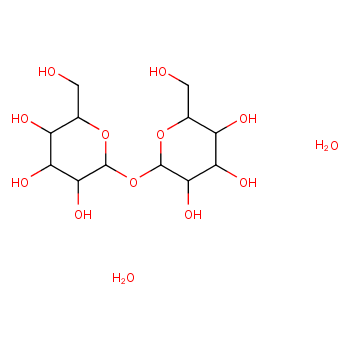
Trehalose, also known as α,α-trehalose, is a disaccharide formed by a 1,1 linkage of two D-glucose molecules. Its molecular formula and weight are C12H22O11 and 342.31, respectively. Typically, it exists as a dihydrate post purification, a standard commercial product. D-trehalose dihydrate, a unique sugar, exhibits significant interactions with water. Chemically, it's a disaccharide, composed of two monosaccharide units, specifically two α-glucose molecules. D-trehalose dihydrate possesses several characteristics, including high solubility in water and remarkable water retention ability. Its non-reducing nature makes it a vital component across various industries. So, what is D trehalose dihydrate used for?
D-trehalose dihydrate is increasingly favored in the food industry due to its unique properties. Unlike table sugar, it serves not only as a sweetener but also as a stabilizer, texture modifier, and flavor enhancer.
(1) Preservation: D-trehalose dihydrate is employed in food processing and storage to preserve food items. Its high water retention capability helps prevent baked goods from drying out and extends the shelf life of frozen foods by minimizing ice crystal formation, ensuring fresher texture and better taste for consumers.
(2) Texture optimization: Its ability to interact with water molecules influences texture. For instance, in ice cream, it prevents large ice crystals formation, contributing to a smoother, creamier texture. It also enhances the texture of baked goods, making them chewier or crispier according to the recipe.
(3) Flavor enhancement: D-trehalose dihydrate enhances the taste of food. By masking off-flavors and lingering bitterness, it allows natural flavors of ingredients to shine. Additionally, it helps preserve the aroma and flavor volatile compounds of fruits and vegetables.
(4) Sweet treats and more: D-trehalose dihydrate finds its way into various food products, from baked goods like cookies and bread to frozen desserts like ice cream and yogurt, even dried fruits and vegetables. Due to its lower sweetness compared to table sugar, it's suitable for diabetic-friendly or low-calorie foods.
It's causing a stir in the cosmetics and personal care arena. Beyond just a sweetener, it's a versatile ingredient with moisturizing, protective, and even anti-aging properties.
(1) Hydration: D-trehalose dihydrate effectively maintains skin hydration. Acting as a humectant, it retains skin moisture, especially in dry climates or post-cleansing.
(2) Skin savior: With its fundamental hydrating action, it acts as a protective agent, shielding the skin from environmental aggressors like pollution and UV radiation. It can also soothe irritation and promote skin barrier repair.
(3) Anti-aging: Some studies suggest D-trehalose dihydrate may possess anti-aging properties. Its ability to protect cells and proteins from damage may contribute to a more youthful appearance. Additionally, by promoting healthy skin barrier function, it may help reduce wrinkles and fine lines.
(4) Beauty booster: Look for D-trehalose dihydrate in various skincare and haircare products. It's commonly found in moisturizers, serums, and masks, providing ample hydration to maintain a healthy skin barrier. Shampoos and conditioners containing dihydrate trehalose can improve hair texture, reduce frizz, and enhance shine.
D-trehalose dihydrate garners attention in the pharmaceutical industry for its ability to protect fragile molecules. What is D trehalose dihydrate used for? A key application is stabilizing proteins and vaccines. Proteins are vital for various bodily functions but are prone to denaturation or loss of function during processing, storage, or transportation. The unique properties of D-trehalose dihydrate help prevent protein unfolding, ensuring their activity and efficacy in medications. Similarly, vaccines often contain fragile components that need preservation during storage and transportation. Trehalose dihydrate, as a stabilizer, protects these components and ensures vaccine potency.
An exciting area of exploration is the potential of D-trehalose dihydrate as a cryoprotectant. Cryopreservation, the process of freezing cells or tissues for long-term storage, often damages these biological materials due to ice crystal formation. The ability of D-trehalose dihydrate to interact with water molecules may provide a solution. By reducing ice crystal formation and protecting cell membranes, it could revolutionize cryopreservation, paving the way for advancements in tissue banking, cellular therapies, and organ transplantation.
D-trehalose dihydrate is a non-reducing disaccharide used as a bulking agent in biologic therapeutic applications. Its primary purpose is to protect protein drugs in liquid and frozen states. It offers tension, stability, freeze protection, and lyophilization protection. Trehalose, superior to other sugars due to the rigidity of its α 1,1 linkage, remains more stable under high temperature and acidic conditions. Being non-reducing, trehalose does not react with other bulking agents like amino acids or aldehydes.
In the biotechnology and research realms, dihydrate trehalose shines as a multifunctional tool for preserving cells and biomolecules. Its ability to stabilize structures and prevent damage during storage and processing renders it invaluable in cell culture experiments. By safeguarding cell membranes from stress and preventing ice crystal formation during freezing, D-trehalose dihydrate aids in low-temperature storage, allowing researchers to extend cell viability without compromising functionality. Moreover, its role in molecular biology is under exploration. D-trehalose dihydrate can help maintain the integrity of proteins and enzymes during purification and storage processes, ensuring their functionality in various research applications.
The unique properties of dihydrate trehalose find significant applications in various industrial processes. Its ability to stabilize emulsions and prevent degradation makes it a useful stabilizer in paints, coatings, and other industrial formulations. Its role as a cryoprotectant preserves enzymes used in industrial processes. These enzymes lose activity during freezing or storage, but the ability of D-trehalose dihydrate to protect them under these conditions paves the way for more efficient and cost-effective industrial applications. Additionally, its anti-caking properties prove beneficial in preventing clumping in hygroscopic powders used in various industries, ensuring smooth and efficient production processes.
In different industries, D-trehalose showcases extensive uses and applications. This article summarizes D-trehalose's major uses in food, pharmaceuticals, chemical engineering, and other fields, emphasizing its versatility and importance in enhancing product stability, functionality, and performance. As a multifunctional compound, D-trehalose provides crucial support for the quality and performance of many products, with vast prospects for its application across different domains. Further research and innovation are encouraged to explore new applications and benefits of D-trehalose dihydrate.
[1]https://www.ulprospector.com/en/na/PersonalCare/Detail/5738/641990/SpecKare-TRHL-Trehalose
[2]https://www.sciencedirect.com/science/article/abs/pii/S027869150200011X
[3]https://www.biospectra.us/products/parenteral-grade-products-low-bioburden-low-endotoxin/trehalose-dihydrate
 |
|
 |
 |
 |
 EN
EN
 Agricultural News
 Food News
 Industrial News
 Cosmetic News
 Pharmaceutical News
 Science News

 3YRS
3YRS

