-
We detected your language preference as English. Would you like to switch to the English version for a better experience?
Switch to English
Stay here


What is ethynodiol diacetate used for? Ethynodiol diacetate (ED) is a synthetic estrogen commonly used in oral contraceptives. It plays a role in regulating the female menstrual cycle and can be used for contraception and to address certain estrogen-related issues. As a significant component, ED holds importance in the field of gynecology. This article explores the uses of ethynodiol diacetate, including its applications in contraceptive control and other gynecological issues, to provide readers with a comprehensive understanding of its significance and clinical relevance.
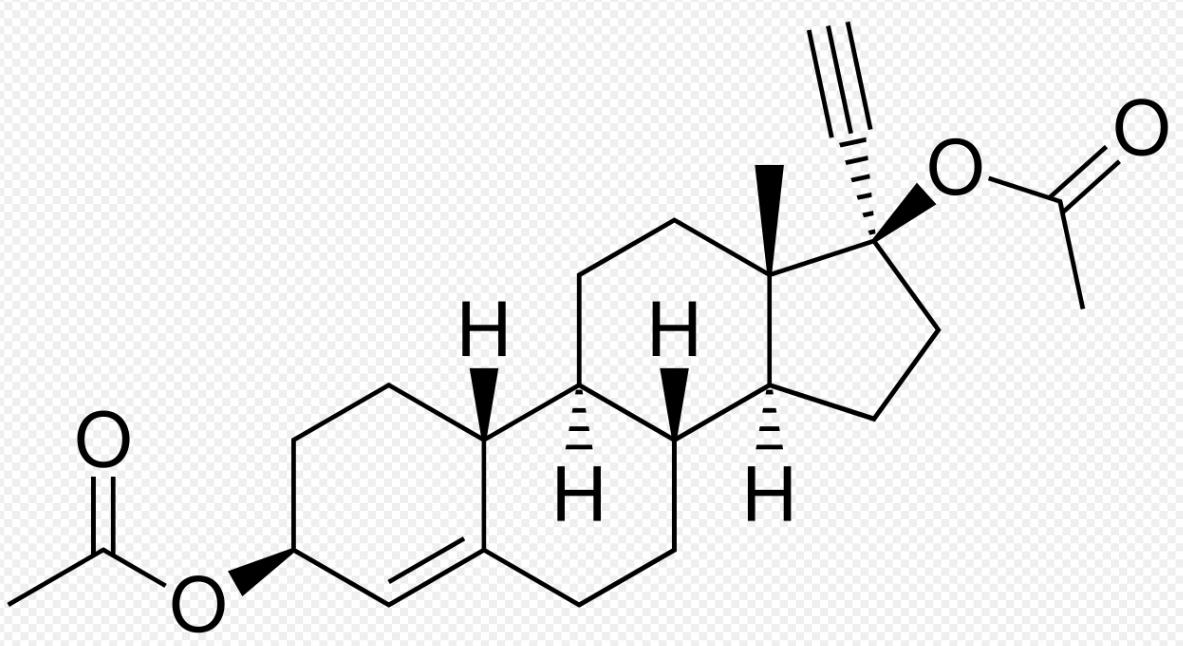
Ethynodiol diacetate, also known as 3β-Hydroxy-17α-ethynylestr-4-ene-3β,17β-diol diacetate, is a synthetic estrogenic steroid, a derivative of testosterone. Specifically, it is a derivative of 19-nortestosterone and ethynyltestosterone or norethisterone (17α-ethynyl-19-nortestosterone), where the C3 keto group has been dehydrogenated to a C3β hydroxyl group, and acetate esters are attached at the C3β and C17β positions. Ethynodiol diacetate is the 3β,17β-diacetate ester of ethynylestradiol (17α-ethynylestr-4-ene-3β,17β-diol).
Ethynodiol diacetate is a steroidal ester and terminal ethyl compound. It functions as a modulator of estrogen receptors, a contraceptive, and a synthetic oral contraceptive. Its function is associated with estrogen.
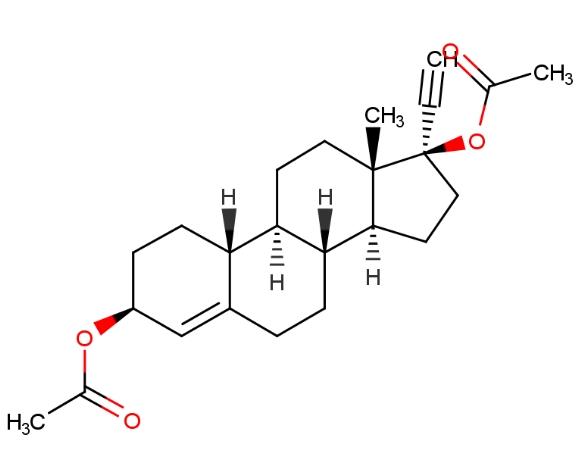
Ethynodiol diacetate is used as a female contraceptive. It is a synthetic form of the female sex hormone progesterone or naturally occurring progestogen. During a woman's normal menstrual cycle, an egg matures and is released from the ovaries (ovulation). The ovaries then produce progesterone, which prevents the release of more eggs and prepares for possible pregnancy. If pregnancy occurs, the level of progesterone in the body remains high, maintaining the uterine lining. If pregnancy does not occur, the level of progesterone in the body decreases, leading to menstruation. Ethynodiol diacetate deceives the body into thinking that ovulation has occurred by maintaining high levels of synthetic progesterone synthesis. This prevents the ovaries from releasing eggs.
Binds with progesterone and estrogen receptors. Target cells include the female reproductive tract, breasts, hypothalamus, and pituitary. Once bound to the receptor, progestins like ethynodiol diacetate slow the frequency of release of gonadotropin-releasing hormone (GnRH) from the hypothalamus and inhibit the pre-ovulatory luteinizing hormone (LH) surge.
Ethynodiol diacetate is an oral contraceptive used for birth control. Ethynodiol diacetate is combined with estrogen (such as mestranol or ethinylestradiol) in women's combined oral contraceptives to prevent pregnancy.
Ethynodiol diacetate in combination with ethinyl estradiol prevents ovulation and pregnancy. It belongs to a group of drugs called oral contraceptives, which are combinations of estrogen and progestin. The medication may also be used for other purposes; if you have any questions, consult your healthcare provider or pharmacist. Generic brand names include Demulen 1/35, Demulen 1/50, Kelnor 1/35, Kelnor 1/50, Zovia 1/35, Zovia 1/35E, Zovia 1/50E.
Endometrial cancer is the most common and second deadliest gynecological cancer in the United States. Endometrioid carcinoma is the major histological subtype, accounting for about 75% of all cases typically diagnosed early and having a good prognosis. These tumors are associated with obesity and hormone and reproductive factors related to cumulative lifetime estrogen exposure. Non-endometrioid carcinomas account for 15%-20% of cases and are described as estrogen-dependent, typically diagnosed at a poor prognosis in advanced stages. Uterine sarcomas are rare tumors that usually arise in the uterine myometrium and are less well-known.
Research is underway to investigate the potential of ethynodiol diacetate (often used in conjunction with estrogen) in preventing endometrial cancer. Progestins can counteract the stimulatory effects of estrogen on the endometrium.
The role of steroid hormones in the pathogenesis of endometriosis is also undisputed. Estrogen is the primary hormone responsible for endometrial proliferation and expansion. Increased action of aromatase, mainly in deeply infiltrating endometriosis, leads to increased local activity of estrogen. On the other hand, progesterone cannot exert an antagonistic effect on estrogen in endometrial tissue, which is a decisive factor in the establishment of endometriosis. Epigenetic changes are also undeniable factors in the pathogenesis of endometriosis, affecting not only reproductive-age women but also adolescents and young women with a family history of the disease.
Researchers are studying the effectiveness of ethynodiol diacetate in treating endometriosis, a condition where endometrial tissue grows outside the uterus. Progestins, such as ethynodiol diacetate, can help regulate endometrial growth and alleviate associated pain.
What is ethynodiol diacetate used for? Ethynodiol diacetate itself has not been directly proven to treat acne. However, it is found in combination with birth control pills and estrogen, which can help treat acne. Here's how it works: birth control pills contain hormones that can regulate your hormone and ovulation cycles. This helps to lower the levels of androgens that contribute to acne.
If you are considering using birth control pills to treat acne, it is important to talk to your doctor. They can help you determine if this is the right choice for you. There are many different birth control pills available, each containing different doses of hormones.
For many women, ethynodiol diacetate is generally considered a safe and well-tolerated medication. However, it is possible to experience nausea, vomiting, headaches, abdominal bloating, breast tenderness, ankle/foot swelling (fluid retention), or weight changes. Spotting (vaginal bleeding between periods) or missed/irregular periods may occur, especially in the first few months of use. If any of these effects persist or worsen, promptly inform your doctor or pharmacist.
Ethynodiol diacetate, as a synthetic estrogenic drug, plays an important role in contraceptive control and the treatment of estrogen-related gynecological issues. By understanding its uses and mechanisms of action, we can better comprehend the effects of ethynodiol diacetate on the body and its clinical applications. If you have specific questions about the use or dosage of ethynodiol diacetate, it is recommended to consult a doctor or healthcare professional for personalized advice and guidance. Always remember that consulting a doctor is an important step in ensuring the proper use of medications and maintaining health.
[1] https://www.webmd.com/drugs/2/drug-6749/ethynodiol-diacetate-ethinyl-estradiol-oral/details
[2] https://go.drugbank.com/drugs/DB00823
[3] https://pubchem.ncbi.nlm.nih.gov/compound/Ethynodiol-diacetate
[4] https://en.wikipedia.org/wiki/Etynodiol_diacetate
[5] https://www.ncbi.nlm.nih.gov/books/NBK567777/
[6] https://jamanetwork.com/journals/jamaoncology/fullarticle/2792010
|
 |
 |
 |
 |
 |
 EN
EN
 Agricultural News
 Food News
 Industrial News
 Cosmetic News
 Pharmaceutical News
 Science News

 2YRS
2YRS


