-
We detected your language preference as English. Would you like to switch to the English version for a better experience?
Switch to English
Stay here


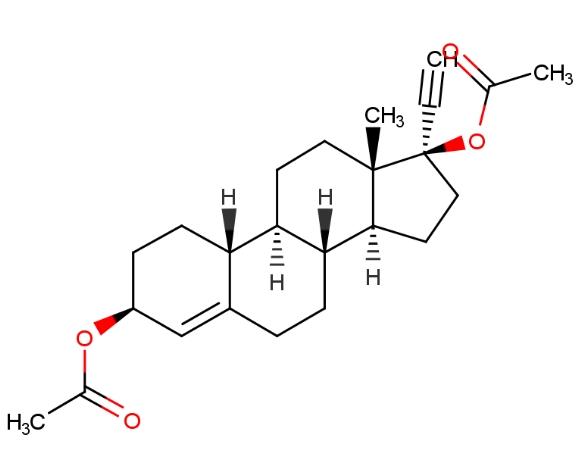
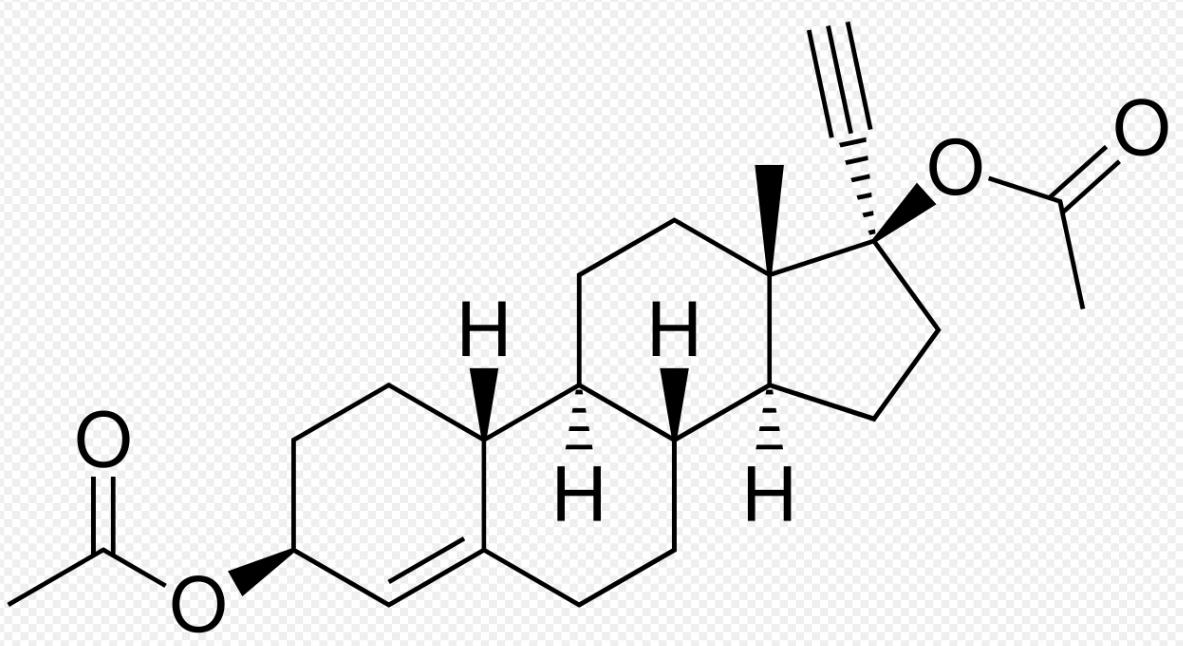
Ethynodiol Diacetate is a synthetic estrogen used in oral contraceptives. Classified as a synthetic progestogen, it functions similarly to natural progestogens, suppressing ovulation and thickening cervical mucus. This article explores the role of Ethynodiol Diacetate in contraception, with a specific focus on its status as a first-generation progestogen. Understanding the characteristics and classification of Ethynodiol Diacetate provides insights into its role and significance in contraceptive control.
Ethynodiol Diacetate, also known as Ethynodiol, is the diacetate ester of ethynodiol, a semi-synthetic progestin agonist. Ethynodiol Diacetate binds to cytoplasmic progesterone receptors in the reproductive system, subsequently activating progesterone receptor-mediated gene expression. Due to negative feedback mechanisms, the release of luteinizing hormone (LH) is inhibited, resulting in suppressed ovulation and changes in cervical mucus and the endometrium. Additionally, Ethynodiol Diacetate exhibits weak estrogenic and androgenic properties.
Progesterone is a naturally occurring hormone that helps prepare the uterine lining for pregnancy. Progestins are substances, either natural or synthetic, that possess progesterone-like properties. Progestins are classified by generation, indicating the time they were introduced.
Ethynodiol Diacetate belongs to the first generation of progestogens. It has viable progestational activity but with weaker estrogenic and lower androgenic activity. Ethynodiol Diacetate is derived from norethindrone. This means it readily converts to norethindrone in the body. Contraceptive pills containing this progestin may be beneficial for women with endometriosis, a condition where the endometrium grows outside the uterus. Side effects of pills containing this progestin include breast tenderness and breakthrough bleeding, which is bleeding that occurs during the mid-cycle of the menstrual period. Examples of medications containing this progestin include Demulen, Kelnor, and Zovia.
Progestins are used in combination (estrogen plus progestin) and progestin-only contraceptive pills. Contraceptive pills are commonly used to prevent pregnancy but can also be used to treat other conditions such as menstrual irregularities and endometriosis. Progestins have several different effects on the female body:
Progestational effects: These help prevent ovulation and reduce monthly bleeding.
Androgenic effects are unwanted side effects such as acne and increased body hair growth.
Estrogenic effects primarily depend on the amount of ethinyl estradiol in the pill. These effects help counteract the androgenic effects.
Different progestins may vary in these effects. For example, some may have lower progestational effects but higher androgenic effects, and vice versa. This may affect whether the pill causes certain side effects, such as acne or breakthrough bleeding.
Progestins have four generations. Different generations have different qualities. Remember, newer isn't always better. Some progestins are more likely to cause unnecessary side effects, so it's important to consult your healthcare provider to determine which medication is best for you.
Norethindrone, norethindrone acetate, and ethynodiol. These progestins are less potent than newer generations, so they may lead to breakthrough bleeding.
Levonorgestrel and norgestrel. These progestins are more effective than first-generation progestins but may cause androgenic side effects such as acne and weight gain.
Desogestrel and norgestimate. Third-generation progestins are more effective than first-generation progestins and less likely to cause androgenic side effects than second-generation progestins.
Drospirenone. Compared to earlier generations, fourth-generation progestins are the most effective and less likely to cause breakthrough bleeding even if not taken strictly on time. They are also less likely to cause androgenic side effects.
These contraceptives combine two molecules: estrogen (EE or ethinyl estradiol) and progestin. The latter is classically categorized by its commercialization date and pharmacological properties into generations (first generation, second generation, third generation) or "other progestins" (as shown in the table below).

The balance of estrogen and progestin depends on the doses and types of these hormones. This balance results in very different hormonal situations, leading directly to different indications and adverse reactions. Early chronic type C hepatitis was composed of large doses of synthetic estrogen (150 μg EE or ethinylestradiol) and progestin with androgenic properties such as norethindrone acetate or norethindrone. Contemporary CHCs now offer 50 ~ 15μg EE or 1 ~ 3 mg of ethinyl estradiol or estradiol valerate daily (Bitzer and Simon, 2011). Progestins used in combination hormonal contraception are mainly derived from norsteroids. Derivatives of norethindrone, such as norethindrone acetate, ethinylestradiol, ethynodiol acetate, or norethindrone, belong to the first generation and are no longer used. Oral contraceptives available now include second-generation and third-generation pills. Second-generation pills contain norgestrel or levonorgestrel. Since the early 1980s, newer progestins (gestodene and norelgestromin) have constituted third-generation contraceptives (Sitruk-Ware and Nath, 2010). Norgestrel is a progestin initially classified as third generation but may fall between second and third generations. These compounds significantly reduce EE doses due to their higher anti-gonadotropic activity. Furthermore, their clinical applications are theoretically associated with fewer androgenic adverse effects. Drospirenone (a spironolactone antagonist) and cyproterone acetate are molecules with high anti-androgenic activity and are classified as other generation drugs along with chlormadinone acetate and dienogest (Sitruk-Ware and Nath, 2010). These products theoretically lack androgenic properties and are anti-androgenic drugs of drospirenone and cyproterone acetate (Sitruk-Ware, 2004).
Ethynodiol Diacetate is classified as a first-generation synthetic progestogen and plays a critical role as a component of oral contraceptives in the field of contraception. Understanding the generation to which Ethynodiol Diacetate belongs helps us better understand its pharmacological actions and clinical applications. If you have further questions about the use, dosage, side effects, or other related issues regarding Ethynodiol Diacetate, it is recommended to consult a doctor or healthcare professional for personalized advice and guidance. Ensuring consultation with a doctor before using any medication is crucial to ensure your health and safety.
[1] https://www.sciencedirect.com/science/article/abs/pii/B9780128012383657367
[2] https://www.sciencedirect.com/topics/neuroscience/etynodiol-diacetate
[3] https://medlineplus.gov/druginfo/meds/a602008.html
[4] https://www.verywellhealth.com/different-progestin-types-906936
[5] https://pubchem.ncbi.nlm.nih.gov/compound/9270
 |
 |
|
 EN
EN
 Agricultural News
 Food News
 Industrial News
 Cosmetic News
 Pharmaceutical News
 Science News


 2YRS
2YRS


