-
We detected your language preference as English. Would you like to switch to the English version for a better experience?
Switch to English
Stay here


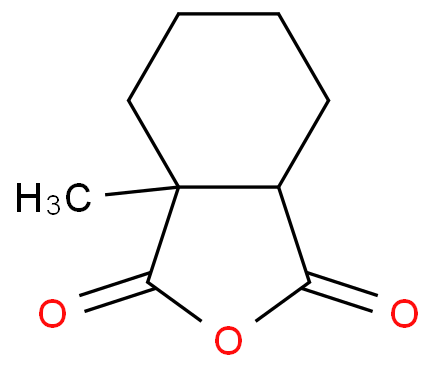
Methylhexahydrophthalic anhydride (MHHPA), also known as methylhexahydrophthalic anhydride, with the CAS number 25550-51-0, is a cyclic anhydride with excellent physical and chemical properties. It is widely used as a non-toxic epoxy resin curing agent, forming a three-dimensional network structure upon curing with epoxy resins. After high-temperature curing, it exhibits excellent weather resistance, heat resistance, water resistance, corrosion resistance, and dielectric properties. It is suitable for impregnation of large components, as well as casting, bonding, and laminating processes. Its applications span across electronic components, conductive inks, automotive coatings, and wood preservation. The structure of methylhexahydrophthalic anhydride is as follows:

Methylhexahydrophthalic anhydride (MHHPA) is primarily used as a curing agent for epoxy resins. In the electronics and electrical industries, MHHPA’s excellent mechanical and electrical properties make it particularly suitable for high-performance LED and automotive transparent coatings. Due to its cyclic aliphatic structure, MHHPA offers good resistance to UV and environmental factors, enabling MHHPA-based coatings to provide durable protection and color retention.
MHHPA plays a significant role as a raw material in the manufacture of polyurethane and polyester resins. These resins are widely used in the production of adhesives and sealants. With MHHPA’s high weather resistance and excellent mechanical properties, it enhances the durability and performance of adhesives and sealants, especially in outdoor and extreme environments.
In the automotive industry, MHHPA is used to manufacture high-performance automotive coatings that can withstand harsh environmental conditions such as UV radiation, moisture, and high temperatures. In the aerospace sector, MHHPA is utilized to create high-temperature and corrosion-resistant coatings and composites to ensure the long-term reliability and safety of components.
MHHPA’s application in building materials is mainly reflected in its use in producing weather-resistant polyurethane and polyester resins. These resins are used in manufacturing exterior coatings and decorative materials for buildings, providing excellent UV and environmental corrosion resistance, thereby extending the service life of building materials.
Methylhexahydrophthalic anhydride offers exceptional performance advantages, especially in terms of enhanced durability and resistance. Its molecular structure provides outstanding resistance to harsh conditions, including exposure to UV radiation, chemicals, and environmental factors. This makes MHHPA an ideal choice for applications that require long-lasting performance and reliability.
Compared to other anhydrides, MHHPA possesses unique advantages. Its distinct chemical composition gives it superior stability and resistance compared to similar compounds. This means products made with MHHPA have a longer lifespan and better performance under challenging conditions. The versatility of methylhexahydrophthalic anhydride and its compatibility with various resins further enhance its appeal for a wide range of industrial applications.
According to GHS classification, methylhexahydrophthalic anhydride (MHHPA) is identified as a hazardous substance with acute and chronic health risks. Contact with this compound can cause severe redness, irritation, and chemical burns on the skin, and may trigger long-term allergic reactions. After contact, thoroughly wash the affected area with soap and water, and seek medical attention if symptoms persist. Contact with the eyes can lead to severe irritation and pain; rinse immediately with water and seek medical attention promptly.
Inhaling MHHPA vapors or aerosols may cause respiratory irritation, coughing, and asthma symptoms. Ingestion of the substance can result in gastrointestinal discomfort and irritation of the mouth, esophagus, and stomach. Large quantities ingested may cause severe chemical burns to the digestive tract.
MHHPA may pose a hazard to aquatic life, and is considered a mild water pollutant. Avoid releasing it into water bodies, wastewater, or soil. In case of large spills, notify local authorities immediately. MHHPA transportation is not subject to specific regulatory constraints.
MHHPA is a combustible material but does not ignite easily. Combustion releases harmful gases, including large amounts of carbon monoxide and carbon dioxide.
|
 |
 |
 |
 |
 EN
EN
 Agricultural News
 Food News
 Industrial News
 Cosmetic News
 Pharmaceutical News
 Science News

 1YR
1YR

