-
We detected your language preference as English. Would you like to switch to the English version for a better experience?
Switch to English
Stay here


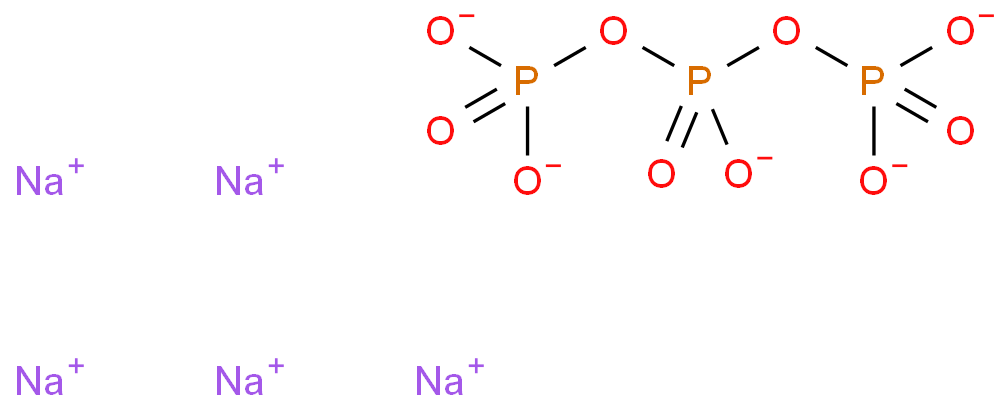
What is tripolyphosphate de sodium? Tripolyphosphate de sodium (STPP) is an inorganic compound with the chemical formula Na5P3O10. It is the sodium salt of pentasodium triphosphate and the conjugate base of triphosphoric acid. Historically, STPP has been in use since the early 20th century, with its production process evolving over time to meet growing demands and improve its chemical properties. Initially synthesized by fusion of phosphoric acid and sodium carbonate, modern production methods involve the reaction of phosphoric acid with sodium hydroxide or sodium carbonate to form STPP crystals. This compound's unique molecular structure and chemical composition make it widely applicable across various industries, including detergent manufacturing, water treatment, food processing, and agriculture.

STPP is a colorless salt that exists in both anhydrous and hexahydrate forms. The anion can be described as a chain of five phosphorus atoms [O3POP(O)2OPO3]5?. Many related diphosphate, triphosphate, and polyphosphate salts are known, including the cyclic triphosphate P3O93?. It tightly binds with metal cations, acting as a bidentate and tridentate chelating agent. Tripolyphosphate de sodium is a white powder characterized by a high melting point and density. It has a melting point of 622°C and a density of 2.52 g/cm3. Tripolyphosphate de sodium has relatively low solubility, with a solubility in water of about 42g/100mL. It is odorless, and its pH indicator range is 9-10.
In terms of chemical properties, tripolyphosphate de sodium is a basic substance with strong detergent and anti-hard water properties. Under alkaline conditions, tripolyphosphate de sodium undergoes ionization to form anionic surfactants, giving it properties similar to certain organic surfactants. Due to this characteristic, tripolyphosphate de sodium is often used in detergents such as laundry powder and soap to improve cleaning effectiveness.
In the industrial sector, STPP is a key component of detergent and cleaner formulations. Its ability to sequester hard water ions makes it an important ingredient in laundry detergents, enhancing their effectiveness by preventing the precipitation of mineral salts. As a water softener, STPP enables detergents to maintain efficiency even in areas with high mineral content in water. This property ensures not only cleaner clothes but also prevents scale buildup, thereby extending the lifespan of washing machines. Most of the STPP produced is consumed as an ingredient in commercial detergents. It acts as a "builder," an industry term in the realm of soft water. In hard water (water containing high concentrations of Mg2+ and/or Ca2+), detergents become deactivated. The TPP5? is a highly charged chelating agent that can tightly bind with dic, preventing them from interfering with sulfonate-based detergents.
STPP also plays a crucial role in water treatment processes. Its ability to isolate metal ions makes it an effective agent for water conditioning and purification. By chelating heavy metal ions such as calcium and magnesium, STPP helps prevent scale formation in pipes and equipment, thus maintaining the efficiency of industrial machinery and ensuring water quality for various applications.
In the culinary and food industry, STPP has multiple uses primarily as a food additive. Its emulsifying and moisture-retaining properties make it valuable in processing meat and seafood products, enhancing their texture, juiciness, and tenderness. STPP, as a preservative, inhibits microbial growth, extending the shelf life of perishable foods. In canned food products, STPP helps maintain the firmness and crispness of fruits and vegetables during storage and transportation, ensuring product quality.
Tripolyphosphate de sodium, as a commonly used chemical product, is also widely used in the agricultural sector. It serves primarily as an additive in fertilizers and pesticides, considered effective substances for promoting plant growth and increasing crop yields.
The role of tripolyphosphate de sodium in fertilizers mainly lies in its chelating, suspending, dispersing, gelling, and emulsifying properties, which can stabilize soil solutions and increase soil water and fertility retention. Since phosphorus in STPP is one of the three major nutrients for plants, it can promote the growth of plant roots and improve plant resistance to stress.
However, the use of tripolyphosphate de sodium in agriculture also poses some risks. Due to the high toxicity of STPP at high concentrations, if the dosage is not controlled during use, it may have adverse effects on soil and the environment. Additionally, the hydrating properties of STPP may also affect crop yields. Especially in the production process of laundry powder slurry, the hydrating properties of STPP may lead to different properties of the slurry, such as its fluidity, affecting the efficiency and quality of agricultural production. The use of STPP may also lead to water pollution, causing eutrophication issues.
The use of tripolyphosphate de sodium has raised significant concerns regarding its environmental impact, particularly on aquatic ecosystems. Since STPP is commonly used in detergents and cleaners, its discharge into water bodies can lead to eutrophication, a process characterized by excessive nutrient enrichment. The inflow of these nutrients promotes rapid algae growth, resulting in algal blooms that deplete oxygen levels in water, adversely affecting aquatic organisms and ecosystems. Additionally, STPP's chelating properties can enhance the mobility of heavy metals in water, posing risks to aquatic organisms and ecosystem health.
In consideration of environmental factors, ensuring the safe handling and disposal of STPP is necessary to prevent human health risks and environmental contamination. Safety guidelines for STPP handling include proper storage, labeling, and transportation procedures to minimize exposure and potential hazards. Additionally, effective waste management practices, such as recycling and disposal, are crucial for preventing toxic plant contaminants from leaching into soil and groundwater, thereby protecting terrestrial ecosystems and human health. By adhering to comprehensive safety protocols and adopting environmentally friendly alternatives, stakeholders can mitigate the environmental and health risks associated with STPP use, promoting sustainable practices for ecosystem and community well-being.
Tripolyphosphate de sodium (STPP) is widely used across various industries due to its versatility. In industrial applications, STPP is commonly added to detergents and cleaning products, where it acts as a water softener to enhance cleaning efficiency. Additionally, STPP is essential in water treatment processes, isolating metal ions and inhibiting scale formation in pipes and equipment. In the culinary field, STPP serves as a food additive, enhancing the texture and freshness of meat, seafood, and canned food products.
STPP, as a multifunctional food additive, plays a significant role in the food and culinary industry. Its emulsifying and moisture-retaining properties improve the texture, juiciness, and tenderness of processed meat and seafood products. Acting as a preservative, STPP inhibits microbial growth, extending the shelf life of perishable foods. In canned food products, STPP helps maintain the firmness and crispness of fruits and vegetables during storage and transportation, ensuring product quality.
While generally considered safe when consumed in prescribed amounts, excessive exposure or ingestion of STPP may pose health risks. At high concentrations, STPP can irritate the skin, eyes, and respiratory tract, causing discomfort and irritation. Additionally, long-term or excessive exposure to STPP may have adverse effects on aquatic ecosystems and biodiversity as it can lead to eutrophication and water pollution.
This article provides an overview of the multifunctionality, advantages, and safety considerations of tripolyphosphate de sodium (STPP). Across various industries, STPP has proven to be a versatile compound, playing vital roles in detergent formulations, water treatment, food processing, and agriculture. Its ability to isolate metal ions, soften water, enhance texture, and extend shelf life makes it indispensable in modern applications.
However, while acknowledging its advantages, it's essential to recognize and address the safety issues associated with STPP, including environmental impact and potential health risks. By implementing appropriate safety measures and regulatory guidelines, stakeholders can harness the potential of STPP while ensuring its sustainable and responsible use.
[1] https://fr.wikipedia.org/wiki/Triphosphate_de_sodium
[2] Qin, W. (2021). tripolyphosphate de sodium Price Rose Over 30%, Tight Supply Expected to Continue With Further Upside. Foshan Ceramics, 31(10), 53.
[3] Zheng, W., & Zhang, Y. (2018). Influence of Different Process Conditions on the Morphology of tripolyphosphate de sodium. Guangzhou Chemical Industry, 46(02), 63-65+68.
[4] Chen, J., & Yang, L. (2012). Multifunctional Study on tripolyphosphate de sodium Production Equipment. Inorganic Salts Industry, 44(10), 54-56.
[5] Song, X. (2007). Exploration of the Development Direction of tripolyphosphate de sodium in China. Guizhou Chemical Industry, (04), 23-27.
 |
 |
 |
 |
 |
 |
 EN
EN
 Agricultural News
 Food News
 Industrial News
 Cosmetic News
 Pharmaceutical News
 Science News

 1YR
1YR


