
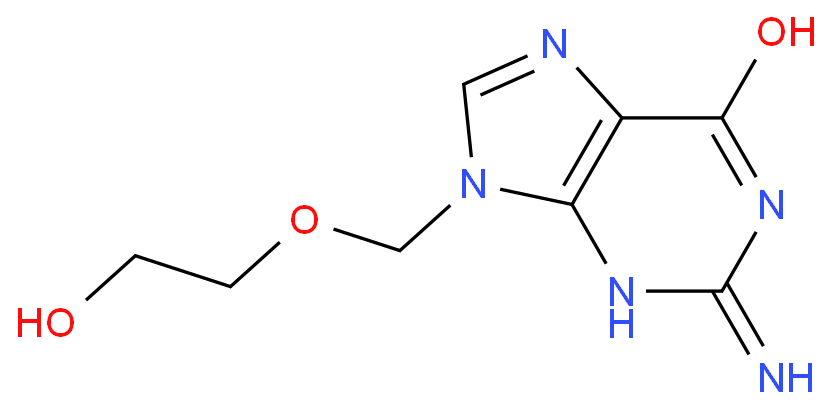
Acyclovir, with the chemical formula C8H11N5O3 and CAS number 59277-89-3, is a widely used antiviral medication for treating herpes simplex virus (HSV) and varicella zoster virus (VZV) infections.
Valacyclovir, with the chemical formula C13H20N6O4 and CAS number 124832-26-4, is the L-valyl ester of acyclovir. It is considered a prodrug of acyclovir, as it is converted to acyclovir in the body. Valacyclovir's enhanced bioavailability makes it more effective in oral form compared to acyclovir.
This article will address the question regarding the acyclovir vs valacyclovir dosage. The primary difference between acyclovir vs valacyclovir lies in their bioavailability and dosing schedules. While acyclovir must be administered multiple times a day due to poor absorption, valacyclovir, with higher bioavailability, is typically dosed less frequently. This leads to significant differences in the dosing regimen, as acyclovir requires 3-5 doses daily, while valacyclovir can be taken once or twice a day.


Both drugs share a similar core structure, with valacyclovir being a derivative of acyclovir. The key difference in their synthesis lies in the esterification of acyclovir to form valacyclovir, enhancing its bioavailability.
Acyclovir and valacyclovir are both antiviral medications primarily used in the treatment of infections caused by the herpes simplex virus (HSV) and varicella zoster virus (VZV). These medications are highly effective in managing conditions such as genital herpes, cold sores, shingles, and chickenpox. While their primary indications overlap, the key differences between the two lie in their pharmacokinetics, bioavailability, and dosing schedules, which can significantly influence their clinical applications.

Acyclovir has long been the cornerstone of treatment for HSV infections, including genital herpes and cold sores, as well as chickenpox and shingles caused by VZV. It is available in multiple forms: oral tablets, topical creams, and intravenous injections, making it a versatile treatment option depending on the severity of the infection. For patients with mild to moderate outbreaks, oral acyclovir is typically prescribed, while more severe cases, especially those affecting immunocompromised individuals, may require intravenous administration.
One of the drawbacks of acyclovir is its poor oral bioavailability, meaning that only a small fraction of the drug reaches systemic circulation when taken by mouth. As a result, acyclovir requires frequent dosing—typically every 4 hours—to maintain effective therapeutic levels in the bloodstream. This can be challenging for patients, especially those managing chronic conditions or busy schedules. However, despite this limitation, acyclovir remains an essential treatment for acute viral infections, offering rapid antiviral action to alleviate symptoms and reduce the duration of outbreaks.
Valacyclovir, a prodrug of acyclovir, offers a significant advantage in terms of bioavailability. When ingested, valacyclovir is rapidly converted into acyclovir in the body, but the conversion process results in higher levels of acyclovir in the bloodstream. This increased bioavailability allows for fewer doses throughout the day, typically only once or twice, compared to acyclovir’s more frequent dosing schedule.
Because of this pharmacokinetic advantage, valacyclovir is often prescribed for long-term suppression of HSV infections, including the prevention of recurrent outbreaks in patients with genital herpes. Additionally, valacyclovir is commonly used in the treatment of shingles (herpes zoster), where its once-daily dosing regimen simplifies patient adherence and improves the overall management of the condition. Valacyclovir's ability to provide effective antiviral action with fewer doses per day makes it a preferred choice for patients looking for convenience and better quality of life during long-term treatment.
Both acyclovir and valacyclovir can be used in combination with other antiviral medications to treat more severe or complicated viral infections, particularly in immunocompromised patients who may be at higher risk for complications. In these cases, healthcare providers may opt for a combination therapy to achieve a broader spectrum of antiviral activity and to increase the likelihood of therapeutic success.
In addition to their use as monotherapy, valacyclovir’s once-daily dosing schedule makes it a popular option for long-term management of HSV infections, especially for patients with recurrent outbreaks. Its convenience can enhance patient compliance, which is critical in preventing the transmission of the virus and reducing the frequency of outbreaks. On the other hand, acyclovir remains an invaluable treatment option for acute infections, especially in cases where intravenous administration is necessary for rapid intervention, such as in severe cases of herpes encephalitis or neonatal herpes.
This paper addresses the question regarding the acyclovir vs valacyclovir dosage. In summary, while acyclovir and valacyclovir are both effective antiviral medications used to treat herpes and varicella zoster virus infections, valacyclovir's improved bioavailability allows for less frequent dosing. Acyclovir, with its lower bioavailability, requires more frequent dosing but remains a highly effective treatment option. The choice between these two drugs often depends on the patient's specific condition, convenience, and the need for ongoing treatment.
| Side Effect |
Acyclovir |
Valacyclovir |
|---|---|---|
| Digestive Issues | Rare, may cause mild bloating or upset stomach | Less common, but may cause nausea or abdominal discomfort |
| Low Blood Pressure | Possible, may cause dizziness or lightheadedness | Possible, may cause dizziness or lightheadedness |
| Dehydration | Unlikely to cause dehydration | Rare, but could occur if taken with other dehydration-inducing medications |
| Kidney Strain | Rare, but should be used cautiously in individuals with kidney conditions | Risk of kidney strain, especially with prolonged use or in those with kidney issues |
| Allergic Reactions | Rare, could include rash, itching, or swelling | Rare, could include rash, itching, or difficulty breathing |
When choosing between acyclovir and valacyclovir, it’s important to consider your specific health needs, such as the type of viral infection you are treating and your overall health condition. Acyclovir is often prescribed for acute outbreaks of herpes simplex virus (HSV) and varicella zoster virus (VZV) infections. However, because it requires multiple daily doses due to its lower bioavailability, it may not be the most convenient option for those seeking a more manageable treatment regimen. Acyclovir is highly effective but may lead to some digestive discomfort or other minor side effects, especially when taken frequently.
In contrast, valacyclovir is a more convenient option for many patients because it has better bioavailability, allowing for fewer doses throughout the day. This is particularly beneficial for those who need long-term antiviral therapy for managing HSV or VZV infections. Valacyclovir is generally well-tolerated, with fewer side effects like gastrointestinal issues, and can be taken once or twice daily, improving patient adherence to treatment. However, as a more potent form of acyclovir, it may be more expensive, which could be a concern for some individuals.
Ultimately, if you're looking for a treatment that offers fewer doses and greater convenience for long-term antiviral therapy, valacyclovir is the superior choice. It allows for effective management with fewer disruptions to daily life. However, if cost is a primary concern or if you need an option for short-term use, acyclovir remains a highly effective and affordable alternative, though it may require more frequent dosing.
*For optimal results and to ensure you are taking the appropriate form and dosage, it is highly recommended to follow the guidance of your healthcare provider. They can help you determine the most suitable antiviral medication based on your specific health needs and any underlying medical conditions.
If you're looking to purchase these compounds, Guidechem is your go-to platform for sourcing high-quality raw materials and reliable suppliers. With our extensive global network, we connect you to a wide range of acyclovir suppliers and valacyclovir suppliers, ensuring you find the right products to meet your specific research or production requirements. Whether you're in pharmaceuticals, food additives, or other industries, Guidechem simplifies the sourcing process, offering verified supplier information, competitive pricing, and seamless communication.
[1]Herpes Simplex Virus: Diagnosis and Treatment by S. T. Anderson.
[2]The Pharmacology of Valacyclovir in Journal of Antiviral Research.
[3]Acyclovir Therapy: A Review by R. M. Larson.
[4]Valacyclovir: A Prodrug of Acyclovir in Clinical Infectious Diseases.
 |
 |
 |


 6YRS
6YRS

