-
We detected your language preference as English. Would you like to switch to the English version for a better experience?
Switch to English
Stay here


Zirconium acetate, as a crucial inorganic compound, holds extensive applications and significant research value. This article delves into the definition, properties, and recent research progress of zirconium acetate to provide readers with a comprehensive understanding of its characteristics and potential applications.
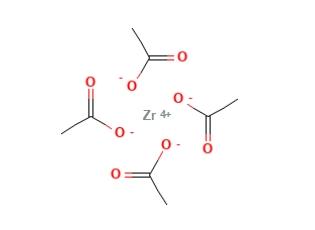
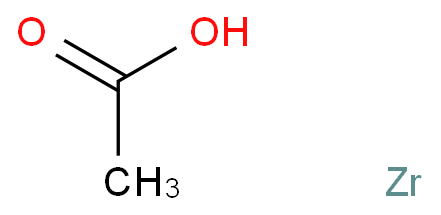
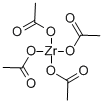
Zirconium acetate, with the English name Zirconium Acetate and zirconium acetate cas number 7585-20-8, has the zirconium acetate formula C8H12O8Zr. Chemically, zirconium acetate is represented by Zr(CH3COO)2. Zirconium, with the chemical symbol Zr, is an element. Zirconium acetate refers to a compound formed by the combination of zirconium and acetate ions. It is a highly pure crystalline powder utilized extensively in research and industrial applications. The primary applications of zirconium acetate include serving as a drier in paints, surface treatments for fibers and papers, and waterproofing agents in construction materials.

Zirconium acetate is soluble in water and typically exists in the form of an aqueous solution. The stability of zirconium acetate in solution depends on several factors:
(1) Temperature: The solution is generally stable at room temperature. However, prolonged exposure to high temperatures can lead to hydrolysis, irreversibly altering the properties of the solution.
(2) pH Value: Zirconium acetate exhibits weak acidity. Hydrolysis becomes more likely as the pH decreases (becomes more acidic).
(3) Concentration: Solutions with higher concentrations generally tend to hydrolyze more easily.
Overall, zirconium acetate solutions are relatively stable under recommended storage conditions. However, it is essential to pay attention to temperature, pH, and concentration to prevent degradation.
Zirconium acetate hydroxide (Zr(OH)x(CH3COO)y, where x + y ≈ 4) is formed through the reaction of zirconium compounds (usually zirconium salts) with alkaline solutions, a process known as hydrolysis. The specific ratio of hydroxide ions (OH) to acetate ions (CH3COO) in the final product (Zr(OH)x(CH3COO)y) can vary based on reaction conditions such as the concentration of the base and the initial zirconium salt.
Zirconium acetate hydroxide is a white powder with low solubility in water. It serves as a versatile compound used as a precursor for zirconia synthesis. It is commonly employed in the production of zirconia-doped metal or metal oxide nanoparticles. Some key features include:
(1) Precursor: It serves as a valuable precursor for synthesizing various zirconium-based materials, including:
- Zirconia (ZrO2) nanoparticles: Through heat treatment, zirconium acetate hydroxide can be transformed into ZrO2 nanoparticles with different crystal forms (phases), finding wide applications in catalysis, ceramics, and fuel cells.
- Doped zirconia materials: By combining zirconium acetate hydroxide with other metal cations during synthesis, doped zirconia materials with specific properties can be created.
(2) Coating: Zirconium acetate hydroxide can be used as an initial material to deposit zirconia films on various substrates using techniques such as sol-gel processing.
Zirconium acetate and zirconium acetate hydroxide can be seen as siblings. They are both related to zirconium but have some key differences. Zirconium acetate typically exists in solution in water, while zirconium acetate hydroxide exists in a solid-state as a white powder. Zirconium acetate exhibits tolerance towards temperature and acidity, but its applications are more limited. Zirconium acetate hydroxide may be somewhat finicky environmentally, but it is the preferred choice when manufacturing new zirconium-based materials is required.
While zirconium acetate does not pose extreme hazards, improper handling can cause irritation and harm. It may cause skin and eye irritation. Research indicates that zirconium acetate is a corrosive substance that can cause harm to the skin, eyes, and respiratory system. Following safety guidelines can ensure a safe working environment and protect you from potential harm.
(1) Eye Irritation: Zirconium acetate can cause severe eye injuries.
Safety Precautions: Wear chemical safety goggles or face shields for eye protection.
(2) Skin Irritation: Contact with zirconium acetate can irritate the skin.
Safety Precautions: Wear protective clothing, including gloves, to prevent skin contact. Thoroughly wash the skin after handling.
(3) Respiratory Irritation: Inhaling concentrated vapors or dust of zirconium acetate can irritate the respiratory system.
Safety Precautions: Use in well-ventilated areas. Consider using a respirator if working in large quantities or in dusty environments.
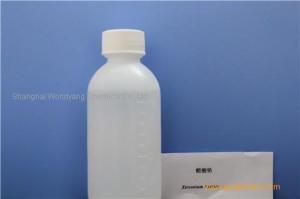
Store zirconium acetate solution in its original sealed container. Keep it in a cool, dry, well-ventilated area away from heat and incompatible materials.
Dispose of zirconium acetate solution according to local regulations. In the absence of specific guidelines, consult waste disposal experts to learn the correct handling and disposal methods. Do not pour it down the drain.
(1) Avoid eating, drinking, or smoking around zirconium acetate solution.
(2) Wash contaminated clothing thoroughly before reuse.
(3) Familiarize yourself with the Safety Data Sheet (SDS) for the specific zirconium acetate solution you are using, as precautions may vary slightly based on concentration.
Zirconium acetate, as a significant inorganic compound, holds vast potential applications and research significance in various fields. By gaining an in-depth understanding of its properties and research progress, we can better harness its potential in areas such as medicine, materials science, and chemical engineering, driving progress and innovation in related fields. This article aims to provide readers with comprehensive information about zirconium acetate, inspiring more interest in this compound and fostering advancements and developments in related fields.
[1] Leshan Wonai Rare Electronic Materials Co., Ltd. A method for preparing zirconium acetate: CN201810643108.0[P]. 2018-11-06.
[2] https://procure-net.com/product/zirconiumiv-acetate-hydroxide-precursor-for-zirconia-synthesis/
[3] https://haz-map.com/Agents/8479
[4] https://pubchem.ncbi.nlm.nih.gov/compound/Zofenopril-calcium
 |
|
 |
 |
 |
 EN
EN
 Agricultural News
 Food News
 Industrial News
 Cosmetic News
 Pharmaceutical News
 Science News

 6YRS
6YRS

