
I. Executive Summary
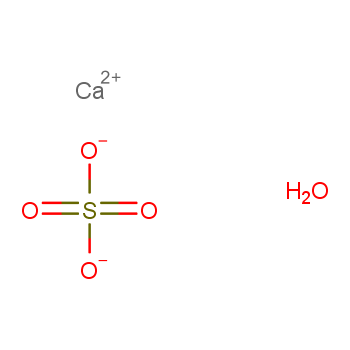
Calcium sulfate hemihydrate (CaSO4·0.5H2O, molecular weight 145.15, CAS 10034-76-1), known commercially as plaster of Paris, calcined gypsum or building plaster, is made by partially dehydrating gypsum. Roughly six percent of chemically combined water remains, and when the powder is mixed with water it rehydrates to gypsum, forming an interlocking crystal network that sets and hardens with a mild exothermic reaction. Construction volumes are enormous, but internationally traded powder is a smaller, quality-differentiated business spanning building materials, medical and dental products, food and feed uses, and brewing-water treatment.
Two variables decide everything commercially. The first is crystal form: alpha hemihydrate, produced hydrothermally, consists of dense crystals with low water demand and high strength, while beta hemihydrate, produced by dry calcination, is porous, demands more water and delivers lower strength. The second is feedstock source: natural mined gypsum, flue-gas desulfurisation gypsum recovered from coal-fired power stations, and phosphogypsum from phosphate fertiliser production. Source drives both the impurity profile and the entire ESG narrative around the product.
Regulatory exposure is unusual for a commodity mineral. The substance itself is normally not classified as hazardous under CLP, yet the product is governed by construction product standards, by food and feed additive purity rules, by medical device rules for dental grades, and by radiation and heavy-metal scrutiny where it derives from phosphogypsum. Logistics risk is dominated by moisture, because hemihydrate that picks up water loses reactivity before it is ever used. This paper addresses procurement, regulatory and technical audiences and offers no clinical guidance.
II. Product Deep Dive: Molecular Mechanisms and Production Evolution
2.1 Physicochemical Properties and Mechanisms
Setting is a dissolution and recrystallisation process. Hemihydrate is markedly more soluble than gypsum, so a fresh paste dissolves rapidly, becomes supersaturated with respect to gypsum, and reprecipitates as interlocking gypsum needles that lock the mix into a rigid solid. The reaction is exothermic, and the small expansion on setting, typically a few tenths of a percent, is precisely what makes the material valuable in dental models and precision casting, where fine detail must be reproduced faithfully.
- Crystal Form: Alpha Versus Beta: Alpha hemihydrate consists of dense prismatic crystals with low water demand and high compressive strength, and is the basis of dental stone, tooling and precision casting. Beta hemihydrate is a porous agglomerate with much higher water demand and lower strength, and is the workhorse of plasterboard, plasters and renders. Water demand, not chemistry, separates the two in practice.
- Setting Behaviour and Additive Control: Setting time is measured by standard penetration methods and is tuned through grinding, ageing, seeding and admixtures: gypsum seed and potassium sulfate accelerate, while citrates, proteinaceous materials and phosphates retard. Board manufacturers demand exceptionally consistent setting behaviour, because the set must match line speed exactly and any drift shows up immediately as weak board or line stoppages.
2.2 Synthesis and Manufacturing Technologies
Manufacture is the controlled partial dehydration of calcium sulfate dihydrate. Two families of process dominate. Dry calcination removes part of the combined water in rotary kilns, kettles or flash calciners and produces beta material. The hydrothermal or autoclave route converts gypsum under saturated steam, or in hot salt solutions containing crystal-habit modifiers, and produces the dense alpha form, which is then filtered, washed and dried.
- Dry Calcination and Energy Integration: Rotary kilns and kettles operate in the region of 120 to 180 degrees Celsius, directly or indirectly fired, with flash and fluidised-bed calciners used where short residence time and tight temperature control matter. The operational art is avoiding both under-burning, which leaves dihydrate and causes false set, and over-burning, which creates insoluble anhydrite that reacts too slowly.
- Autoclave Hydrothermal Route for Alpha Grade: Gypsum is converted in autoclaves under pressure, often with habit modifiers that steer crystal growth toward dense prisms, then dewatered, washed and dried. Washing, drying temperature and subsequent grinding decide strength, colour and water demand, and this route is what separates a five-fold priced dental stone from a bulk building plaster made from the same mineral.
2.3 Core Application Matrix
- Building Materials: Board, Plaster and Self-Levelling: The largest outlet by far is plasterboard, followed by plasters, renders, masonry blocks and self-levelling underlayments. These uses are graded on compressive and flexural strength, setting time, water demand and adhesion, with EN 13279 in Europe and ASTM methods in North America defining how performance is declared and verified.
- Medical, Dental and Precision Casting: Plaster of Paris bandages remain standard for immobilisation, while dental model and die materials are specified under ISO 6873 by consistency, setting expansion and compressive strength. Tooling and precision casting exploit the low water demand and high strength of alpha grades to reproduce fine surface detail, and these customers buy traceability as much as chemistry.
- Food, Feed, Brewing and Industrial Uses: Food-grade calcium sulfate, E516 in the European Union, serves as a coagulant in soy processing, a dough conditioner and a calcium source, and must meet Commission Regulation (EU) No 231/2012 specifications as well as FCC and USP monographs and the United States GRAS affirmation in 21 CFR 184.1230. Other outlets include feed and fertiliser uses, cement setting regulation and brewing-water hardness adjustment.
III. Global Market Supply-Demand Landscape and Export Trends
3.1 Demand Drivers and Market Shifts
Demand in 2026 follows housing starts, urbanisation and renovation, particularly the shift from wet trades to dry lining still underway in Asia, the Middle East and Eastern Europe. Medical and dental consumables add stable, high-margin volume. The structural shift to watch is on the supply side: as coal-fired capacity retires, flue-gas desulfurisation gypsum availability tightens in Europe and North America, pushing producers back toward natural and recycled gypsum.
3.2 Capacity Distribution and Export Flows
Raw material comes from three streams: mined natural gypsum, flue-gas desulfurisation gypsum captured from power station scrubbers, and phosphogypsum from phosphate fertiliser plants. Calcination capacity usually sits next to the board plant or the quarry because the product is bulky and low in value, so trade concentrates in raw gypsum moved by bulk vessel and in bagged powder or finished board by container.
3.3 Market Bifurcation and Pricing Dynamics
Construction grade competes on delivered cost, and because value density is low, freight defines the economic radius and regional price spreads reflect transport and energy more than mineral scarcity. Energy is the dominant conversion cost, while board producers with captive calcination treat merchant powder as a balancing market. Alpha, dental and food grades sit in a different world, priced on specification, certification and consistency rather than on tonnage.
IV. In-depth Analysis of Global Compliance and Regulatory Barriers
Calcium sulfate hemihydrate is a rare case of a commodity mineral whose regulatory burden comes almost entirely from its end uses rather than from its intrinsic hazard. Exporters must therefore track product standards, sector-specific purity rules and, where the source is industrial by-product gypsum, radiation and heavy-metal controls.
4.1 European Market: REACH, CLP, and Sector-Specific Directives
- REACH Registration and CLP Status: Calcium sulfate is registered under REACH, and because it is a mineral that occurs in nature its registration and classification treatment must be confirmed against current ECHA records rather than assumed. Under CLP the substance is generally not classified as hazardous, so the practical obligations are a correct safety data sheet, dust control against workplace exposure limits and, where relevant, particle-size information for the grade being supplied.
- Construction, Food and Medical Product Rules: Construction binders and plasters fall under EN 13279 and the Construction Products Regulation framework with declaration of performance and conformity assessment. Food grade must satisfy the E516 specifications in Commission Regulation (EU) No 231/2012, including limits for lead, cadmium, mercury and arsenic, while feed uses engage feed hygiene and material catalogue rules and dental products must meet ISO 6873 alongside medical device obligations.
4.2 North American Market: TSCA, EPA, and FDA Regulations
- TSCA Status and Workplace Dust Control: Calcium sulfate is an existing TSCA Inventory substance, so import requires no premanufacture notice, but shipments need the Section 13 import certification and correct inventory representation. Occupational compliance focuses on respirable dust: exposure assessment against OSHA particulate limits, local exhaust at packing and discharge points, and housekeeping to prevent slip and dust accumulation.
- FDA Food Status and Phosphogypsum Radiation Controls: In food applications the material is affirmed as generally recognised as safe under 21 CFR 184.1230 and must meet FCC identity and purity criteria. Separately, gypsum from phosphate processing is subject to United States environmental controls on phosphogypsum stacks and radon emissions, and faces use restrictions that exporters must verify before offering it into food or feed chains.
4.3 The Critical Hurdle: Quality Control and Safety Limits
Compliance Warning: The dominant quality failure is pre-hydration. Hemihydrate that has absorbed moisture partially converts to gypsum, so the powder sets slowly, loses strength, develops lumps and can show false set in the plant. Specify free moisture, combined water by loss on ignition, setting time, water demand and compressive strength at a stated water-to-powder ratio, require a production date and shelf-life statement, and test on arrival rather than relying solely on the mill certificate.
V. Green Trade Barriers and ESG in Manufacturing
Gypsum is simultaneously one of the clearest circular-economy stories in construction and one of its most contested materials, because the choice between natural, flue-gas desulfurisation and phosphogypsum feedstocks determines the whole environmental narrative.
5.1 Carbon Footprint and Circular Economy
Calcination is the main energy step, and its footprint depends on fuel choice and on whether the kiln is integrated with a board plant that recovers waste heat. Synthetic gypsum avoids quarrying but is tied to coal-fired power and phosphate production, both carrying upstream burdens, and as coal plants retire the supply of scrubber gypsum tightens. The sector response is recycled gypsum recovered from demolition plasterboard, which reduces quarrying but adds collection, sorting and transport emissions that must be accounted for honestly in EN 15804 declarations.
5.2 Sustainable Sourcing and Traceability
Traceability starts with declaring the source: natural quarry, scrubber gypsum or phosphogypsum. Natural sources should hold ISO 14001 certification and rehabilitation planning, and synthetic sources should provide host-plant emission data plus screening for heavy metals, fluoride, phosphate and naturally occurring radionuclides. Customers working under green building schemes increasingly require recycled content and chain-of-custody evidence as a condition of supply.
VI. Supply Chain Resilience and Export Logistics
Hemihydrate powder is a high-volume, low unit-value, moisture-sensitive bulk solid. Its economics are set by freight radius and its quality risk is set by water, so the logistics plan is essentially a moisture-exclusion plan.
6.1 Packaging Standards and Moisture/Contamination Control
- Moisture-Barrier Packaging: Standard packing is 25 and 50 kilogram multiwall paper sacks with polyethylene liner, 500 to 1,500 kilogram big bags with liners, and pressure-tank trucks or silo containers for large users. Palletising with stretch or shrink hood, container liners and desiccant systems are routine on sea freight, because condensation inside containers is the most common cause of caked, partly hydrated arrivals.
- Dry Storage and Shelf-Life Management: Warehouses must be dry, with pallets off the floor, strict stock rotation and a declared shelf life, typically six to twelve months under good conditions, because stored hemihydrate slowly rehydrates and loses reactivity. Bulk silos need sealed, dehumidified venting and regular turnover; when a plant reports slow set or lumping, the cause is far more often storage than production.
6.2 Dangerous Goods Identification and Transit Protocols
Calcium sulfate hemihydrate is not classified as dangerous goods for transport and moves as general cargo by road, rail, container or bulk vessel. The operational risks are moisture, dust and cargo weight: containers must be dry and lined, bulk vessels need clean holds and dust control at discharge, and loading plans must respect high bulk density. Where the source is phosphogypsum, shippers should screen for naturally occurring radionuclides against transport and national clearance levels before offering the cargo, since this is one route by which a benign mineral becomes a regulated consignment.
VII. Enterprise Global Expansion Strategy Guide
Three moves define competitive position in a low-margin, freight-sensitive market.
- Sell Consistency, Not Chemistry: Board and plaster customers buy repeatability, so make setting time, water demand and compressive strength at a stated water-to-powder ratio contractual, publish lot-to-lot variation, and support the customer's line with rapid technical response. A supplier whose set time varies by minutes loses business to a nearer competitor even at a delivered-cost disadvantage.
- Choose and Declare the Feedstock Story: Decide deliberately whether to build the proposition on natural gypsum, scrubber gypsum or recycled gypsum, then document it: impurity screening, radionuclide results where relevant, recycled content and an environmental product declaration. Customers under green building schemes and public procurement increasingly score suppliers on this evidence rather than on price alone.
- Move Up the Value Ladder: Bulk construction grade is a regional commodity, so margin is found in alpha, dental, tooling and food grades, where hydrothermal capacity, certification and clean packing create defensible positions. The prerequisite is quality infrastructure: ISO 9001, documented change control, validated analytical methods and the willingness to hold retained samples for every lot.
VIII. Conclusion
Calcium sulfate hemihydrate looks like a commodity and behaves like a specification product. The mineral is abundant, but the qualifying variables are crystal form, water demand, setting consistency, source purity and arrival condition, and each is where margin is won or lost. Exporters who treat it purely as a bulk solid compete on freight radius; those who treat it as a performance binder build positions in board, dental, tooling and food chains.
The 2026 agenda is straightforward. Confirm REACH and CLP status from current records and keep dust controls documented. Declare and screen the feedstock, particularly where industrial by-product gypsum is involved. Treat moisture as the primary quality risk from filler to silo. Then invest in the high-specification grades, where certification rather than tonnage sets the price.
IX. Industry Resource Connection and Supplier Ecosystem
Powered by Guidechem
This white paper is exclusively compiled by the Guidechem Intelligence Team based on global customs data, regulatory databases, and industry research. Guidechem is a leading global B2B chemical platform, dedicated to connecting global buyers with verified, high-quality manufacturers.
Relying on Guidechem's extensive global database, we have mapped the core participants in the current global Calcium sulfate hemihydrate supply chain:
- China: Natural Gypsum Quarries and Scrubber-Gypsum Conversion: China combines extensive natural gypsum reserves with very large volumes of flue-gas desulfurisation gypsum and phosphogypsum from its coal and phosphate industries. Its calcination base serves the world's largest plasterboard market and exports bagged powder and board, though buyers should test impurity profiles carefully when the feedstock is industrial by-product gypsum.
- European Union: Integrated Board Groups and Recycled Gypsum: Europe's ecosystem is built around integrated plasterboard manufacturers operating captive calciners, historically fed by power-station scrubber gypsum and now shifting toward natural and recycled sources as coal retires. Its strength is standards leadership, environmental product declarations and closed-loop take-back schemes that turn demolition board back into feedstock.
- Middle East: Fast-Growing Board Demand and Import Dependence: Gulf construction programmes have created one of the fastest-growing plasterboard markets, served by regional calcination and board plants fed by imported natural gypsum and regional by-product sources. The region absorbs both raw gypsum in bulk vessels and finished powder and board in containers, with specifications aligned to European and American standards.
Disclaimer: The content of this white paper is compiled based on public market data and regulatory information available as of 2026. Global chemical regulations are subject to dynamic adjustments. In actual export operations, enterprises must consult professional regulatory advisors or relevant competent authorities to obtain the latest compliance guidance.


 EN
 Agricultural News
 Food News
 Industrial News
 Cosmetic News
 Pharmaceutical News
 Science News


 3YRS


