-
We detected your language preference as English. Would you like to switch to the English version for a better experience?
Switch to English
Stay here


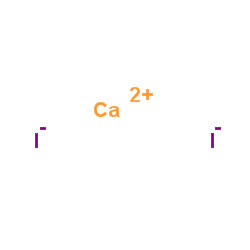
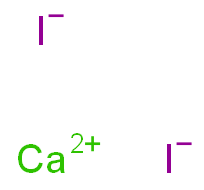
Calcium iodide (CAS 10102-68-8), CaI2, is a highly water-soluble alkaline-earth halide supplied as anhydrous powder, flake or concentrated solution for use as an iodide source in fine-chemical synthesis, industrial brines, nutrition premixes and materials research. Commercially it is specification-driven rather than commodity: water is taken up rapidly from moist air, and iodide is readily oxidised by air and light with liberation of elemental iodine. Those two physical realities, rather than nominal assay, determine qualification outcomes, packaging design and shelf life. This white paper reviews the chemistry, manufacturing routes, the 2026 supply structure and the regulatory perimeter governing international trade in this salt.
Cost structure follows elemental iodine. Primary recovery remains concentrated in Chilean caliche brines and Japanese gas-field brines, so the iodine price index feeds directly into conversion economics and into producers' willingness to hold inventory. Quoted prices therefore move with iodine rather than with plant utilisation, and quotations are expressed inconsistently across anhydrous, hydrate and solution bases. Comparing offers requires normalisation to dry substance plus explicit declarations of assay basis, water content and residual iodate, which explains why specification discipline matters more than unit price in this category.
From a contract development and manufacturing perspective, this is a halide-synthesis and containment problem rather than a commodity fill. Relevant services include custom iodide preparation at chloride-free specification, control of hydrate stoichiometry, particle-size engineering, analytical development for iodate and heavy metals, scale-up from kilo-lab to campaign tonnage and technical transfer to regional finishing sites. Calcium iodide is not an approved medicinal product and carries no therapeutic indication; material supplied for laboratory work is supplied for research use only, and no food, feed or consumer use is implied by such supply.
The anhydrous salt is a colourless to off-white crystalline solid melting above 780 degrees Celsius, with exceptional water solubility and appreciable solubility in lower alcohols and acetone. Because the hydration enthalpy of the cation is large, the solid does not require standing water to hydrate: it draws equilibrium moisture through any imperfect barrier. Hydrates and solutions are therefore the thermodynamically favoured forms in normal handling, and anhydrous material is metastable. Chemically, iodide acts as a soft nucleophile and a mild reducing agent, which explains both its synthetic utility and its instability.
Industrial manufacture starts from elemental iodine, converted to hydroiodic acid or an intermediate metal iodide and then neutralised with a calcium base. Apparent simplicity hides three recurring problems: carbon dioxide evolution and foaming on carbonate neutralisation, transition-metal carry-over from iodine contact equipment, and dehydration without hydrolytic decomposition. Plants that exclude copper and iron from the contact train produce visibly more stable product, which is why low-metal specification and iodine-free appearance correlate in practice.
Demand tracks iodide consumption rather than bulk-chloride cycles. Growth in iodine-containing active pharmaceutical ingredients sustains stable high-purity demand, while iodide-based scintillators and halide-perovskite photovoltaics support a smaller but specification-intense research segment. Larger tonnage moves into mineral premixes wherever iodine deficiency correction programmes operate. Because iodine supply is geographically concentrated, buyers increasingly treat security of supply as the primary decision criterion and accept higher conversion cost to obtain it.
Primary iodine recovery is concentrated in Chile and Japan, whereas conversion to alkali and alkaline-earth iodides is distributed among Asian derivative producers, with finishing assets in Europe and North America. Chinese capacity dominates merchant industrial tonnage, while Japanese and European converters retain strength in high-purity low-metal specification. Flows therefore run from Asian conversion plants to Western end users in drums or intermediate bulk containers rather than bulk vessels. Classification generally falls within iodide headings of HS Chapter 28 and should be confirmed by binding ruling.
Three tiers coexist: technical solution or hydrate supply for brines, mid-purity solid for industrial use, and high-purity anhydrous material with documented low metal content. Apparent price differences of twenty percent frequently disappear once quotes are normalised to dry substance and contained iodine, since some are given wet and others per delivered salt. Volatility is imported from the iodine feed market, and conversion margins widen when producers must hold iodine inventory through spot price increases.
Compliance operates on three independent axes that purchasers routinely conflate. The substance itself must satisfy chemical inventory and hazard communication law, principally REACH and CLP in Europe and TSCA in the United States. The intended sector may impose its own authorisation system, since iodides entering feed, food fortification or pharmaceutical manufacture sit inside separate frameworks. The impurity profile must satisfy the relevant limit set, which differs between undesirable-substance controls for feed and elemental impurity expectations for pharmaceuticals.
Iodide manufacture inherits the environmental questions of primary iodine production and adds its own reduction and acid-handling burdens. European customers subject to corporate sustainability reporting and supply-chain due-diligence duties request plant-level emissions and water data as a condition of tendering, so producers unable to document these burdens lose access regardless of price. Credible programmes quantify inherited and process-specific burdens separately rather than reporting only energy use at the conversion site.
Scope 1 emissions arise from iodine reduction chemistry, steam raising and effluent treatment; Scope 2 covers evaporation, crystallisation, drying and refrigeration; Scope 3 is dominated by elemental iodine, acids, packaging and freight. Abatement levers include multiple-effect evaporation, mechanical vapour recompression, heat recovery around drying, and recovery of iodine from iodide effluents, spent catalysts and detector scrap. Sites certified to ISO 14001 alongside ISO 9001 provide the audited framing buyers now expect.
Traceability runs back to the iodine source, Chilean caliche or Japanese gas-field brine, and increasingly includes scrutiny of water abstraction and brine disposal in arid extraction regions. Documented iodine recovery content is becoming a differentiator for end users reporting circular-economy metrics. Recyclable drum and liner systems, return schemes and reduced single-use desiccant packaging complete the chain.
Because commercial risk is water uptake and subsequent iodine liberation rather than thermal degradation, logistics strategy should centre on barrier performance and lane duration. Long sea transits through tropical humidity are the highest-risk leg, particularly where containers dwell at elevated temperature before discharge. Air freight is justified only for high-purity small lots, and even then only with desiccated packaging. Regional stocking materially reduces exposure by converting multi-week humid transit into short domestic movement.
The salt itself is generally not assigned a dangerous goods classification for road, sea or air transport, but that conclusion must be supported by documented transport review rather than assumption, especially for solution grades whose density and corrosivity differ. Declarations, marking and packaging must align with IMDG, IATA and ADR as applicable, and cargoes must be segregated from acids and oxidising substances. Because evolved iodine vapour can contaminate adjacent cargo, consignments arriving with discoloured or pressurised packaging should be quarantined pending assessment.
Successful buyers treat procurement here as a specification and documentation exercise first and a price exercise second, because form clarity, oxidation indicators and sector authorisation determine usability while apparent price differences frequently reflect assay basis alone.
Calcium iodide is a simple salt with demanding physical behaviour. Hygroscopicity and iodide oxidation, not nominal assay, decide whether a delivery is usable, and both are controllable through discipline in dehydration, transition-metal exclusion, barrier packaging and inert handling. Buyers who normalise price to dry iodine content and require explicit form declaration remove most of the apparent volatility that otherwise dominates commercial discussion.
Across 2026, geographically concentrated iodine feedstock meets differentiated demand from synthesis, electronics materials and nutrition. Organizations offering chloride-free custom iodide preparation, validated iodate and metal analytics, anhydrous finishing and technical transfer to regional sites will hold the high-specification segment, while undifferentiated converters compete on contained-iodine price. Documented due diligence and credible emissions reporting increasingly determine access to regulated end markets.
Powered by Guidechem
This white paper is exclusively compiled by the Guidechem Intelligence Team based on global customs data, regulatory databases, and industry research. Guidechem is a leading global B2B chemical platform, dedicated to connecting global buyers with verified, high-quality manufacturers.
Relying on Guidechem's extensive global database, we have mapped the core participants in the current global Calcium Iodide supply chain:
Disclaimer: The content of this white paper is compiled based on public market data and regulatory information available as of 2026. Global chemical regulations are subject to dynamic adjustments. In actual export operations, enterprises must consult professional regulatory advisors or relevant competent authorities to obtain the latest compliance guidance.
|
 |
 |
 |
 |
 |
 EN
EN
 Agricultural News
 Food News
 Industrial News
 Cosmetic News
 Pharmaceutical News
 Science News

 14YRS
14YRS


