
I. Executive Summary
Monoethylene glycol (MEG, CAS 107-21-1) is one of the highest-volume organic intermediates in world trade, with roughly four-fifths of demand consumed as a polycondensation comonomer with purified terephthalic acid to make PET bottle resin, film and textile fibre. The balance serves antifreeze and coolant, heat-transfer fluids, unsaturated polyester resins, gas hydrate inhibition and de-icing. For B2B buyers in 2026, the molecule is defined less by scarcity than by structural oversupply, cost-curve divergence and a tightening compliance and carbon agenda.
Advantaged ethane-based crackers in the Middle East and on the US Gulf Coast, naphtha-based Asian complexes and a large Chinese coal-to-glycol segment now compete in the same export market, keeping margins thin at the bottom of the cost curve. Meanwhile, recycled-content mandates, data-centre liquid cooling, electric-vehicle thermal management and oilfield hydrate control are creating specification-driven niches that reward documented purity, provenance and carbon performance rather than spot price alone.
This 2026 white paper gives procurement, regulatory and strategy teams an integrated view of ethylene glycol: molecular behaviour and grade-defining impurities, route economics, capacity and trade flows, REACH/CLP and TSCA/FDA/EPA duties, diethylene glycol safety controls, Scope 1-3 emissions, bulk logistics discipline and a sourcing playbook. It targets buyers qualifying suppliers, exporters defending margin in regulated markets and investors assessing where advantage remains in a commoditising molecule.
II. Product Deep Dive: Molecular Mechanisms and Production Evolution
2.1 Physicochemical Properties and Mechanisms
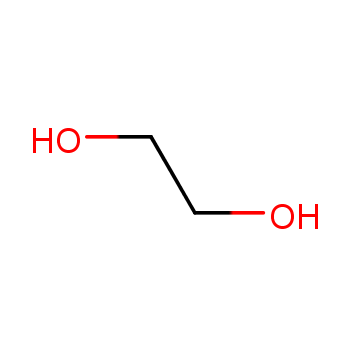
Ethylene glycol (ethane-1,2-diol, C2H6O2, MW 62.07) is a colourless, odourless, hygroscopic liquid fully miscible with water and lower alcohols. Three mechanisms govern its commercial behaviour: hydrogen bonding, colligative freezing-point depression, and the reactivity of two primary hydroxyl groups that enable step-growth polyesterification. Each maps onto a testable parameter - freezing point, water content, and the diethylene glycol and aldehyde numbers that define polyester grade.
- Hydrogen Bonding and Freezing-Point Depression: Two vicinal hydroxyls give strong water-bridging hydrogen bonding, low volatility and complete miscibility. In coolants the glycol disrupts ice-lattice formation, depressing the freezing point to a eutectic near -49 °C at about 60 wt%. The same polarity makes the liquid hygroscopic, so unpadded tanks absorb water and erode the freezing-point guarantee.
- Diol Reactivity and Thermal-Oxidative Degradation: The primary hydroxyls esterify with terephthalic acid or transesterify with dimethyl terephthalate to build the PET backbone and, with dibasic acids, unsaturated polyester resins and polyester polyols. Under heat and oxygen the glycol oxidises to glycolic, glyoxylic and oxalic acids, acidifying coolant and attacking solder, aluminium and copper. Inhibitor packages with controlled reserve alkalinity are therefore mandatory.
2.2 Synthesis and Manufacturing Technologies
Commercial ethylene glycol is made by hydration of ethylene oxide, itself produced by silver-catalysed direct oxidation of ethylene; hydration selectivity and the energy needed to separate dilution water set plant economics and carbon intensity. A Chinese coal- and methanol-based pathway and a maturing family of bio-based and circular routes are reshaping competition. Buyers should treat route disclosure as due diligence, since route fixes the impurity fingerprint, the cradle-to-gate footprint and certification eligibility.
- Ethylene Oxide Hydration and Selectivity Engineering: Non-catalytic thermal hydration runs near a 20:1 water-to-oxide ratio to suppress diethylene and triethylene glycol, and the multi-effect evaporation needed to recover water dominates energy use. Catalytic hydration with carbonate systems or ion-exchange resins lowers the ratio toward 5-10:1 and lifts MEG selectivity above 90%, cutting steam demand per tonne. Selectivity is thus both an economic and a safety control.
- Coal-to-Glycol, Bio-Based and Circular Pathways: The Chinese syngas route couples CO and methanol to dimethyl oxalate and hydrogenates it to MEG, decoupling supply from crude but carrying a higher carbon burden that attracts carbon-border scrutiny. Bio-based MEG runs through fermentation ethanol, bio-ethylene and bio-ethylene oxide to a chemically identical drop-in molecule certifiable under mass balance (ISCC PLUS). Circular routes - PET glycolysis and methanolysis back to monomer - close the loop and serve recycled-content mandates.
2.3 Core Application Matrix
- Polyester Chain - PET Resin, Film and Fibre: The dominant outlet: MEG is polycondensed with purified terephthalic acid into PET for bottle resin, sheet, biaxially oriented film and textile filament and staple fibre. Fibre and bottle grades are specified on diethylene glycol, water, acidity, iron, chloride, ash, colour and UV transmittance at 220, 275 and 350 nm, with aldehydes and catalyst-poisoning metals capped because they suppress intrinsic viscosity and yellow the polymer.
- Thermal Management - Antifreeze, Coolants and Liquid Cooling: Engine coolants, chillers and secondary-refrigerant loops exploit glycol-water freezing-point depression and high boiling point. Growth is being re-rated by digital infrastructure and electrification: data-centre direct-to-chip cooling, battery and power-electronics circuits and heat-pump hydronic blends all specify inhibited, low-chloride, low-conductivity concentrates. Here formulation support outweighs molecule price.
- Industrial and Energy Service - Hydrate Control, Resins and Intermediates: MEG is injected into gas production and transport systems to suppress methane hydrate plugging, then recovered and regenerated in closed loops, making reclaim quality and salt tolerance contractual issues. It is also a core diol for unsaturated polyester resins in composites and panels, a building block for glycol ethers and plasticiser alcohols, and a humectant in inks and textile auxiliaries.
III. Global Market Supply-Demand Landscape and Export Trends
3.1 Demand Drivers and Market Shifts
Demand remains anchored in the polyester chain, now pulled in two directions: continued integrated capacity investment in Asia and India, and packaging regulation pushing recycled content into bottle resin. EU Single-Use Plastics Directive requirements, extended producer responsibility fee modulation and brand pledges divert part of virgin MEG demand toward recycled feedstock, while textile demand tracks apparel cycles. The structural upside lies outside polyester, because data-centre cooling, electric-vehicle thermal systems and storage thermal management are durable and far less price-elastic.
3.2 Capacity Distribution and Export Flows
Global capacity divides into three cost tiers. The lowest is ethane-advantaged cracking in the Middle East and on the US Gulf Coast, exporting by chemical tanker into Asian and European terminals. The second comprises naphtha- and refinery-integrated Asian complexes close to polyester demand in China, India and Southeast Asia. The third is the Chinese coal-to-glycol segment, whose economics follow coal and methanol rather than crude, capping prices but carrying high carbon intensity. Europe has become the rationalising region, trading commodity volume for specialty and bio-circular grades.
3.3 Market Bifurcation and Pricing Dynamics
Pricing has bifurcated along specification and sustainability lines rather than geography. Commodity fibre grade trades on index-linked contracts tied to ethylene, naphtha or coal economics, PTA-PET chain margins, freight and inventory cycles. Bottle and film grades carry a premium for UV transmittance, aldehyde and metals discipline and resin-plant qualification, while low-carbon and bio-circular glycol transacts under ISCC PLUS or RSB mass balance with a documented carbon footprint.
IV. In-depth Analysis of Global Compliance and Regulatory Barriers
Ethylene glycol is a mature high-volume substance whose regulatory burden stays substantial because it combines acute oral toxicity, repeat-dose target-organ effects, food-contact exposure through PET, wide dispersive use and large-volume marine transport. Obligations span inventory and registration, classification and labelling, sector rules for food contact and consumer antifreeze, and the carbon and recycled-content documentation that border mechanisms now demand. Three jurisdictions set the template: the EU under REACH and CLP, the United States under TSCA with FDA and EPA overlays, and Asia-Pacific producers facing tightening inventory rules.
4.1 European Market: REACH, CLP, and Sector-Specific Directives
- REACH Registration and the Only-Representative Route: Registered in the highest REACH tonnage band, ethylene glycol requires an Annex X dossier with a chemical safety report, derived no-effect levels and exposure scenarios covering manufacture, formulation and end uses. Non-EU producers cannot register directly and must appoint an EU-only representative under Article 8, or their importers assume the registrant role. Downstream users must confirm their use is identified and apply the communicated risk-management measures.
- CLP Classification, Food Contact and Antifreeze Rules: Harmonised CLP classification for acute oral toxicity and specific target-organ toxicity drives the H302 and H373 statements, health-hazard pictograms and child-resistant, tactile-warning packaging for consumer preparations. PET made with glycol must satisfy Framework Regulation (EC) No 1935/2004 and the Plastics Regulation (EU) No 10/2011, where ethylene glycol is an authorised monomer subject to a specific migration limit. Several member states also require denatonium benzoate in consumer antifreeze.
4.2 North American Market: TSCA, EPA, and FDA Regulations
- TSCA Inventory, Certification and Reporting: Ethylene glycol is active on the TSCA inventory, so imports require Section 13 import certification at entry, and producers and importers must meet Section 8(a) Chemical Data Reporting on the recurring four-year cycle. The substance has been identified for EPA assessment under the TSCA work-plan process, and any future risk-management rule would cascade into workplace controls. Keep CDR records audit-ready.
- FDA Food-Contact Clearances and EPA Environmental Duties: Packaging uses run through FDA indirect-food-additive clearances, notably the PET polymer provisions of 21 CFR 177.1630 plus supporting adhesive and coating listings, with FDA recycled-plastics guidance where post-consumer content enters. Facilities above threshold quantities report releases under EPCRA Section 313 (Toxics Release Inventory), and spent coolant contaminated with lead or chromium often fails RCRA metals limits. Several states also mandate bittering agents and child-resistant closures.
4.3 The Critical Hurdle: Quality Control and Safety Limits
Compliance Warning: The decisive risk in the glycol chain is diethylene glycol and monoethylene glycol contamination of polyols and excipients: fatal poisonings traced to contaminated glycerin, propylene glycol and sorbitol have prompted repeated World Health Organization alerts on substandard liquid dosage forms. Require validated batch certificates showing DEG and EG by gas chromatography against pharmacopoeial-style limits, verified custody for every lot, and identity testing at incoming goods rather than reliance on paperwork. For polyester grade, water, acidity, iron, chloride, ash, colour and UV transmittance at 220, 275 and 350 nm are equally non-negotiable. Reject any lot offered at a discount or shipped in a non-dedicated tank.
V. Green Trade Barriers and ESG in Manufacturing
Carbon has become a tradable attribute of ethylene glycol. Cradle-to-gate emissions are dominated by the ethylene and ethylene-oxidation steps, so the route - ethane, naphtha, coal or bio-based - can shift the footprint by several tonnes of CO2-equivalent per tonne, and that difference is progressively priced through carbon border mechanisms, corporate Scope 3 accounting and customer scorecards. Exporters without a credible product carbon footprint and reduction plan will be screened out of brand-facing tenders well before any tariff applies.
5.1 Carbon Footprint and Circular Economy
A defensible position starts with cradle-to-gate accounting under ISO 14067 or the Together for Sustainability Product Carbon Footprint Guideline, allocating emissions across the co-produced glycol slate on a documented basis. Scope 1 and 2 reductions come from catalytic hydration, distillation heat integration, waste-heat recovery and low-carbon steam. Scope 3 is larger, spanning feedstock extraction, freight and end-of-life packaging, and is best addressed through circular strategies: PET depolymerisation to monomer, mass-balance bio-attributed glycol and regenerated long-life heat-transfer fluids.
5.2 Sustainable Sourcing and Traceability
Traceability requirements are converging on chain-of-custody certification and auditable recycled-content calculation. ISCC PLUS and RSB mass balance let bio- and circular-attributed glycol enter existing PET assets, and European recycled-content rules prescribe calculation and verification methods that suppliers must document. Water stewardship deserves equal weight, since coal-to-glycol complexes often sit in water-stressed basins; request withdrawal intensity and zero-liquid-discharge status alongside carbon data. ISO 9001, ISO 14001 and verified environmental product declarations convert claims into defensible B2B evidence.
VI. Supply Chain Resilience and Export Logistics
Monoethylene glycol moves by chemical tanker, barge, rail tank car, ISO tank container, IBC and drum, and its logistics risk lies less in dangerous-goods regulation than in quality preservation during transit. Water ingress, oxygen exposure, thermal history and tank-cleaning discipline decide whether a shipment lands on specification. Contracts should define loading and discharge analysis, sealed sampling and retained-sample arbitration.
6.1 Packaging Standards and Moisture/Contamination Control
- Bulk Containment and Material Compatibility: Polyester-grade glycol should move in dedicated or validated-clean stainless tank containers or lined cargo tanks, with nitrogen padding where practicable to limit oxygen uptake. Carbon steel suits industrial grade only, since iron pickup and colour drift disqualify fibre and bottle grades, and chloride residues corrode downstream stainless equipment. Cleaning validation after methanol, ammonia or caustic must be documented.
- Drum and IBC Presentation and Moisture Control: Specialty and inhibited volumes belong in new or re-tested lacquered steel drums or UN-certified composite IBCs with high-barrier liners, sealed under dry nitrogen with tamper-evident closures. Because glycol pulls water through imperfect seals, water content must be tested at loading and discharge with the difference contractually allocated. Avoid elevated yard temperatures and container-top sun exposure to protect inhibitor stability.
6.2 Dangerous Goods Identification and Transit Protocols
Ethylene glycol is generally not assigned a UN number under the IMDG Code, ADR, RID or IATA rules, and bulk sea carriage falls under the IBC Code product list, yet GHS labelling with H302 and H373, a current safety data sheet including Section 14 information and emergency contacts remain mandatory. The real hazards are physical: the product freezes near -13 °C and becomes very viscous in cold weather, so winter movements need heated tanks, coils and pre-heating at discharge. Specify HS heading 2905.31 for consistent customs treatment, and never co-mingle with used coolant.
VII. Enterprise Global Expansion Strategy Guide
Winning in ethylene glycol in 2026 means accepting that the molecule is commoditised while the terms of trade are not. Advantage now comes from regulatory readiness, grade differentiation, carbon documentation and dependable regional service. The three priorities below consistently separate durable suppliers from price-only traders in buyer qualification.
- Build a Regulatory-First Market Entry Package: Secure EU access through an appointed only representative whose registration covers the intended uses and tonnage, maintain TSCA import certification and Chemical Data Reporting readiness, and prepare food-contact dossiers including 21 CFR 177.1630 and the EU Plastics Regulation for packaging customers. Add SVHC screening, Proposition 65 assessment and bittering compliance. Presenting these proactively shortens qualification cycles.
- Tier the Portfolio and Monetise Sustainability: Sell commodity fibre grade on index-linked contracts with tight cost control and reserve margin for bottle, film, inhibited and low-carbon grades. Prove the difference analytically - gas chromatography for diethylene glycol, UV transmittance, aldehydes, iron and chloride, ideally under ISO 17025 accreditation - then add an ISO 14067 or TfS-aligned carbon footprint plus ISCC PLUS or RSB certification, and price those attributes explicitly.
- Regionalise Supply and Hedge Structural Risk: Qualify at least two producing regions with different feedstock economics, pairing a Middle East or US Gulf ethane-based source against an Asian naphtha- or coal-based source, so one outage or trade measure cannot halt supply. Use terminal storage and vendor-managed inventory in key import basins, and model anti-dumping, safeguard and carbon-border scenarios in pricing.
VIII. Conclusion
Ethylene glycol enters 2026 as a molecule of contrasts: oversupplied at the commodity end, yet increasingly differentiated at the specification, service and sustainability end. The polyester chain will keep setting the volume and price tone, but attractive growth is migrating to thermal management for data centres and electrified transport, to chemically recycled and bio-attributed feedstock and to closed-loop glycol reclamation. Price-only suppliers will be squeezed between low-cost capacity and customers whose criteria now include carbon and traceability.
For buyers, the agenda is disciplined qualification and diversification: verify route and impurity fingerprint, demand diethylene glycol limits with identity testing on every polyol lot, insist on validated tank history and discharge analysis, and price carbon and compliance as real terms of trade. For exporters, it is documentation and differentiation - REACH and TSCA readiness, food-contact and bittering compliance, ISO 14067 footprints and mass-balance chain of custody - backed by regional inventory and transparent contracting.
IX. Industry Resource Connection and Supplier Ecosystem
Powered by Guidechem
This white paper is exclusively compiled by the Guidechem Intelligence Team based on global customs data, regulatory databases, and industry research. Guidechem is a leading global B2B chemical platform, dedicated to connecting global buyers with verified, high-quality manufacturers.
Relying on Guidechem's extensive global database, we have mapped the core participants in the current global Ethylene glycol supply chain:
- North America Ecosystem: Integrated ethane-advantaged petrochemical complexes on the US Gulf Coast supply fibre, bottle and industrial grades, backed by deep tanker and barge infrastructure, extensive terminal storage and mature contract-indexation practice. A second tier of regional formulators converts glycol into inhibited antifreeze and cooling concentrates with strong technical service.
- Europe Ecosystem: Producers under full REACH and CLP obligations with high energy and carbon costs have shifted toward bottle and film grades, inhibited thermal fluids and bio-circular mass-balance volumes. Their assets are documentation depth, ISO 9001 and ISO 14001 certification, verified product carbon footprints and proximity to brand owners facing recycled-content mandates.
- Asia-Pacific / China Ecosystem: This region supplies the largest share of global volume through naphtha-based integrated refining-chemical complexes and a substantial coal-to-glycol segment, giving cost leadership and scale but variable carbon and water intensity. Leading complexes are installing catalytic hydration and bio-circular lines to remain eligible for export markets where ESG documentation decides tenders.
Disclaimer: The content of this white paper is compiled based on public market data and regulatory information available as of 2026. Global chemical regulations are subject to dynamic adjustments. In actual export operations, enterprises must consult professional regulatory advisors or relevant competent authorities to obtain the latest compliance guidance.


 EN
EN
 Agricultural News
 Food News
 Industrial News
 Cosmetic News
 Pharmaceutical News
 Science News

 1YR
1YR

