
I. Executive Summary
Dioctadecyl dimethyl ammonium chloride (DODMAC, also traded as distearyl dimethyl ammonium chloride, CAS 107-64-2) is the benchmark dialkyl quat of the cationic surfactant industry. Two saturated C18 chains on a permanently charged nitrogen give it exceptional substantivity to anionic substrates such as cellulose, keratin, silica, clay, ores and bitumen fines. That is why one molecule serves fabric softeners, hair conditioners, cationic asphalt emulsions, flotation collectors and organophilic bentonite.
In 2026 sourcing is no longer a commodity story, because DODMAC sits where oleochemical feedstock volatility, tightening aquatic-hazard classification and the shift to esterquats intersect. It is sold either as a 74–80 % active concentrate in isopropanol/water or glycol/water, or as a ≥95 % solid in flake, pastille, bead or prill form. A defensible specification fixes C16/C18 chain distribution, iodine value, free amine and amine salt, ash, water, colour, residual solvent and heavy metals.
Because the hydrophobe is a natural-derived UVCB substance, chain distribution is a regulatory attribute as much as a performance one under REACH. This paper covers route chemistry, impurity logic, applications, regional supply, the REACH, CLP, TSCA and detergent-biodegradability framework, logistics and qualification strategy for buyers and contract manufacturers. It contains no consumer-facing guidance, because finished-product claims belong to the finished-product manufacturer.
II. Product Deep Dive: Molecular Mechanisms and Production Evolution
2.1 Physicochemical Properties and Mechanisms
DODMAC is a tetraalkylammonium salt, C38H80N+ Cl−, with molecular weight near 586.5 g/mol. The nitrogen carries a permanent pH-independent charge, so unlike amine cationics it keeps substantivity in alkaline media. The two stearyl chains give a very low HLB and high Krafft temperature, so the product forms lamellar gels and vesicles rather than dissolving; formulators therefore control particle size and dispersion temperature.
- Chain-length architecture and phase behaviour: The hydrophobe is a hydrogenated tallow or vegetable C16–C18 cut, so commercial "distearyl" means a distribution, typically 60–70 % C18. That distribution controls melting range (roughly 85–100 °C), iodine value as a proxy for unsaturation and colour risk, gel collapse temperature and softening performance. Buyers who specify only "DSDMAC" invite batch-to-batch rheology drift.
- Electrostatic adsorption and surface-energy reversal: Performance derives from electrostatic anchoring of the cationic head onto negatively charged surfaces, followed by outward orientation of the two tails. On cotton and hair this gives lubrication; on montmorillonite it produces an organophilic rheological additive; on ores it enables flotation; on bitumen it yields a droplet that binds acidic aggregate. Zeta-potential reversal and contact-angle shift are more predictive receipt tests than assay alone.
2.2 Synthesis and Manufacturing Technologies
Industrial DODMAC is a downstream oleochemical: volume starts from hydrogenated C16–C18 fatty acid and passes through nitrile formation, amine formation, tertiary amine build and Menshutkin quaternization. Plants are usually integrated with fatty amine units, because the secondary-amine intermediate is shared across cationics, imidazolines and amine oxides. Differentiators are hydrogenation selectivity, methyl chloride handling discipline, and the finishing step that produces a free-flowing non-caking solid.
- Fatty nitrile and fatty amine route: Fatty acid is converted to nitrile by continuous ammoniation/dehydration over alumina or zinc oxide with ammonia recycle, then hydrogenated to primary amine over nickel or cobalt. The primary amine is converted to secondary amine by catalytic disproportionation, with the primary/secondary/tertiary ratio set by temperature, ammonia partial pressure and residence time. Selectivity here determines residual unsaturation, colour precursors and nitrile carry-over.
- Reductive methylation and quaternization: The secondary amine is N-methylated with formaldehyde and hydrogen over nickel, or by Eschweiler–Clarke-type chemistry, with tight control of tertiary amine value. The tertiary amine is quaternized with methyl chloride in isopropanol/water in a pressure-rated reactor. Each batch is stripped and release-tested for residual methyl chloride, isopropanol and the free amine/amine-hydrochloride pair, the last two being the usual cause of odour complaints.
2.3 Core Application Matrix
- Fabric softening and hair conditioning: DODMAC deposits on anionic fibre surfaces and delivers softness, lubricity and anti-static behaviour. In Europe this outlet was largely displaced by esterquats through detergent biodegradability rules and Ecolabel criteria. Demand persists in Asia, the Middle East, Africa and Latin America, in institutional softeners, and in hair conditioners.
- Bitumen emulsification, mineral flotation and organophilic clay: These three outlets are the volume stabiliser for the molecule. As an emulsifier it lets producers coat acidic aggregates that anionic emulsions cannot hold; as an organoclay modifier it turns bentonite into the rheological backbone of coatings, greases and drilling fluids. It is a specification-sensitive outlet where chain-length consistency matters more than price.
- Preservative boosting and industrial auxiliaries: Cationic quats are valued as biocidal enhancers in water treatment and metalworking fluids, as antistatic additives and as pigment dispersants. In these non-detergent uses esterquat substitution pressure is weak. That is why industrial grades with looser colour limits compete successfully against premium fabric-care grades.
III. Global Market Supply-Demand Landscape and Export Trends
3.1 Demand Drivers and Market Shifts
Demand is best read as three cycles. Household fabric care in Western Europe, Japan and North America is flat to declining, because esterquats won the rinse-softener segment on biodegradability grounds. Emerging-market fabric care still grows with urbanisation and washing-machine penetration, while industrial demand for road emulsions, mining, organoclay and oilfield tracks infrastructure spend and is now the swing factor.
3.2 Capacity Distribution and Export Flows
Capacity sits in oleochemical clusters with access to hydrogenated tallow or vegetable stearin and to fatty amine units. China holds the largest concentration of quaternary ammonium capacity, in Jiangsu, Shandong and Zhejiang, exporting to Asia, the Middle East, Africa and Latin America; India competes from Gujarat and Maharashtra. Europe keeps high-specification capacity increasingly configured around esterquats, while North America serves domestic demand and imports selectively.
3.3 Market Bifurcation and Pricing Dynamics
Commodity concentrate and industrial flake are priced off the C16–C18 fatty acid and fatty amine chain, so quotations move with tallow, palm stearin, ammonia, hydrogen, methyl chloride, solvent, energy and freight. Contracts therefore carry feedstock-linked adjustment clauses. Speciality grades — low-ash, low free-amine, tight colour, anti-caking bead — carry a premium and are contracted rather than spot-traded. Solid grades also carry a seasonality liquids do not, because hot-port summer transit is exactly when caking occurs.
IV. In-depth Analysis of Global Compliance and Regulatory Barriers
DODMAC is registered and listed in the major jurisdictions, so the compliance problem is classification accuracy, UVCB identity, sector rules and documentation, not access. Importers must hold an SDS whose GHS statements match the actual classification and verify that registration covers the chain-length distribution shipped. Because it is a cationic surfactant with a corrosive profile and strong aquatic toxicity, classification drives labelling, transport, occupational controls and detergent eligibility.
4.1 European Market: REACH, CLP, and Sector-Specific Directives
- REACH registration and UVCB identity: Imports are lawful where the supply chain is covered by an existing registration under EC 1907/2006. The trap is identity: the UVCB hydrophobe's C16/C18 ratio, unsaturation and tallow-versus-vegetable origin must match the registered substance and the certificate of analysis. Verify the registration number on the SDS, confirm any Only Representative, and screen the dossier against the candidate list.
- CLP classification and detergent biodegradability: Under CLP (EC 1272/2008) it carries skin and eye classification plus acute and chronic aquatic hazard, with an M-factor that shifts mixture thresholds for formulators. Separately, Regulation (EC) 648/2004 requires detergent surfactants to meet ultimate biodegradability, and Ecolabel schemes add exclusions. That framework, not REACH, is why dialkyl quats lost the European softener segment to esterquats.
4.2 North American Market: TSCA, EPA, and FDA Regulations
- TSCA inventory status: It is listed and active on the TSCA inventory, so ordinary commercial import is permitted. Importers should hold the supplier's inventory-status statement and maintain Section 13 import certification at entry. Exporters should review Section 12(b) export-notification obligations for shipments from the United States.
- EPA and sector overlays: Sold into antimicrobial or preservative-booster uses, the finished product is a FIFRA pesticide requiring EPA and state registration. Discharge is governed by NPDES permits and pretreatment limits, and cationic surfactants interfere with conventional wastewater treatment. Cosmetic use falls under MoCRA substantiation duties; food contact would need a separate FDA clearance this grade lacks.
4.3 The Critical Hurdle: Quality Control and Safety Limits
Compliance Warning: A certificate of analysis reporting only "assay ≥ 98 %" is not a qualification document. Insist on the full release panel: quaternary assay by two-phase or potentiometric titration, free amine and amine hydrochloride separately, ash, water by Karl Fischer titration, colour on a defined melt, residual isopropanol and methyl chloride, chloride stoichiometry, heavy metals and iodine value. Confirm C16/C18 distribution and tallow-versus-vegetable origin in writing, and confirm the aquatic M-factor on the SDS, because a change silently reclassifies the customer's finished mixture.
V. Green Trade Barriers and ESG in Manufacturing
ESG pressure arrives through feedstock, biodegradability and the customer's Scope 3 accounting rather than through the factory gate. European, Japanese and multinational buyers request carbon-footprint data, renewable-carbon content, deforestation-free sourcing evidence and wastewater performance. A supplier who cannot answer becomes commercially invisible even at a competitive price.
5.1 Carbon Footprint and Circular Economy
The footprint sits upstream: fatty-acid splitting and hydrogenation, high-temperature ammoniation, and hydrogen-consuming hydrogenation and methylation steps. Plants compete through heat integration, hydrogen recovery, catalytic efficiency that shrinks amine recycle loops, and solvent recovery. DODMAC is not recovered from post-consumer streams at scale, so claims should rest on renewable carbon and downstream energy savings such as lower-temperature asphalt placement.
5.2 Sustainable Sourcing and Traceability
Traceability is where most supply chains fail audit. Tallow-derived hydrophobe is outside EUDR scope but needs animal-by-product documentation, TSE controls and Halal or Kosher certification where applicable. Palm-derived hydrophobe is within EUDR scope and needs geolocation, legality assurance and RSPO certification; require a stated chain-of-custody model and audit ISO 9001 and ISO 14001.
VI. Supply Chain Resilience and Export Logistics
Logistics is a physical-form problem before a regulatory one. Solids soften well below 100 °C and are hygroscopic, so they cake, bridge and block after hot voyages; concentrates contain solvent and need measured flash points. Exporters who engineer form, barrier packaging and thermal history as one system avoid most disputes.
6.1 Packaging Standards and Moisture/Contamination Control
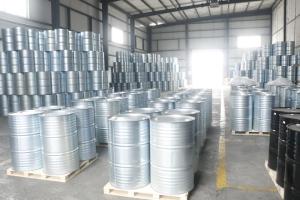
- Physical form and anti-caking design: Bead and prill flow best; flake has the highest surface area and bridging risk. Silica anti-caking aids are used where permitted, but organoclay and asphalt customers often reject them. Multiwall sacks with polyethylene liner, or foil-laminate bags in fibre drums, are standard, each with lot code and net weight.
- Moisture barrier, thermal limits and storage discipline: Packaging must combine a moisture barrier with stack strength, and cargo must stay below the softening range in dry, ventilated storage. Pallets should be stretch-wrapped with desiccant and broken down on arrival. Water ingress and thermal history cause most caking claims, both detectable by Karl Fischer titration on retained samples.
6.2 Dangerous Goods Identification and Transit Protocols
Classification must derive from the actual substance classification and form, not a competitor's SDS. Where aquatic hazard applies, solids typically move as UN 3077, Class 9, PG III, under IMDG, ADR, RID and IATA, with marine-pollutant marking; solvent concentrates are assessed for flammability. Shipments need a compliant SDS, GHS labels, a dangerous-goods declaration and a packing certificate, plus retained samples from every lot.
VII. Enterprise Global Expansion Strategy Guide
Three strategies separate profitable exporters from price-only suppliers in the dialkyl quat business. Each is defensible against low-cost entrants because each requires discipline rather than capital.
- Qualify dual feedstock routes: Validate both a hydrogenated-tallow and a fully hydrogenated vegetable C16–C18 hydrophobe to the same specification, with documented equivalence on iodine value, chain distribution, colour and performance. Dual qualification protects supply against tallow price spikes and animal-by-product trade restrictions and unlocks customers with religious-dietary or vegan requirements. It is also a prerequisite for credible EUDR and RSPO answers in European tenders.
- Manage the esterquat transition deliberately: Position DODMAC where its chemistry is genuinely superior — cationic bitumen emulsions, organoclay modification, mineral flotation and industrial auxiliaries. Develop or toll an esterquat grade for customers whose finished products fall under detergent biodegradability requirements. Suppliers offering both molecules from one quality system win accounts a single-molecule producer cannot serve.
- Sell the quality system, not just the molecule: Invest in ISO 9001 and ISO 14001 at the producing site, validated methods with declared uncertainty, retained samples and customer change-control notification. Ship chain-length and water certificates with every lot and publish the correct aquatic M-factor. Where assay is easy to match, documentation and consistency are the real differentiator.
VIII. Conclusion
DODMAC in 2026 is a mature molecule in a structurally changing market. The detergent segment that made it famous has, in the most regulated regions, moved to esterquats, and no price competition will reverse a substitution driven by biodegradability criteria written into EU detergent law. What remains is a durable, geographically shifting business built on the molecule's ability to anchor to anionic surfaces: asphalt emulsions, organoclay rheology modifiers, mineral processing aids and industrial auxiliaries.
For buyers, the practical message is that DODMAC rewards specification discipline. Define chain distribution, iodine value, free amine and amine salt, water, ash, colour and residual solvent; verify aquatic classification and M-factor on the SDS; confirm REACH and TSCA coverage and the chain-of-custody model. Treat packaging form, moisture barrier and thermal history as part of the purchase, because done carelessly the molecule generates caking claims, colour rejections and downstream mixture reclassification.
IX. Industry Resource Connection and Supplier Ecosystem
Powered by Guidechem
This white paper is exclusively compiled by the Guidechem Intelligence Team based on global customs data, regulatory databases, and industry research. Guidechem is a leading global B2B chemical platform, dedicated to connecting global buyers with verified, high-quality manufacturers.
Relying on Guidechem's extensive global database, we have mapped the core participants in the current global Dioctadecyl dimethyl ammonium chloride (DODMAC) supply chain:
- China — integrated oleochemical-to-quaternary cluster: The largest concentration of dialkyl quat capacity, anchored by fatty-amine and cationic-surfactant plants in Jiangsu, Shandong and Zhejiang with access to imported palm stearin and domestic tallow. Producers supply both 74–80 % concentrates and ≥95 % flake, bead and prill grades and dominate export tenders into Asia, the Middle East, Africa and Latin America. The advantage is integrated feedstock and scale; watch-points are chain-length consistency, residual solvent control and SDS classification accuracy.
- India — oleochemical export platform: Indian producers leverage a mature vegetable-oil and fatty-acid industry in Gujarat and Maharashtra to serve the same Asian and African softener, asphalt and textile markets, competing head-to-head with Chinese material on landed cost. Strengths include English-language regulatory documentation and flexibility on smaller lots. Audits should focus on colour stability, water control and caking performance for tropical destinations.
- European Union — high-specification and esterquat-transition hub: European capacity is smaller in commodity terms but sets the specification and documentation standard for the industry, configured around esterquats for home care while continuing to serve organoclay, asphalt and industrial speciality demand. Buyers gain mature REACH dossiers, robust biodegradability data packages and ISO 9001/14001-certified sites. The premium is justified by documentation and consistency rather than chemistry.
Disclaimer: The content of this white paper is compiled based on public market data and regulatory information available as of 2026. Global chemical regulations are subject to dynamic adjustments. In actual export operations, enterprises must consult professional regulatory advisors or relevant competent authorities to obtain the latest compliance guidance.



 EN
 Agricultural News
 Food News
 Industrial News
 Cosmetic News
 Pharmaceutical News
 Science News



 4YRS


