-
We detected your language preference as English. Would you like to switch to the English version for a better experience?
Switch to English
Stay here


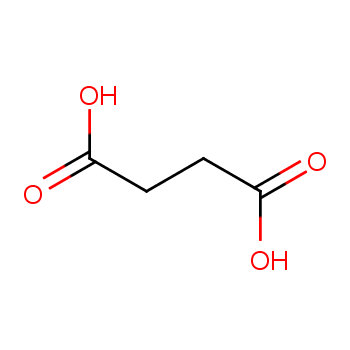
Succinic acid, CAS 110-15-6, is butanedioic acid, a four-carbon dicarboxylic acid and central platform molecule for chemicals, polymers, food systems, and pharmaceutical synthesis. Its two carboxyl groups provide acidity, salt formation, esterification, and polycondensation reactivity, while its modest molecular size supports broad water and solvent compatibility. Commercial material is supplied as crystalline solid in technical, food, and high-purity grades. B2B qualification should distinguish petrochemical and fermentation routes, crystal form, assay basis, moisture, color, metals, and end-use documentation.
The supply landscape is evolving from conventional maleic-anhydride hydrogenation toward bio-based fermentation using carbohydrate feedstocks, though economics depend on feedstock, energy, purification, and co-product assumptions. Bio-based origin can reduce fossil-carbon exposure but does not automatically deliver a lower verified footprint or identical impurity profile. Polymer customers value color, thermal stability, and consistency; food and pharmaceutical customers add identity, residual-solvent, elemental-impurity, and hygiene requirements. Route transparency and change control are therefore commercially important even when both routes meet the same assay.
In 2026, suppliers compete on reliable capacity, purity, regulatory support, and credible low-carbon claims rather than commodity price alone. REACH, CLP, TSCA, FDA, GHS, and downstream product rules define market access, while cGMP, ICH, DMF, CEP, and USP/Ph.Eur. expectations apply only to appropriately controlled pharmaceutical programs. ISO 9001 and ISO 14001 systems support governance, and quantified Scope 1-3 Emissions help customers compare routes. Long-term agreements should allocate risk for feedstock volatility, energy, sustainability claims, and specification changes.
Succinic acid has two ionizable carboxyl groups, enabling stepwise dissociation and formation of succinate salts over formulation-relevant pH ranges. It participates in esterification, amidation, and polycondensation, making it a versatile building block for polyesters, plasticizers, solvents, and active-ingredient intermediates. In biological systems, succinate is a normal intermediate in the tricarboxylic-acid cycle, but industrial safety and suitability still depend on dose, purity, and route of exposure. Its acidity also provides buffering or flavor effects where specifically authorized.
The established petrochemical route hydrogenates maleic anhydride or maleic acid, followed by crystallization and purification to control maleate, fumarate, catalyst metals, and color. Bio-based production ferments sugars or other renewable carbon to succinate, then separates the product from cells, salts, proteins, and fermentation-derived color bodies. Downstream recovery may use acidification, electrodialysis, ion exchange, evaporation, and crystallization in route-specific combinations. Competitive process development minimizes neutralizing-agent consumption, wastewater salt, steam demand, and yield loss while preserving crystal quality.
Demand is linked to resins, coatings, plasticizers, solvents, food ingredients, and the emerging market for bio-based polyesters. Sustainability targets stimulate interest in renewable carbon, but purchasing teams increasingly require audited mass balance or direct fermentation evidence rather than generic “green” labels. Petrochemical supply remains relevant because scale, purity, and cost can be strong, especially when maleic anhydride markets are balanced. The market is therefore bifurcating by carbon origin, application performance, and documentary quality.
Asia-Pacific and China hold significant chemical-conversion capacity and expanding fermentation capabilities, supported by integrated feedstocks and export infrastructure. Europe has strategic interest in bio-based platform chemicals and higher-value polymer applications, while North America combines fermentation know-how, regional distribution, and established petrochemical demand. Trade routes are influenced by energy prices, carbohydrate economics, tariffs, and plant operating rates. Buyers should evaluate effective qualified output because nameplate capacity can overstate material available at low color or pharmaceutical-relevant purity.
Benchmark pricing reflects maleic anhydride, glucose or other fermentable carbon, hydrogen, catalysts, neutralizing chemicals, steam, electricity, and freight. Bio-based premiums vary with certification boundary, carbon intensity, fermentation yield, and whether environmental attributes are transferred to the buyer. Food and pharmaceutical grades command additional value for purification, analytical release, controlled packaging, and documentation. Total cost should also include color failures, polymer yield, filtration, regulatory maintenance, inventory, and change-management burden.
The regulatory path depends on whether succinic acid is sold as an industrial monomer, food ingredient, excipient, reagent, or active-substance intermediate. REACH and TSCA inventory obligations coexist with CLP and GHS communication, but they do not authorize downstream food or drug use. FDA conditions, local positive lists, and food-contact migration rules must be mapped to the exact application. For pharmaceutical programs, buyers should define whether USP/Ph.Eur. conformity, cGMP manufacture, ICH impurity evaluation, a DMF, or CEP support is actually required.
Succinic acid offers a useful case study in comparing renewable carbon with process-wide environmental performance. A fermentation route may reduce fossil feedstock but consume significant steam, nutrients, neutralizer, and water during recovery, whereas catalytic hydrogenation depends on fossil maleic feedstock and hydrogen. ISO 14001 can organize site controls and ISO 9001 can protect data consistency. Credible ESG assessment compares both routes using the same boundary, allocation, product purity, and geography.
Manufacturers should disclose Scope 1 fuel and process emissions, Scope 2 purchased energy, and material Scope 3 Emissions from feedstocks, hydrogen, nutrients, chemicals, packaging, and logistics. Fermentation improvements include higher titer and yield, low-salt recovery, renewable power, and heat integration. Petrochemical improvements include lower-carbon hydrogen, catalyst longevity, energy-efficient crystallization, and upstream feedstock optimization. Claims should rely on independently reviewed lifecycle data and state whether biogenic carbon, co-products, and land-use effects are included.
Petrochemical traceability should connect maleic feedstock, hydrogen, catalyst lots, campaigns, purification, and packaging, while fermentation traceability adds organism bank, substrate origin, nutrients, and downstream processing aids. Mass-balance claims require auditable custody and clear allocation rules. Food and pharmaceutical customers may also request allergen, animal-origin, GMO, nitrosamine-risk, and elemental-impurity assessments. Supplier-change controls should cover feedstock origin because route changes can alter both impurity profiles and ESG assertions.
Succinic acid is generally stable in dry, compatible packaging but can cake or dissolve when exposed to moisture. Global plans should combine sealed inventory, qualified alternate routes, realistic port dwell assumptions, and temperature-humidity risk assessment. Export documents must align CAS number, grade, origin, tariff classification, SDS, and regulatory declarations. Receiving laboratories should confirm identity, assay, water, color, and application-critical impurities before releasing material to polymer or regulated production.
Transport classification must follow the final SDS and modal rules, including ADR, RID, IMDG, and IATA assessments where relevant. Succinic acid is often shipped as non-dangerous goods, but dust, acidic solutions, or formulated mixtures can require additional controls. Containers should remain dry and protected from strong oxidizers, strong bases, and incompatible residues. Emergency information, seal records, and route-temperature data improve investigation if packaging damage or caking occurs.
Market entry should begin with a route-and-grade value proposition: dependable commodity acid, low-color polymer grade, verified bio-based material, food grade, or pharmaceutical-support grade. Each position requires distinct analytical methods, claims, and customer qualification packages. Suppliers should avoid using renewable origin as a substitute for process capability or legal status. Pilot validation followed by locked specifications and a lifecycle quality agreement supports scalable international business.
Succinic acid combines straightforward dicarboxylic chemistry with a strategically important choice between petrochemical and fermentation supply. Its value is determined by reactivity, color, impurity control, carbon origin, and regulatory fitness for purpose. No single route is automatically superior across cost, quality, and environmental metrics. Buyers should qualify the exact route and manufacturing site against their process rather than relying on generic assay or bio-based branding.
A resilient 2026 sourcing program integrates dual-region supply, route-specific analytics, regulatory mapping, and assured ESG data. REACH, CLP, TSCA, FDA, GHS, cGMP, ICH, DMF, CEP, and USP/Ph.Eur. concepts must be applied according to the intended market and role. Controlled packaging and change notification preserve qualified performance across borders. Suppliers that combine reliable chemistry with transparent lifecycle evidence can support both established applications and responsible growth in bio-based materials.
Powered by Guidechem
This white paper is exclusively compiled by the Guidechem Intelligence Team based on global customs data, regulatory databases, and industry research. Guidechem is a leading global B2B chemical platform, dedicated to connecting global buyers with verified, high-quality manufacturers.
Relying on Guidechem's extensive global database, we have mapped the core participants in the current global Succinic acid supply chain:
Disclaimer: The content of this white paper is compiled based on public market data and regulatory information available as of 2026. Global chemical regulations are subject to dynamic adjustments. In actual export operations, enterprises must consult professional regulatory advisors or relevant competent authorities to obtain the latest compliance guidance.
|
 |
 |
 |
 |
 |
 EN
 Agricultural News
 Food News
 Industrial News
 Cosmetic News
 Pharmaceutical News
 Science News


 3YRS

