
I. Executive Summary
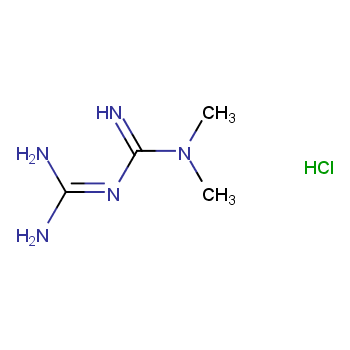
Metformin hydrochloride (CAS 1115-70-4) is the hydrochloride salt of 1,1-dimethylbiguanide, C4H11N5·HCl, with a relative molecular mass of 165.62. It is first-line pharmacotherapy for type 2 diabetes and, by tonnage, one of the largest-volume synthetic oral antidiabetic APIs. Off-patent and on the WHO Model List of Essential Medicines, it behaves as a low-margin commodity in which documentation and impurity control decide supplier selection.
Three drivers shape demand: expanding diabetes populations across Asia-Pacific, Latin America and Africa; migration toward extended-release and fixed-dose combinations; and tender procurement of an essential medicine. Manufacturing gravity has moved to Asia-Pacific, where the electricity-intensive cyanamide and dicyandiamide chain is concentrated.
Since the nitrosamine crisis of 2019–2020, metformin hydrochloride has become the reference case for how one impurity class, N-nitrosodimethylamine (NDMA), can destabilise a mature generic API. Regulators in the European Union, the United States and elsewhere now expect documented risk assessments, root-cause analysis and confirmatory lot testing. This paper examines the molecule across nine dimensions for API makers, CDMO partners and procurement teams planning 2026 commitments.
II. Product Deep Dive: Molecular Mechanisms and Production Evolution
2.1 Physicochemical Properties and Mechanisms
Metformin hydrochloride is a cation-forming biguanide with well characterised physicochemistry and disposition. It is a white crystalline powder, freely soluble in water and practically insoluble in acetone or dichloromethane, melting between 220 °C and 226 °C with decomposition. The parent base is strongly basic, so the molecule is a protonated hydrophilic cation at physiological pH, eliminated unchanged renally with a half-life of four to eight hours.
- Hepatic Gluconeogenesis, AMPK Signalling and Complex I: Metformin enters hepatocytes through organic cation transporter 1 and inhibits mitochondrial complex I, lowering cellular energy state and raising the AMP/ATP ratio. AMPK activation through the AXIN/LKB1 lysosomal axis then suppresses gluconeogenic gene expression, and because insulin secretion is not stimulated, monotherapy carries low hypoglycaemia risk.
- Transporter-Dependent Disposition and Gut Mechanisms: Intestinal uptake is mediated by PMAT and organic cation transporters, hepatic uptake by OCT1, and renal secretion by OCT2 with MATE1 and MATE2-K, so renal function strongly influences exposure. Part of the effect is gut-mediated, through altered bile-acid metabolism, microbiome modulation and enhanced GLP-1 secretion. The safety corollary is gastrointestinal intolerance and a rare, renal-function-dependent risk of lactic acidosis.
2.2 Synthesis and Manufacturing Technologies
Industrial metformin hydrochloride is made by condensing dimethylamine with dicyandiamide, a sixty-year-old route run in melt, solvent-mediated and continuous variants. Dimethylamine hydrochloride and dicyandiamide are heated neat at 130–160 °C or in a high-boiling alcohol, then converted to the salt and recrystallised. Differentiation comes from thermal control, impurity management, particle engineering and exclusion of nitrosating species.
- Cyanoguanidine Condensation: Melt, Solvent and Continuous Routes: Solvent-free melt condensation gives high productivity and a low solvent burden, but the exotherm demands jacketed high-torque equipment; hot spots cause discolouration and guanidine by-products. Solvent-mediated routes improve heat transfer and impurity purge at the cost of recovery duties, while continuous extrusion decouples heat generation from reactor volume.
- Crystallisation, Particle Engineering and Nitrosamine-by-Design: With unit doses of 500 to 1,000 mg and poor compactability, suppliers differentiate on particle-size distribution, density and flow, offering direct-compression and granulation grades. Seeded cooling or antisolvent crystallisation is followed by drying tuned to hold water and residual dimethylamine within tight limits. Nitrosamine control is designed in: amine raw materials carry nitrite limits, nitrosating agents are excluded, and lots are released against LC-MS/MS methods quantifying below the 96 ng/day NDMA intake.
2.3 Core Application Matrix
- Immediate- and Extended-Release Generic Solid Dose: The dominant outlet is high-dose monotherapy, where high solubility but modest permeability makes absorption, not dissolution, the rate-limiting step. Extended-release matrix systems improve tolerability and enable once-daily dosing, demanding tighter particle-size control, and supply national tenders and hospital procurement.
- Fixed-Dose Combinations and Multilayer Platforms: Metformin is combined with SGLT2 inhibitors, DPP-4 inhibitors, sulfonylureas and thiazolidinediones in bilayer and multiparticulate presentations that simplify chronic polypharmacy. These programmes need predictable compactability and compatibility with a second active substance, plus stability and bioequivalence support. For CDMO partners, combination development converts a commodity API into higher-margin revenue.
- Clinical Research, Metabolic and Geroscience Programmes: Investigators in prediabetes, steatotic liver disease, obesity and geroscience sustain demand for documented comparator material. Such work uses research-use-only grade characterised by identity, assay and related substances, with a strict boundary against GMP material for clinical use. For CDMOs this is a distinct service line: small-batch custom synthesis, analytical development and reference-standard preparation.
III. Global Market Supply-Demand Landscape and Export Trends
3.1 Demand Drivers and Market Shifts
Demand is driven less by therapeutic innovation than by chronic-disease demography and public procurement. Rising type 2 diabetes prevalence across Asia-Pacific, the Middle East and sub-Saharan Africa sustains volume growth, while broader screening widens the treated population. Value growth concentrates in extended-release and fixed-dose presentations, which carry better margins and higher technical barriers.
3.2 Capacity Distribution and Export Flows
Capacity is layered rather than concentrated: upstream, cyanamide and dicyandiamide derive from calcium carbide and lime nitrogen in an electricity-intensive sequence tied to regional power economics. Midstream API synthesis is dominated by Asia-Pacific producers, with China supplying intermediates and bulk API and India expanding under bulk-drug parks. Europe and North America retain finished-dose capacity, importing API under GMP equivalence.
3.3 Market Bifurcation and Pricing Dynamics
The market is bifurcated between a price-driven commodity tier and a compliance-driven regulated tier, and the gap has widened. Commodity buyers optimise landed cost and accept minimal documentation, viable only where nitrosamine accountability sits elsewhere. Regulated pricing internalises DMF or CEP maintenance, annual nitrosamine surveillance, audit readiness, change control and dual-site security. Contracts increasingly use index-linked clauses and committed safety stock.
IV. In-depth Analysis of Global Compliance and Regulatory Barriers
Metformin hydrochloride is at once one of the least restricted molecules to trade and one of the most heavily documented. Every kilogram entering a regulated market must be traceable to a GMP site, a maintained dossier and a defensible impurity strategy. An API is qualified through the finished-product application that references it, so the quality agreement, change-control clause and audit clause are the most commercially significant documents in any transaction.
4.1 European Market: REACH, CLP, and Sector-Specific Directives
- REACH, CLP and the Medicinal-Product Exemption: Active ingredients in authorised medicinal products benefit from the REACH Article 2(5)(a) exemption from registration and downstream-user duties. The exemption is use-specific, so research or industrial volumes still need full registration with a technical dossier. CLP classification is not harmonised, so suppliers self-classify and notify to the C&L Inventory, commonly as Acute Tox. 4 (H302), and issue GHS labels with a sixteen-section safety data sheet.
- CEP or ASMF, EU GMP and Nitrosamine Obligations: The European gateway is a Certificate of Suitability to the Ph.Eur. monographs issued by EDQM, or an Active Substance Master File, supported by a valid EU GMP certificate. Monograph compliance covers identity, assay, related substances, residual solvents and elemental impurities under ICH Q3D. Following the Article 5(3) nitrosamine referral, authorisation holders must document risk assessments and confirmatory testing, and that obligation flows upstream.
4.2 North American Market: TSCA, EPA, and FDA Regulations
- TSCA Scope, EPA Reporting and the Pharmaceutical Exclusion: TSCA excludes a substance manufactured, processed or distributed for use as an active ingredient in an FDA-regulated drug, so pharmaceutical-grade metformin hydrochloride generally falls outside inventory and Chemical Data Reporting. The exclusion is purpose-specific, so material diverted to industrial channels must be checked against the Inventory. EPA obligations at the site remain applicable through air permitting, wastewater discharge and RCRA waste handling.
- FDA DMF, cGMP and Impurity Control: United States supply requires a Type II Drug Master File referenced by each application, an FDA-registered cGMP site and API production aligned to ICH Q7. FDA nitrosamine guidance requires risk assessments, confirmatory testing with validated methods and reporting above the acceptable intake; extended-release products received particular scrutiny. Buyers should also expect ICH Q3D and Q3C specifications plus annual quality reviews.
4.3 The Critical Hurdle: Quality Control and Safety Limits
Compliance Warning: Treat NDMA control as a release specification, not a marketing claim. Demand a nitrosamine risk assessment covering raw materials, process chemistry, purified water, recovered solvents and packaging, plus validated LC-MS/MS or GC-MS/MS lot data below the 96 ng/day acceptable intake. Verify nitrite limits on dimethylamine and nitrocellulose-free liners and inks, and keep ICH Q3D and Q3C assessments current. Require change-control notification and comparative re-testing whenever the cyanoguanidine source, solvent system or crystallisation train changes.
V. Green Trade Barriers and ESG in Manufacturing
Metformin hydrochloride is not directly covered by the current phase of the EU Carbon Border Adjustment Mechanism, yet pharmaceutical customers increasingly apply the same carbon logic to API sourcing. Environmental performance has moved from corporate reporting to a qualification criterion transmitted through customer scorecards and tender prequalification.
5.1 Carbon Footprint and Circular Economy
Most of the cradle-to-gate footprint sits in Scope 3, because dicyandiamide is made from calcium carbide via lime nitrogen in an electricity-intensive sequence whose emissions follow the regional power mix. The condensation itself has favourable atom economy and, when run solvent-free, low process mass intensity. Reporting should follow the GHG Protocol across Scope 1, 2 and material Scope 3 categories under ISO 14001 and ISO 50001.
5.2 Sustainable Sourcing and Traceability
Traceability expectations now reach past the API maker to cyanamide and dimethylamine producers, where nitrosamine precursors, solvent provenance and energy origin are determined. Mature suppliers maintain a mapped chain with documented change control. Audit evidence under recognised programmes such as Together for Sustainability, supported by ISO 9001, is increasingly expected, and chain-of-custody records should travel with each lot alongside REACH SVHC statements.
VI. Supply Chain Resilience and Export Logistics
Metformin hydrochloride is a robust, ambient-stable, water-soluble solid, easier to move than most modern APIs. Its high unit dose and moderate hygroscopicity make moisture and cross-contamination the controlling risks. Because no cold chain is required, it can be consolidated economically and held as strategic buffer stock, although documentation is usually the binding constraint on release.
6.1 Packaging Standards and Moisture/Contamination Control
- Primary Packaging and Moisture Control: Standard presentation is a 25 kg fibre or HDPE drum with two sealed polyethylene liners, a desiccant sachet and a tamper-evident closure, with high-barrier liners for humid transits. ICH Q1A stability data must support the claimed shelf life, and contact materials must be screened for nitrosamine precursors such as nitrocellulose coatings.
- Cross-Contamination, Cleaning Validation and Lot Integrity: Although low-potency and high-dose, the API is produced in campaigns shared with other oral antidiabetics, so cleaning validation with documented carryover limits is expected under ICH Q7 and EU GMP. Dust control during charging and milling protects operators, segregated quarantine and retained-sample systems preserve lot identity, and drum labels carry CAS number, batch, retest date and GHS labelling.
6.2 Dangerous Goods Identification and Transit Protocols
Where the substance does not meet the acute-toxicity criteria of UN class 6.1, it moves as general cargo by road, sea and air. A GHS-compliant safety data sheet is required, and where self-classification carries hazard statements, CLP labelling and applicable ADR, IMDG or IATA documentation apply. Documentary gateways include the EU written confirmation for imported active substances and FDA registration with DMF reference.
VII. Enterprise Global Expansion Strategy Guide
For API producers and CDMO partners, the winning 2026 strategy is to compete on documented quality, engineered material and supply assurance rather than on price. Price leadership here is fragile, whereas qualification status and change-control discipline are durable.
- Productise Compliance into a Qualification Package: Assemble one reusable dossier containing an active Type II DMF or CEP, a current nitrosamine risk assessment with root-cause analysis, validated methods, ICH Q3D and Q3C assessments and an open audit calendar. Offer it as a standard deliverable so customer qualification is measured in weeks.
- Dual-Qualify Capacity and Regionalise Finishing: Qualify two API sites using different cyanoguanidine sources against identical specifications so that a single disruption cannot halt supply. Where tariffs or local-content rules justify it, add regional finishing close to the customer. Support this with contractual safety stock and Incoterms that allocate risk clearly.
- Move Up the Value Chain Through Material Science and Services: Develop differentiated direct-compression, wet-granulation and extended-release grades supported by compactability, flow and stability data that reduce the customer's formulation risk. Extend into fixed-dose-combination development, bilayer feasibility, bioequivalence-support batches and reference-standard supply. Keep a separate research-use-only channel documented plainly as not for clinical or consumer use.
VIII. Conclusion
Metformin hydrochloride is the archetype of a mature essential-medicine API whose dynamics are governed by documentation, impurity science and logistics. Its chemistry is settled and its route efficient, so advantage accrues to those who can prove control of nitrosamine risk, particle properties, upstream carbon and change itself. Buyers who embed these expectations in qualification protocols secure supply that survives recall pressure.
Ahead, the market should grow in tonnage while consolidating in vendor number, as compliance costs push less documented producers out. Demand will favour extended-release and combination formats, engineered grades and partners offering integrated development and regulatory support. For CDMOs the opportunity is that integration: custom synthesis, process research and scale-up, analytical development and tech transfer in one service envelope.
IX. Industry Resource Connection and Supplier Ecosystem
Powered by Guidechem
This white paper is exclusively compiled by the Guidechem Intelligence Team based on global customs data, regulatory databases, and industry research. Guidechem is a leading global B2B chemical platform, dedicated to connecting global buyers with verified, high-quality manufacturers.
Relying on Guidechem's extensive global database, we have mapped the core participants in the current global Metformin hydrochloride supply chain:
- North America — Compliance-Led Finished-Dose and Qualified API Tier: This tier comprises finished-dose manufacturers, specialty generic companies and API suppliers holding active Type II DMFs, with buying decisions dominated by nitrosamine documentation and FDA inspection status. Its distinguishing capability is regulatory: dossier maintenance, rapid change-control communication and pricing that reflects compliance cost rather than commodity parity.
- Europe — Pharmacopoeial and CEP-Driven Qualification Tier: The European tier is organised around CEP and ASMF holders operating under EU GMP, Its value proposition is pharmacopoeial conformity, inspection maturity and auditable evidence satisfying nitrosamine obligations. Buyers weigh REACH and CLP status and verified emissions data.
- Asia-Pacific and China — Integrated Upstream and Scale Manufacturing Tier: Centred on China, this tier supplies much of the global cyanoguanidine, metformin base and GMP-grade API volume, combining upstream integration with large-scale crystallisation and particle engineering. The proposition is scale, cost and vertical integration, with leading participants adding DMF and CEP coverage.
Disclaimer: The content of this white paper is compiled based on public market data and regulatory information available as of 2026. Global chemical regulations are subject to dynamic adjustments. In actual export operations, enterprises must consult professional regulatory advisors or relevant competent authorities to obtain the latest compliance guidance.


 EN
 Agricultural News
 Food News
 Industrial News
 Cosmetic News
 Pharmaceutical News
 Science News


 3YRS

