-
We detected your language preference as English. Would you like to switch to the English version for a better experience?
Switch to English
Stay here


Mycophenolate mofetil (MMF), CAS 115007-34-6, is the 2-morpholinoethyl ester prodrug of mycophenolic acid and the antimetabolite backbone of tacrolimus–mycophenolate–corticosteroid triple therapy in kidney, liver, heart and lung transplantation. Long off patent, it is a fully generic, high-volume active pharmaceutical ingredient sourced across Europe, India and China. In 2026 the decisive buyer question is no longer freedom-to-operate but demonstrable control of fermentation-derived impurities, solid form, nitrosamine risk and uninterrupted cGMP supply.
Demand fundamentals are structural rather than cyclical. Transplant activity continues to recover across OECD markets, and protocols favouring earlier mycophenolate exposure sustain per-patient consumption. Label-supported use in lupus nephritis, IgA nephropathy and myasthenia gravis extends the treatable population well beyond graft recipients. Finished-dose procurement has meanwhile hardened into tender-driven, reference-priced purchasing that transmits cost pressure directly upward onto API suppliers.
The differentiated supplier is therefore defined by documentation depth, not nameplate capacity: a defensible DMF or ASMF/CEP dossier, ICH Q7 starting-material control, validated genotoxic-impurity and nitrosamine assessments, and audited continuity under EU GMP Chapter 5 cross-contamination expectations. The labile ester also imposes humidity discipline uncommon among oral solid-dose APIs, shaping every decision from liner specification to cold-chain excursion management.
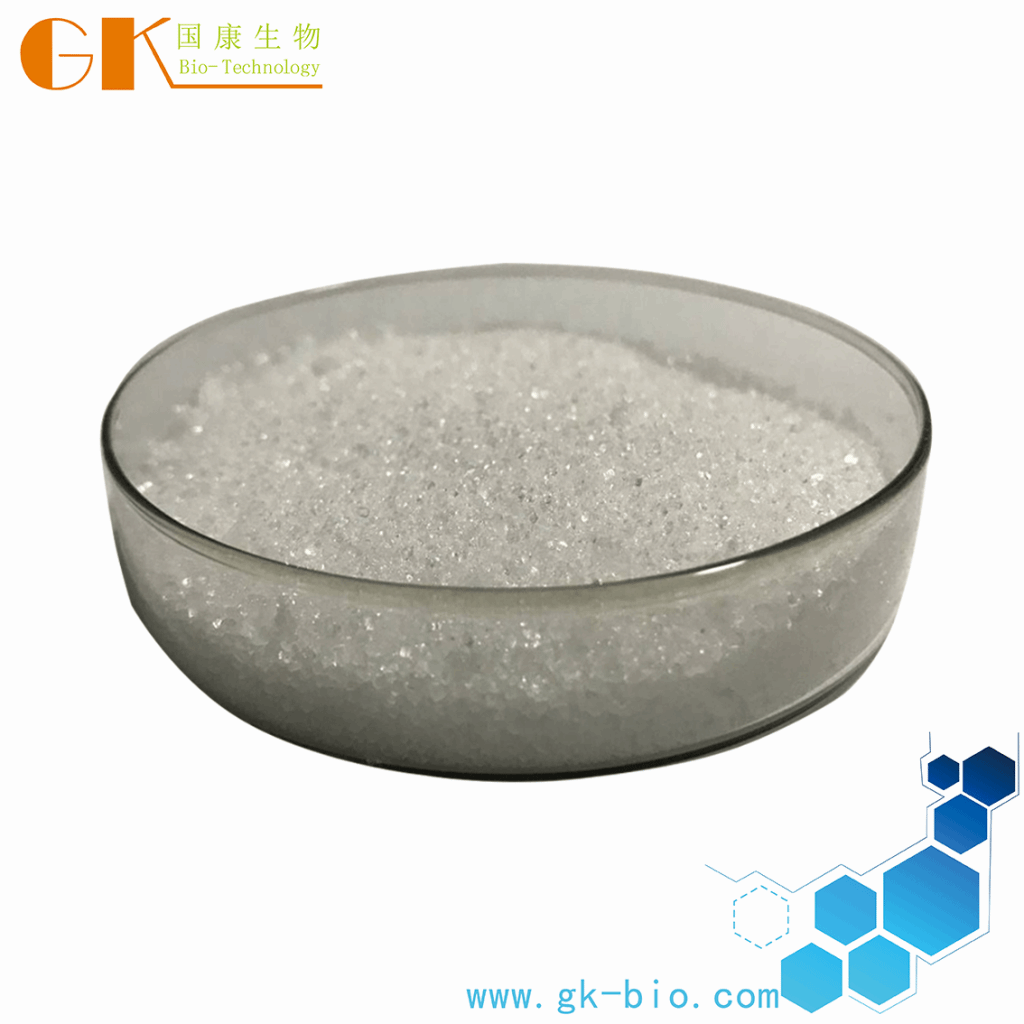
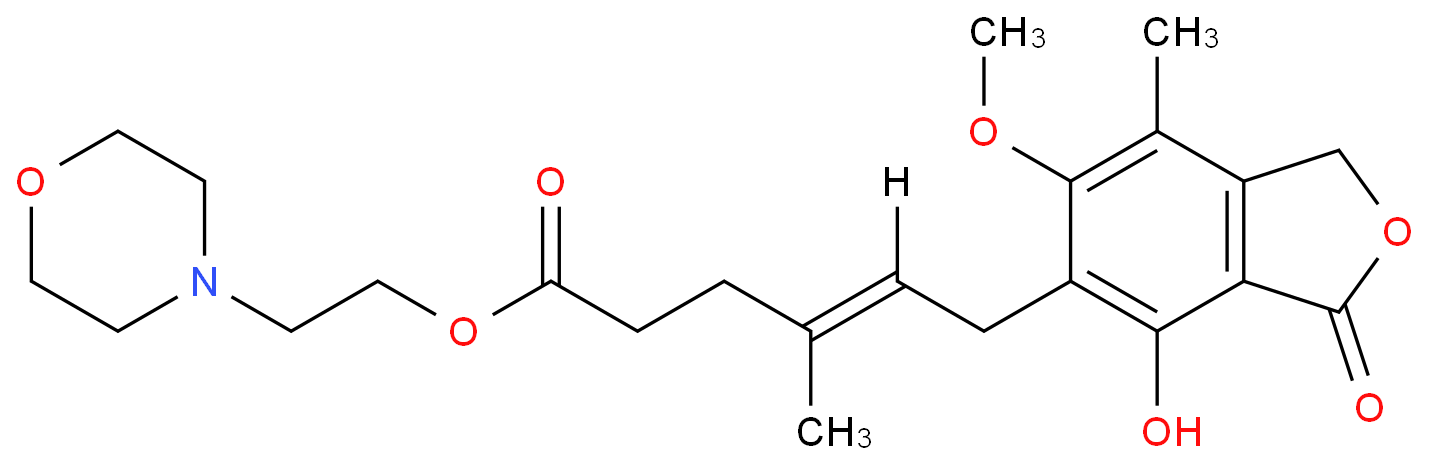
Mycophenolate mofetil (C23H31NO7, MW 433.50 g/mol) is a white to off-white crystalline powder melting near 95 °C with markedly pH-dependent solubility: freely soluble in dimethyl sulfoxide and chloroform, sparingly soluble in ethanol, and only slightly soluble in neutral water. A tertiary morpholino nitrogen (pKa ca. 5.6) confers weak-base behaviour that is exploited in salt formation and chromatographic control. Because the ester is the labile element of the structure, MMF is best understood as a delivery form rather than the effector molecule.
Commercial MMF production couples submerged fungal fermentation to a short chemical tail. Penicillium brevicompactum assembles mycophenolic acid through a polyketide synthase-derived tetraketide that is methylated, farnesylated and oxidatively cleaved before recovery by solvent extraction from acidified broth. The isolated acid is esterified with 2-(morpholin-4-yl)ethanol and polished to pharmacopoeial grade. Because mycophenolate sodium draws on the same intermediate, broth titre largely determines the economics of both product families.
Epidemiology rather than economics sets the demand floor. Ageing populations and diabetes-driven chronic kidney disease keep transplant waiting lists long, while expanded donor registries and improved organ preservation sustain conversion rates. The autoimmune segment absorbs rising volume because diagnosis rates climb, biologics remain second line on cost grounds, and mycophenolate offers comparatively inexpensive oral steroid-sparing therapy. The result is steady tonnage growth amid softening unit prices.
Mycophenolic acid fermentation capacity clusters in three macro-regions. European sites supply much of the high-value regulated-market tonnage, operating validated stirred-tank cascades with long-standing finished-dose alliances. Indian producers dominate generic API volume into North America, Europe, Latin America and Africa, backed by integrated finished-dose conversion and extensive DMF portfolios. Chinese capacity has moved from intermediates into fermentation-derived APIs, competing chiefly on price in tender markets, though a growing subset has invested in EU GMP-conformant operations.
The API market is bifurcating into documented and opportunistic tiers. In the upper tier buyers pay for DMF/CEP-backed supply, reserved multi-year capacity, ICH stability commitments and proven nitrosamine control, with prices comparatively stable and often indexed to feedstock and energy. In the lower tier tender competition compresses margins until value is recovered only through solvent recovery, broth titre and campaign utilisation. Rising capital demands for containment and data integrity are thinning that lower tier.
As a narrow-therapeutic-index immunosuppressant, MMF ranks among the most scrutinised molecules in generic API trade. Every shipment into a regulated market is effectively a documentation exercise: authorities expect chain of custody for the fungal strain and the designated starting material, every isolated intermediate, genotoxic and nitrosamine assessments, and the container-closure system. Suppliers that treat dossier maintenance as a one-time cost discover, usually at inspection, that their regulatory asset has degraded.
Environmental performance has migrated from a sustainability annex to a qualifying criterion in mycophenolate procurement. European hospital tenders increasingly score environmental product declarations, while North American payers and group purchasing organisations embed ESG questions into prequalification. Because MMF production is fermentative, its cradle-to-gate footprint is dominated by steam for sterilisation and evaporation, electricity for aeration, and carbon-rich spent broth.
Roughly 60–70 % of cradle-to-gate Scope 1 and 2 emissions arise before the chemical step, in media sterilisation, fermenter aeration and downstream isolation. Abatement levers include waste-heat recovery from compressors, combined heat and power, steam-driven evaporators for broth concentration, and replacement of halogenated extraction solvents with recoverable systems within ICH Q3C limits. Scope 3 dominates the total footprint and is best attacked through supplier-specific data and shorter logistics legs; several producers now publish ISO 14067-aligned footprints.
Traceability here is regulation disguised as ESG: batch genealogy must link working cell bank, fermentation lot, isolation campaign, esterification batch and final crystallisation lot, a structure compatible with ISO 9001 lot definition and ISO 14001 aspect mapping. Media components warrant diligence, because soy- or corn-derived peptones introduce deforestation exposure that traceable or synthetic feeds remove. Spent broth should be treated in anaerobic digesters with methane recovery rather than discharged.
Few generic APIs punish logistics shortcuts as quickly as MMF, because the hydrolytic liability that gives good intestinal absorption also drives instability in humid transit. A lot leaving the plant within specification can arrive with elevated mycophenolic acid content and failing total impurities after weeks cycling above 40 °C at near-saturated humidity. Resilience therefore depends less on freight rates than on specified moisture barriers, desiccant loading and monitoring regimes.
MMF carries no UN number under ICAO IATA, IMDG or ADR and is not a dangerous good in transit, although it remains a GHS-classified reproductive toxicant in the workplace. That combination creates a common failure mode: shippers label only the occupational hazard and omit internal transport documentation. Best practice is UN specification drums, route-risk management that avoids summer lanes through equatorial ports, and qualified lanes with continuous temperature mapping. Finished drug product should retain GDP-compliant transport with excursion-driven deviation handling.
For a supplier moving up the value chain in 2026, expansion is decided in the dossier and the audit room before it is decided on price. Diligence teams should plan twelve to eighteen months from initial DMF or CEP submission to first commercial shipment into Europe or North America, with a similar horizon for finished-dose partners transferring their sources. Three moves consistently separate suppliers winning multi-year agreements from those trading spot by spot.
Mycophenolate mofetil has completed the transition from innovative immunosuppressant to a globalised, documentation-driven generic API whose competitive logic rests on compliance depth rather than discovery novelty. Demand anchored in transplant activity and expanding autoimmune indications remains robust, while energy volatility, tightening EU GMP containment expectations, nitrosamine obligations, tariff uncertainty and freight-lane instability continue to separate resilient from marginal operators. Procurement built on unit-price comparison therefore understates true cost of ownership.
The winning posture for 2026 treats quality, regulatory coverage and environmental performance as one integrated asset. Buyers should qualify at least two DMF- or CEP-referenced sources across distinct regions, negotiate defined change-management notification and multi-year commitments, and embed specifications covering solid form, nitrosamine risk, residual solvents and ICH Q3D elements. Sellers should invest in fermentation titre, solvent recovery and data integrity, then translate those investments into documented evidence that procurement teams can defend.
Powered by Guidechem
This white paper is exclusively compiled by the Guidechem Intelligence Team based on global customs data, regulatory databases, and industry research. Guidechem is a leading global B2B chemical platform, dedicated to connecting global buyers with verified, high-quality manufacturers.
Relying on Guidechem's extensive global database, we have mapped the core participants in the current global Mycophenolate mofetil supply chain:
Disclaimer: The content of this white paper is compiled based on public market data and regulatory information available as of 2026. Global chemical regulations are subject to dynamic adjustments. In actual export operations, enterprises must consult professional regulatory advisors or relevant competent authorities to obtain the latest compliance guidance.
|
 |
 |
 |
 EN
 Agricultural News
 Food News
 Industrial News
 Cosmetic News
 Pharmaceutical News
 Science News


 14YRS

