
I. Executive Summary
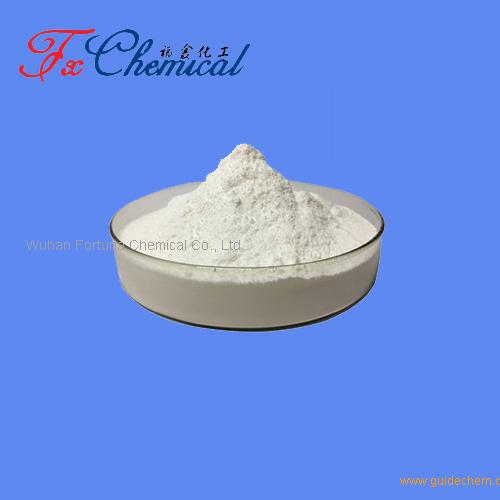
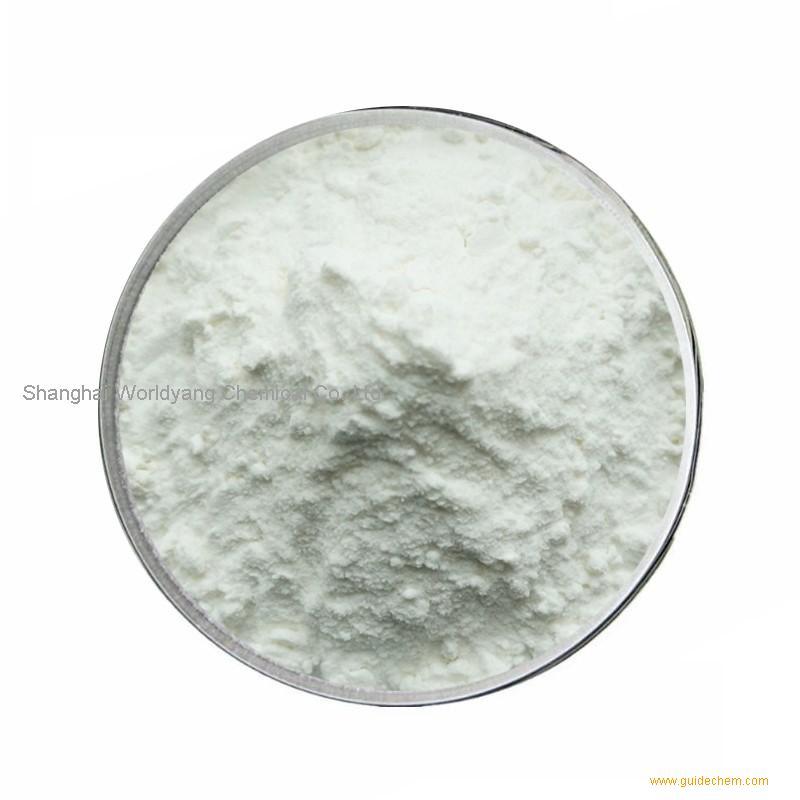
2,3,4,5-Tetrafluorobenzoic acid (CAS 1201-31-6) is a polyfluorinated aromatic carboxylic acid, C7H2F4O2 and molecular weight 194.08, supplied as a white to off-white crystalline solid melting in the region of 85–90 °C. It functions as a fluorinated aromatic building block, most prominently as a side-chain precursor for fluoroquinolone antibacterial active pharmaceutical ingredients, and additionally in agrochemical and electronic-materials development. Volumes are modest relative to commodity fluoroaromatics, but the product is strategically visible because it sits directly upstream of registered pharmaceutical supply chains.
Two issues define the 2026 commercial environment. The first is regiochemical purity: the molecule's value depends on fluorine occupying the 2,3,4,5-positions, and isomeric tetrafluorobenzoic acids from incomplete regiocontrol are difficult to separate and propagate into the API synthesis as structurally related impurities. The second is PFAS adjacency, since polyfluorinated aromatics are swept into buyer questionnaires and regulatory scoping directed at per- and polyfluoroalkyl substances, even though this is a discrete aromatic compound, not a perfluoroalkyl acid.
Beyond those, the operating requirements are those of a pharmaceutical intermediate: EU REACH registration, TSCA active status, ICH-aligned impurity and elemental-impurity control, residual-solvent and fluoride specifications, and documentation support for drug master files or certificates of suitability. This paper addresses the fluorination chemistry, impurity profile, application position, regulatory exposure and logistics of the product.
II. Product Deep Dive: Molecular Mechanisms and Production Evolution
2.1 Physicochemical Properties and Mechanisms
Four fluorine substituents withdraw electron density from the ring, raising acidity relative to benzoic acid and activating the ring toward nucleophilic aromatic substitution. That activation is why the compound is useful in heterocycle-forming chemistry: fluorinated positions serve as leaving groups in cyclisation sequences constructing the quinolone core. In practice the acid is a stable, handleable solid, which is why producers ship it and customers activate it locally.
- Acidity, salt formation and handling: The electron-withdrawing fluorines lower the pKa relative to benzoic acid, which affects both isolation and purification: the acid partitions differently in aqueous work-ups and forms salts readily with inorganic and amine bases. Producers exploit this in purification, and customers should expect specification of both the free acid and, where applicable, its salts. The practical consequence for formulation is that pH control during crystallisation determines both recovery and impurity rejection.
- Nucleophilic aromatic substitution as the reactive logic: Fluorine is the leaving group of choice in nucleophilic aromatic substitution on electron-deficient rings, and the 2- and 4-positions adjacent to ring-activating substituents are the most labile. This underpins the compound's role as a scaffold-building unit, and it also explains why regioisomeric control matters so much: an isomer with fluorine in the wrong position changes which site is activated and therefore changes the cyclisation outcome.
2.2 Synthesis and Manufacturing Technologies
Industrial routes belong to two families. The first is halogen-exchange fluorination, in which a polychlorinated aromatic precursor is converted with an alkali-metal fluoride in a polar aprotic solvent at elevated temperature, followed by conversion of a nitrile or trichloromethyl group to the acid by hydrolysis. The second builds the ring already fluorinated and introduces the carboxyl group by carboxylation or side-chain transformation. Both are discussed at route-class level only; the decisive factors are regiocontrol, safe handling of hydrogen fluoride and fluoride salts, and isomer separation.
- Hydrogen fluoride management and corrosion engineering: Fluorination chemistry generates or employs hydrogen fluoride and metal fluorides, which attack glass and silica, so plants are built around corrosion-resistant metallurgy and fluoropolymer linings, with dedicated scrubbing, fluoride-specific effluent treatment and rigorous personnel protection. Buyers should treat evidence of fluoride abatement and of materials-of-construction discipline as a primary qualification criterion, because these capabilities cannot be retrofitted cheaply and correlate directly with batch consistency.
- Regioselective impurity profile and separation: The characteristic impurity set comprises isomeric tetrafluorobenzoic acids, incompletely fluorinated chloro-fluoro analogues, and residual solvent. Separation relies on differences in acidity and solubility, typically through controlled crystallisation, sometimes repeated, and the achievable purity is evidenced by chromatographic methods that resolve isomers rather than by total assay. Customers should insist on an isomer-resolving chromatographic method, since a non-specific assay can report high purity in material carrying several per cent of a wrong isomer.
2.3 Core Application Matrix
- Fluoroquinolone API side chain: The principal established use is as a fluorinated aromatic building block for quinolone antibacterial active substances, where the substitution pattern is carried into the final molecule. Because the applications are registered pharmaceutical products, buyers operate under ICH Q7 and Q11 expectations, require change control, and qualify suppliers through audit rather than through sample testing alone.
- Agrochemical intermediates: Fluorinated aromatic acids are used in the development of crop-protection actives, where fluorination is employed to tune lipophilicity, metabolic stability and target binding. Volumes track individual development and registration programmes and are therefore campaign-driven, with specification requirements closer to those of the pharmaceutical sector than to commodity agrochemical intermediates.
- Electronic materials and speciality polymers: Polyfluorinated aromatics appear in liquid-crystal and electronic-materials development and as monomers or modifiers in high-performance fluorinated polymers, where the aromatic ring contributes thermal stability and the fluorines contribute low surface energy and dielectric performance.
III. Global Market Supply-Demand Landscape and Export Trends
3.1 Demand Drivers and Market Shifts
Demand is anchored in installed quinolone API capacity and is therefore comparatively stable, with incremental growth from generic API production in Asia and from new fluorinated candidates in agrochemical and electronic pipelines. The more consequential shift is qualitative: customers are tightening isomer and elemental-impurity specifications and are asking suppliers to document fluorination route and fluoride controls, which raises the qualification bar independently of volume.
3.2 Capacity Distribution and Export Flows
China holds the dominant position in fluoroaromatics, supported by integrated fluorochemical and hydrogen fluoride capacity, and supplies both domestic API manufacturers and export customers in India, Europe and Japan. Indian producers focus on specified pharmaceutical intermediate supply, frequently importing fluorinated precursors and finishing them under GMP-aware quality systems. European capacity is limited but retains relevance for customers prioritising EEA-held registrations and audit access, while Japanese producers serve high-specification electronic and pharmaceutical niches.
3.3 Market Bifurcation and Pricing Dynamics
The market splits into technical grade, where competition is on fluorochemical feedstock cost and scale, and pharmaceutical grade supplied under quality agreements with isomer-resolving methods, validated impurity limits and change control. Pricing follows fluorochemical and energy costs, with periodic disruption from environmental inspection and hydrogen fluoride capacity constraints in major producing regions. Pharmaceutical-grade premiums reflect analytical and documentation workload rather than manufacturing difficulty alone.
IV. In-depth Analysis of Global Compliance and Regulatory Barriers
Three regulatory systems matter simultaneously. Chemical-control registration establishes market access. Pharmaceutical quality expectations, codified in ICH guidelines and enforced through customer audit, determine whether a supplier can serve regulated API manufacture. And PFAS-directed policy, which is expanding rapidly in both the European Union and the United States, determines how much screening and documentation burden the product attracts regardless of its intrinsic profile.
4.1 European Market: REACH, CLP, and Sector-Specific Directives
- REACH registration and PFAS-policy adjacency: Non-EU producers must rely on an importer registration or appoint an Only Representative, and buyers should confirm the registration covers their use and tonnage. They should also expect questionnaires arising from the broad European policy direction on per- and polyfluoroalkyl substances, and suppliers should prepare a documented position distinguishing a discrete polyfluorinated aromatic from perfluoroalkyl acids, addressing persistence, mobility and degradation explicitly.
- CLP classification and pharmaceutical documentation: Classification and labelling under CLP must track the current adaptation to technical progress, and safety data sheets must be destination-format and language-compliant. For pharmaceutical supply, the more demanding documentation set is the customer's: drug master file support or a certificate of suitability, statements on residual solvents under ICH Q3C, elemental impurities under ICH Q3D and genotoxic-impurity assessment under ICH M7.
4.2 North American Market: TSCA, EPA, and FDA Regulations
- TSCA inventory status and PFAS reporting obligations: The substance must be active on the TSCA inventory for import without premanufacture notice, and importers must make the Section 13 certification at entry. Separately, reporting requirements directed at per- and polyfluoroalkyl substances, including those introduced under recent TSCA amendments, have led importers and downstream users to seek supplier confirmation of fluorination status and of any reportable perfluoroalkyl impurity, so suppliers should be prepared to answer structured PFAS questionnaires.
- FDA-facing documentation and audit readiness: Where the material enters regulated API manufacture, customers require drug master file references or equivalent support, and expect the supplying site to be audit-ready against ICH Q7. Practical readiness means validated analytical methods, documented change control, deviation and investigation records, and traceability from batch certificate through to production record.
4.3 The Critical Hurdle: Quality Control and Safety Limits
Compliance Warning: The decisive specification issue is isomer control, and it is routinely underestimated. A certificate reporting only total assay can conceal several per cent of a regioisomeric tetrafluorobenzoic acid, which will not behave identically in cyclisation chemistry and will generate structurally related impurities that are expensive to purge from the API. Buyers must require an isomer-resolving chromatographic method with individual limits, not a non-specific titration. Elemental impurities require equal attention: fluorination and downstream chemistry can introduce palladium, iron and nickel, and ICH Q3D limits must be addressed with ICP-MS data rather than assumed. Residual solvent and inorganic fluoride should both be specified, since polar aprotic solvents used in halogen exchange are difficult to remove completely and residual fluoride affects downstream stoichiometry. Finally, because buyers increasingly screen all fluorinated substances, suppliers should maintain a prepared PFAS position statement addressing the distinction from perfluoroalkyl acids and any reportable trace perfluoroalkyl impurities.
V. Green Trade Barriers and ESG in Manufacturing
Fluoroaromatics production carries a distinctive environmental profile: hydrogen fluoride handling, fluoride-containing effluent requiring precipitation and polishing, and high energy demand for the thermal steps in halogen exchange. These are structural cost and compliance elements, and European customers increasingly require evidence of fluoride abatement and effluent performance during qualification.
5.1 Carbon Footprint and Circular Economy
The carbon profile is dominated by energy for the high-temperature fluorination and by the embodied emissions of fluorochemical feedstocks. Solvent recovery from halogen-exchange media is the most effective single lever and is also economically attractive. Circularity is limited because fluorinated aromatic residues are generally destroyed rather than recovered, and producers should be candid about this rather than overstate recycling claims that customer audits will test.
5.2 Sustainable Sourcing and Traceability
Traceability expectations are those of the pharmaceutical sector: fluorochemical source disclosure, route-class disclosure, batch-level linkage between certificate and production record, and change-control notification. Customers also increasingly request confirmation of responsible fluoride management and of no intentional use of long-chain perfluoroalkyl substances anywhere in the manufacturing chain, which suppliers should be able to evidence through purchasing controls.
VI. Supply Chain Resilience and Export Logistics
As a stable crystalline organic acid, the product presents none of the acute handling hazards of reactive fluorinating reagents, and logistics risk is therefore concentrated in moisture control, contamination and documentation rather than in dangerous-goods management. The residual sensitivity is to dust generation and to caking under humid conditions.
6.1 Packaging Standards and Moisture/Contamination Control
- Lined packaging and moisture protection: Standard supply is in fibre drums or bags with polyethylene liners, typically 20–25 kg, with intermediate bulk containers for high-volume pharmaceutical customers. Because caking during humid transit is a recurring cause of dispute, buyers on tropical routes should specify liner integrity and pallet configuration explicitly. Moisture does not chemically degrade the acid, but it affects flow and weighing accuracy.
- Dedicated packaging for pharmaceutical grades: For regulated use, customers frequently require new dedicated liners to exclude carryover, and may specify sub-lot sizing matched to campaign requirements to limit the number of opened containers. Certificates should cross-reference batch numbers on every container label, and retained samples should be held for the period specified in the quality agreement.
6.2 Dangerous Goods Identification and Transit Protocols
The acid itself is generally not classified as dangerous for transport, but classification must be confirmed against the current safety data sheet for the specific grade, and where one applies the shipment must move with the correct packing group, marking, labelling and documentation under the IMDG Code, ADR or IATA Dangerous Goods Regulations. Transit protocols emphasise protection from humidity and heat and intact sealing.
VII. Enterprise Global Expansion Strategy Guide
Suppliers gain position in this product through analytical credibility, documentation readiness and a prepared regulatory stance rather than through price.
- Invest in isomer-resolving analytics first: Validated chromatographic methods that resolve tetrafluorobenzoic acid isomers and quantify individual impurities are the single most valuable technical asset in this product, because they convert an unverifiable claim of purity into auditable evidence and directly address the customer's principal specification risk.
- Build pharmaceutical documentation and audit readiness: Maintain ICH Q7-aligned quality systems, support drug master files or certificates of suitability where requested, and hold validated methods for residual solvents, elemental impurities and genotoxic-impurity assessment. Audit readiness, not sample quality, is what decides qualification for regulated supply.
- Prepare an evidenced PFAS position: Maintain a documented statement distinguishing the polyfluorinated aromatic from perfluoroalkyl acids, addressing persistence and degradation, and confirming purchasing controls against long-chain perfluoroalkyl substances. Screening questionnaires otherwise stall procurement for weeks regardless of product quality.
VIII. Conclusion
2,3,4,5-Tetrafluorobenzoic acid occupies a strategically exposed position: a modest-volume fluoroaromatic intermediate whose importance derives from its role in registered pharmaceutical supply and from the specification discipline that role imposes. Competitive advantage belongs to producers who can demonstrate regiochemical control with resolving analytics, who operate credible hydrogen fluoride and fluoride-effluent engineering, and who are audit-ready against pharmaceutical quality expectations.
Buyers should specify isomer limits explicitly, require ICP-MS elemental data and residual-solvent and fluoride results, and secure change-control commitments before qualification. Regulatory exposure spans REACH registration and CLP accuracy in Europe, TSCA inventory status and Section 13 certification in the United States, and an expanding layer of PFAS-directed screening applied to fluorinated substances broadly.
IX. Industry Resource Connection and Supplier Ecosystem
Powered by Guidechem
This white paper is exclusively compiled by the Guidechem Intelligence Team based on global customs data, regulatory databases, and industry research. Guidechem is a leading global B2B chemical platform, dedicated to connecting global buyers with verified, high-quality manufacturers.
Relying on Guidechem's extensive global database, we have mapped the core participants in the current global 2,3,4,5-Tetrafluorobenzoic acid supply chain:
- China — dominant fluoroaromatics base: Chinese producers lead global supply through integrated fluorochemical and hydrogen fluoride capacity, serving domestic API manufacturers and exporting to India, Europe and Japan. Leaders have invested in isomer-resolving chromatography, fluoride effluent treatment and the quality systems needed for pharmaceutical qualification.
- India — specified pharmaceutical intermediate supply: Indian producers frequently import fluorinated precursors and finish them under GMP-aware quality systems with English-language documentation and established audit practice, positioning themselves as suppliers of choice for regulated API campaigns.
- European Union and Japan — high-specification and compliance-anchored supply: European capacity is limited in volume but provides EEA-held registrations, short logistics and audit access, while Japanese producers serve high-specification electronic and pharmaceutical niches where isomer purity and documentation depth outweigh unit cost.
Disclaimer: The content of this white paper is compiled based on public market data and regulatory information available as of 2026. Global chemical regulations are subject to dynamic adjustments. In actual export operations, enterprises must consult professional regulatory advisors or relevant competent authorities to obtain the latest compliance guidance.



 EN
 Agricultural News
 Food News
 Industrial News
 Cosmetic News
 Pharmaceutical News
 Science News


 13YRS

