
I. Executive Summary
Ralufon NAPE 14-90, CAS 120478-49-1, is a poly(oxyalkylene) naphthol propyl sulfonate, potassium salt: a naphthol-started alkoxylate carrying a terminal propyl sulfonate group, supplied as an aqueous concentrate at roughly 90 per cent active matter. It belongs to the family of naphthol-based additives used as brighteners, levellers and carriers in decorative and functional electroplating baths for zinc, copper, tin and alloy systems, and as a specialty dispersant. The numbers in the grade name denote the nominal oxyalkylene chain length and the active content, and both are specification items rather than decoration.
What distinguishes the molecule from the alkylphenol ethoxylate carriers it replaced is the combination of a naphthol hydrophobe and a permanently anionic sulfonate head. The sulfonate makes the additive ionic, so it does not cloud out at bath temperature the way a non-ionic ethoxylate does, and it tolerates the hardness and electrolyte load of a working bath. The naphthol ring gives the adsorptive, levelling behaviour that produces bright deposits, and the oxyalkylene chain tunes solubility, foam and wetting. The result sits at a defined point on a cloud-point, foam and solubility diagram, and that point is what a formulator has qualified.
This white paper reviews the alkoxylation and sulfonation route classes, the specification set that governs performance and compliance, the residual ethylene oxide and 1,4-dioxane issue under REACH Annex XVII entry 71, the UVCB identity problem in REACH registration, and the obligations plating shops and their customers carry under RoHS, ELV and REACH article rules.
II. Product Deep Dive: Molecular Mechanisms and Production Evolution
2.1 Physicochemical Properties and Mechanisms
The molecule is an anionic surfactant with a polyether mid-block. Three structural variables determine everything: the hydrophobe, the oxyalkylene chain and composition, and the anionic head with its counter-ion.
- Oxyalkylene chain, cloud point and temperature behaviour: The nominal chain length of about fourteen oxyethylene units sets balance, solubility and foam. Because the head group is a sulfonate, the product does not show the sharp cloud point of an alcohol ethoxylate and stays soluble across the operating window of a zinc or tin bath; where a cloud point is quoted it is measured in saline under a defined method, so buyers should confirm which method before comparing numbers. Temperature matters in the other direction: as bath temperature rises, effective hydrophilicity falls and a package qualified in one window behaves differently outside it.
- Sulfonate head, counter-ion and electrolyte tolerance: The propyl sulfonate is permanently anionic and potassium-neutralised, which gives hard-water and electrolyte tolerance and compatibility with the high ionic strength of acid zinc, alkaline non-cyanide zinc and acid copper baths. Potassium is specified for solubility and because sodium or ammonium would shift the bath's ionic balance. Chloride and sulfate carried in from neutralisation are specification items because they perturb the bath and, in copper systems, chloride is itself a functional additive that must be controlled.
2.2 Synthesis and Manufacturing Technologies
The route is two steps: build the alkoxylate, then install the sulfonate.
- Naphthol alkoxylation route class: A naphthol is alkoxylated with ethylene oxide, propylene oxide or a mixture under alkaline catalysis in a pressure-rated reactor, giving a naphthol alkoxylate whose chain-length distribution is set by the catalyst and the oxide-to-starter ratio. Conventional alkali hydroxide catalysis gives the broad distribution typical of the class, while narrow-range catalysts such as double-metal-cyanide or calcium-based systems give a tighter distribution and lower free starter. Ethylene oxide is the dominant process hazard, so inerting, oxygen monitoring and ATEX zoning belong to the route design.
- Sulfoalkylation, neutralisation and finishing: The terminal hydroxyl is converted to the propyl sulfonate by etherification with a propane sultone or with a halopropanesulfonate, then neutralised to the potassium salt with potassium hydroxide or carbonate. Both carry impurity consequences: propane sultone is a genotoxic alkylating agent whose residue must be tested for, and halopropanesulfonate routes leave chloride. Finishing determines compliance: stripping to reduce residual ethylene oxide and 1,4-dioxane, ion exchange for chloride and sulfate, Gardner colour control, and adjustment of active matter and pH.
2.3 Core Application Matrix
- Brightener and leveller in zinc and zinc-alloy plating: In alkaline non-cyanide and acid zinc baths the additive acts as a carrier and leveller, refining grain and widening the bright current-density range. It is one component of a package and is qualified within that package, not in isolation.
- Copper, tin and alloy plating baths: The same chemistry serves acid copper, tin and tin-alloy systems where solubility at temperature, low foam and tolerance of the electrolyte load matter. Selection is made against a defined bath and current-density window.
- Specialty dispersant and wetting agent: Outside plating, the product functions as a high-electrolyte-tolerance dispersant, where the sulfonate head and naphthol hydrophobe give strong adsorption on pigment and carbon surfaces.
III. Global Market Supply-Demand Landscape and Export Trends
3.1 Demand Drivers and Market Shifts
Demand follows three currents. The first is the substitution of cyanide zinc plating by alkaline non-cyanide and acid zinc systems, which forces formulators to rebuild packages around additives that work without cyanide; naphthol-based sulfonates are among the chemistries that survive that transition. The second is growth in functional plating for electronics and corrosion protection, where thickness distribution is specified. The third, and the one that created the opening, is the removal of alkylphenol ethoxylates from the European market under Annex XVII entry 46a.
3.2 Capacity Distribution and Export Flows
Additive capacity follows the plating industry. Germany and the wider European Union hold the formulation houses and much of the additive synthesis serving European plating, with backward integration into alkoxylation and sulfonation. China holds large and growing capacity serving the world's largest plating base and increasingly exporting, and the United States and Japan retain specialist producers. Export flows are unusual: the additive frequently travels as a component of a formulated package rather than as a named substance, which is why customs data understates the trade.
3.3 Market Bifurcation and Pricing Dynamics
Pricing is set by ethylene oxide and propylene oxide cost, by the number of finishing passes needed to meet residual limits, and by the qualification value of the grade rather than by the naphthol. The market bifurcates between commodity additive sold on active matter and cloud point and a qualified grade sold with a full residual and regulatory package into supply chains that must answer RoHS, ELV and REACH article questions. Because plating qualification cycles are long and formulation secrecy is tight, a qualified grade is rarely switched on price.
IV. In-depth Analysis of Global Compliance and Regulatory Barriers
Two regulatory layers apply: the substance layer, REACH registration as a UVCB and CLP, and the article layer, the RoHS, ELV and REACH obligations that the plated part inherits.
4.1 European Market: REACH, CLP, and Sector-Specific Directives
- REACH registration and the UVCB identity problem: This is the hard part. An ethoxylated ladder is a UVCB substance, and the registration stands or falls on how precisely the identity is described: the starter, the oxides and their ratio, the nominal chain length and its range, the terminal group and the counter-ion must all be fixed in the substance identity and must match what ships. A supplier who changes starter grade, oxide ratio or catalyst without updating the identity is shipping outside the dossier, the most common failure in this class. Importers should ask for the registration number and identity description.
- Annex XVII entries 46a and 71, and CLP: The commercial reason this product exists is regulatory: alkylphenol ethoxylates are restricted under REACH Annex XVII entry 46a, and nonylphenol ethoxylates were in effect removed from European use, so formulators moved to naphthol-based replacements. Residual ethylene oxide and 1,4-dioxane are restricted under Annex XVII entry 71, which is why the stripping step and the residual specification are compliance items rather than preferences. Under CLP the classification rests on the supplier's own data, and eye irritation and aquatic endpoints are what usually drive the SDS and the transport classification.
4.2 North American Market: TSCA, EPA, and FDA Regulations
- TSCA inventory, PMN and Chemical Data Reporting: Ethoxylated naphthol sulfonates are listed on the TSCA Chemical Substance Inventory as UVCB entries keyed to starter and oxide; importers must verify the listing against the CAS and synonym, because a change in chain length or counter-ion can move the material to a different identity. Where a variant is not listed, a premanufacture notice under TSCA section 5 or a low-volume exemption is required before import, and the Section 13 certification applies at entry.
- EPA effluent guidelines and state chemical listings: US plating shops operate under the EPA Metal Finishing effluent guidelines at 40 CFR part 433 and the Metal Products and Machinery rule at part 438, so additive suppliers are routinely asked for composition and treatability data. The California Proposition 65 listing of 1,4-dioxane adds a state reason to hold that residual low.
4.3 The Critical Hurdle: Quality Control and Safety Limits
Compliance Warning: Two residues decide whether this additive is saleable in Europe. Residual ethylene oxide and 1,4-dioxane are restricted under REACH Annex XVII entry 71, and both are generated by the alkoxylation step rather than added, so the only control is stripping plus a validated headspace GC-MS method with a limit of quantitation below the applicable limit and a batch result on every lot. Residual naphthol belongs on the same panel. Buyers should also require a written statement that the product contains no alkylphenol ethoxylate and no nonylphenol ethoxylate, because plating customers audit for exactly that, and a supplier who cannot say so in writing fails the audit regardless of the certificate of analysis.
V. Green Trade Barriers and ESG in Manufacturing
The environmental pressure on this chain comes from the oxide feedstocks and from the customer's own emissions permit, not from the naphthol.
5.1 Carbon Footprint and Circular Economy
Ethylene oxide and propylene oxide manufacture dominates the cradle-to-gate footprint, so supplier-specific oxide data matters more than anything in the additive plant. Useful levers are closed-loop oxide handling and recovery, stripping-gas treatment rather than venting, bio-attributed ethylene oxide where a customer wants a mass-balance claim, and steam and power that can be evidenced for Scope 2. Because the product ships as an aqueous concentrate, the water shipped is a real share of the logistics footprint, and higher-active grades reduce it.
5.2 Sustainable Sourcing and Traceability
Traceability runs from the naphthol and the oxide forward. Buyers ask for the origin of the naphthalene or naphthol stream, the oxide supplier, and confirmation that no alkylphenol ethoxylate is present anywhere in the plant, since cross-contamination in shared alkoxylation equipment is a documented failure mode. Chain-of-custody documentation, a declared site and ISO 9001 and 14001 certification are the standard evidence set.
VI. Supply Chain Resilience and Export Logistics
This is a viscous aqueous concentrate; its logistics risks are viscosity, freeze-thaw stability and colour, rather than the hydrolysis risk that ether sulfates carry.
6.1 Packaging Standards and Moisture/Contamination Control
- Viscosity, pumping and temperature: The concentrate is viscous at ambient temperature and is pumped warm, generally between 40 and 60 degrees Celsius, so heated or insulated ISO tank containers and heated drum storage are standard, with a documented maximum holding temperature because extended heat ages the product and builds colour. Frost must be avoided, because freezing can cause phase separation that does not fully reverse on warming.
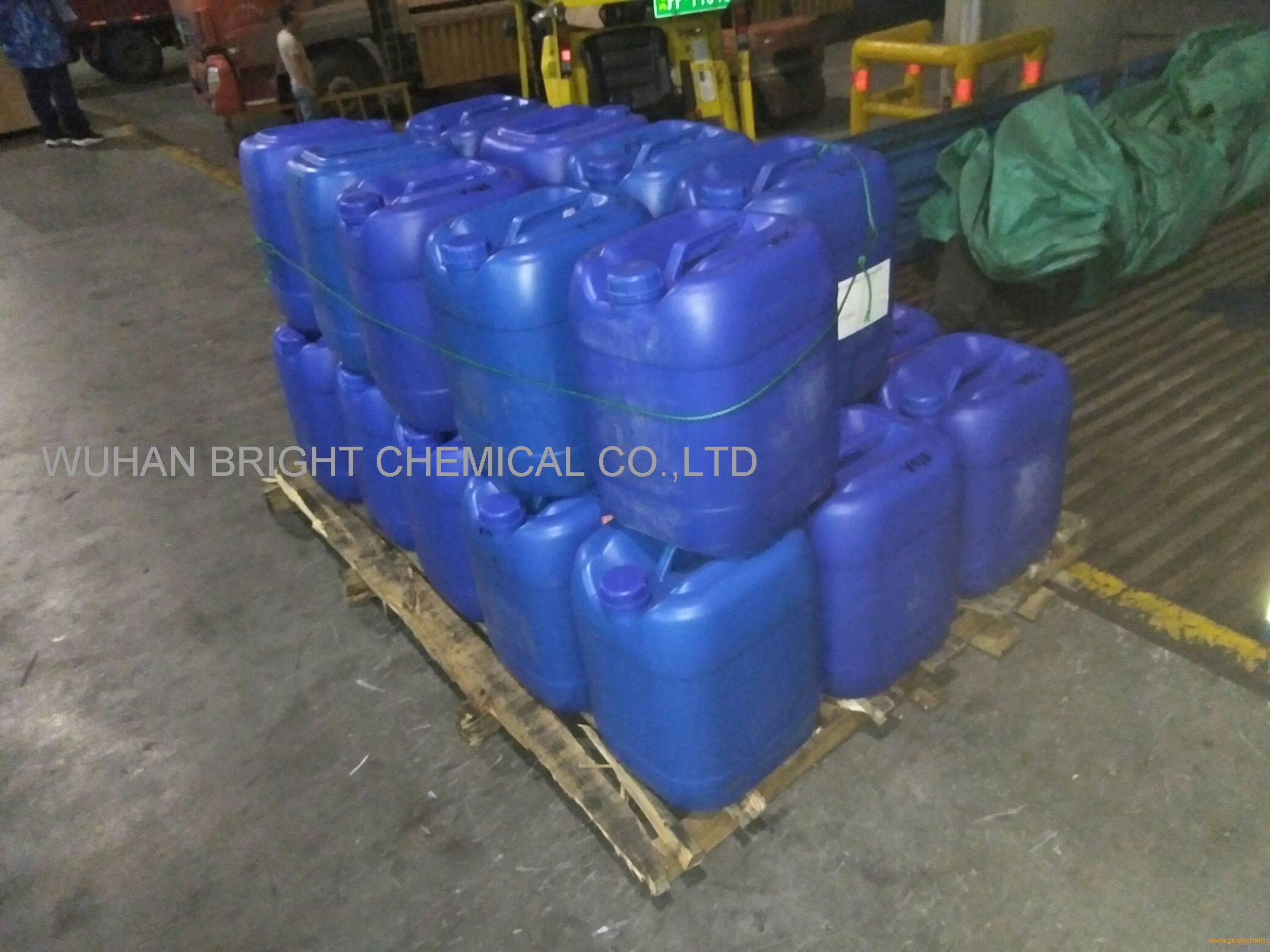
- Container hygiene and cross-contamination: Because customers audit for alkylphenol ethoxylates, dedicated or documented-clean equipment matters: dedicated alkoxylation lines or a validated cleaning procedure with swab results, and dedicated or certified-clean tank containers. Drums should be high-density polyethylene or lined steel with compatible gaskets, and retained samples held through the retest period.
6.2 Dangerous Goods Identification and Transit Protocols
In the classifications most commonly notified, this aqueous concentrate carries no UN number and travels as a non-regulated liquid, but that must be read from Section 14 of the lot safety data sheet; where the supplier's classification carries aquatic chronic or serious eye-damage endpoints, a UN 3082, Class 9, Packing Group III consignment may apply. Shipment is ambient with frost protection, generally between 5 and 40 degrees Celsius, in lined ISO tanks for bulk or 200 kilogram drums and IBCs for packaged material. Shelf life is managed as a retest at 12 or 24 months with active matter and pH re-measured.
VII. Enterprise Global Expansion Strategy Guide
Three moves determine whether supply survives customer audit in this market.
- Specify the residues, not just the actives: Put residual ethylene oxide, 1,4-dioxane, free naphthol, chloride and sulfate on the specification with methods and batch results, and require a written alkylphenol ethoxylate-free statement.
- Fix the substance identity in the contract: Require the supplier to state the starter, the oxide ratio, the nominal chain length and range and the counter-ion, and to notify any change, because that description is the REACH identity and a silent change invalidates the dossier.
- Support the customer's permit and article obligations: Provide the composition, biodegradability and treatability data a plating shop needs for its effluent permit and for its RoHS, ELV and REACH article answers, because that package shortens qualification more than any price concession.
VIII. Conclusion
This additive is a small-volume, high-consequence material. Its value lies in a defined position on a solubility, foam and levelling diagram, and its risk lies in two residues that are generated rather than added and in a substance identity that is a range rather than a structure. Buyers who specify the residues and fix the identity buy a supply that survives audit; buyers who buy on active matter and cloud point buy a reformulation risk.
The structural trend is favourable but demanding. The removal of alkylphenol ethoxylates under Annex XVII entry 46a created durable demand for naphthol-based replacements, and the move away from cyanide zinc enlarges it, while entry 71 and Proposition 65 tighten what is acceptable in the drum. The winners will be suppliers who hold tight residual limits and document a stable UVCB identity, because plating qualification cycles are long and a qualified grade is very rarely changed.
IX. Industry Resource Connection and Supplier Ecosystem
Powered by Guidechem
This white paper is exclusively compiled by the Guidechem Intelligence Team based on global customs data, regulatory databases, and industry research. Guidechem is a leading global B2B chemical platform, dedicated to connecting global buyers with verified, high-quality manufacturers.
Relying on Guidechem's extensive global database, we have mapped the core participants in the current global Ralufon NAPE 14-90 (poly(oxyalkylene) naphthol propyl sulfonate, potassium salt) supply chain:
- Germany and the European Union: formulation houses and additive synthesis: German and wider European producers hold the plating formulation expertise and much of the additive synthesis, with backward integration into alkoxylation and sulfonation and the REACH dossiers. Their advantage is application support and regulatory documentation; the qualification question is the tightness of the identity.
- China: scale plating-additive capacity: China holds large and growing alkoxylation and sulfonation capacity serving the world's largest plating base, and increasingly exports additive and formulated packages. Its advantage is scale, cost and speed; buyers should qualify residual analysis and cross-contamination control as carefully as price.
- United States and Japan: specialist producers and electronics grades: US and Japanese producers supply specialist grades, often for electronics and functional plating where specification windows are narrow, and hold the TSCA positions and effluent-permit documentation North American shops need. They are where buyers go for tightly specified, documented grades.
Disclaimer: The content of this white paper is compiled based on public market data and regulatory information available as of 2026. Global chemical regulations are subject to dynamic adjustments. In actual export operations, enterprises must consult professional regulatory advisors or relevant competent authorities to obtain the latest compliance guidance.



 EN
 Agricultural News
 Food News
 Industrial News
 Cosmetic News
 Pharmaceutical News
 Science News


 1YR


