
I. Executive Summary
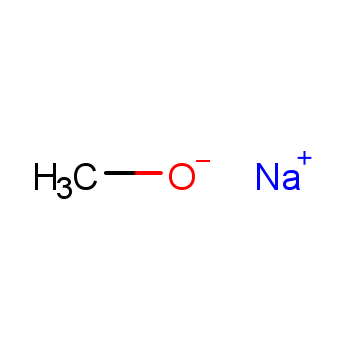
Sodium methoxide (CAS 124-41-4), CH3NaO, molar mass 54.02 g/mol, is the sodium alkoxide of methanol and a workhorse strong base in industrial organic chemistry. It is supplied as a white, hygroscopic free-flowing solid or, more commonly in bulk trade, as a 25 to 30 per cent solution in methanol. Its commercial value lies in basicity and nucleophilicity; its commercial risk lies in water reactivity, because contact with moisture liberates methanol and caustic soda with heat. This paper examines the chemistry, production routes, hazard classification, compliance perimeter and logistics of sodium methoxide supply in 2026.
The substance is made either by dissolving sodium metal in methanol, which liberates hydrogen, or by reacting caustic soda with methanol under continuous removal of the water formed. The sodium-metal route gives a low-water product directly but carries hydrogen and metal-handling hazards, while the caustic route is cheaper in raw materials yet requires energy-intensive dehydration. Most bulk supply is the methanolic solution, with solid produced by evaporation and drying under inert gas. Process design is dominated by water exclusion, hydrogen management and methanol recovery.
Sodium methoxide is a reagent and catalyst rather than an end product, so its market follows the industries it serves: pharmaceutical and agrochemical synthesis, and biodiesel and specialty ester production. Buyers qualify on strength, free alkali, water content and carbonate rather than on nominal purity. Contract Development and Manufacturing Organizations use it under strict process-safety control in custom synthesis, and a clear boundary is kept between industrial reagent supply and any consumer-facing use.
II. Product Deep Dive: Molecular Mechanisms and Production Evolution
2.1 Physicochemical Properties and Mechanisms
Methoxide is both a strong base and a compact nucleophile, and its behaviour follows from the equilibrium between methoxide, methanol and hydroxide. In methanol solution the effective base is methoxide; water converts it rapidly to hydroxide with liberation of methanol, which is why water matters most in specifications. Deprotonation, transesterification, Claisen and Dieckmann condensations and nucleophilic substitution all rely on anhydrous conditions to avoid saponification. Heat release on contact with water, acids and protic solvents drives the hazard profile.
- Basicity, Nucleophilicity and Water Sensitivity: Methoxide deprotonates acidic methylene and alcohol functions and attacks ester carbonyls in transesterification and condensation chemistry, typically at catalytic loadings. Trace water converts it to hydroxide and methanol, promoting saponification, soap formation and yield loss, so specifications centre on water and free alkali.
- Thermal Behaviour and Decomposition: The solid self-heats in air and can ignite, particularly when finely divided or contaminated with methanol, and its reaction with water is strongly exothermic and generates methanol. Carbon dioxide absorption forms sodium methyl carbonate and raises carbonate content during storage. Process-safety work, including reaction calorimetry and self-heating testing, belongs before scale-up rather than after.
2.2 Synthesis and Manufacturing Technologies
Two industrial routes dominate, and the choice between them determines both cost structure and hazard profile. Reaction of caustic soda with methanol is limited by the water produced, so plants rely on reactive distillation, azeotropic or adsorptive water removal and control of free alkali. Direct reaction of sodium metal with anhydrous methanol is fast and gives a low-water product but produces hydrogen and requires metal-handling infrastructure. Both routes finish under dry inert gas, with methanol recovery as an economic and environmental necessity.
- Caustic Route with Reactive Distillation and Dehydration: Caustic soda and methanol form an equilibrium mixture, so water must be removed continuously by distillation, molecular-sieve adsorption or membrane dehydration to reach commercial strengths. Energy demand is the main cost driver, and free caustic and carbonate must be controlled to specification. Heat recovery and closed methanol loops deliver most emissions reduction.
- Sodium Metal Route and Hydrogen Management: Sodium reacts exothermically with methanol to give sodium methoxide and hydrogen, requiring controlled addition, inert blanketing and hydrogen detection. The route suits captive production integrated with chlor-alkali sodium supply and gives product with very low water content. Capital and operating cost are higher, and process-safety discipline must cover metal handling as well as alkoxide handling.
2.3 Core Application Matrix
- Pharmaceutical and Fine Chemical Synthesis: Methoxide is used for deprotonation, cyclisation, condensation and transesterification steps in active substance and intermediate manufacture. Material used in regulated synthesis is qualified as a process reagent under ICH Q7 within a cGMP environment, with the choice and specification documented in the drug master file (DMF) or active substance master file (ASMF). Custom synthesis at CDMOs requires documented process-safety assessment before the reagent is introduced.
- Biodiesel and Oleochemical Transesterification: Sodium methoxide in methanol is a standard catalyst for transesterification of triglycerides to fatty acid methyl esters, prized for high conversion at low loading. Sodium, potassium and total metal limits in the finished ester are controlled against EN 14214 and ASTM D6751, so reagent quality directly affects fuel specification. Sustainability schemes add documentation requirements on feedstock and energy.
- Agrochemical, Dye and Specialty Ester Chemistry: The reagent supports methylation, ester interchange and base-mediated ring formation in crop protection, colourant and specialty ester production, usually in dedicated anhydrous plant. Research quantities are supplied with research-use-only labelling and end-use declarations, and never for consumer, food or household applications.
III. Global Market Supply-Demand Landscape and Export Trends
3.1 Demand Drivers and Market Shifts
Demand follows biodiesel policy and pharmaceutical and agrochemical production, both of which are regional and policy-sensitive. Three shifts matter for 2026: biodiesel mandates and renewable-diesel competition in Europe and Asia, reshoring of pharmaceutical intermediate production with its process-safety requirements, and continued cost pressure that favours solution grades over solid. Buyers evaluate delivered strength, methanol credit and packaging handling rather than price per tonne.
3.2 Capacity Distribution and Export Flows
Production is distributed across Asia-Pacific, Europe and North America, typically close to methanol supply or to chlor-alkali assets, because freight cost and hazard classification penalise long-distance movement of solid grades. Solution grades move regionally by road tanker and isotank, while solid grades are exported in drums under strict moisture control. Export flows therefore cluster around regional production rather than intercontinental trade. Lead times reflect packaging and hazard documentation.
3.3 Market Bifurcation and Pricing Dynamics
Pricing tracks methanol, caustic soda or sodium metal, and energy, with the methanol content of solution grades making quotations sensitive to methanol markets. Solution and solid grades are priced differently because drying, packaging and hazard classification add cost to the solid. Quality disputes usually concern strength drift from methanol loss, carbonate formation and water uptake. Buyers who specify strength, free alkali, water and carbonate avoid most disputes.
IV. In-depth Analysis of Global Compliance and Regulatory Barriers
Sodium methoxide is regulated primarily as a hazardous substance and dangerous good rather than as a product with end-use restrictions. The obligations that matter are classification and labelling, transport classification, worker protection and environmental permitting at the point of manufacture and use. Professional suppliers qualify a customer's handling capability before supplying, particularly for solid grades. Misclassification is the most common cause of enforcement action in this trade.
4.1 European Market: REACH, CLP, and Sector-Specific Directives
- REACH, CLP and Seveso Considerations: European manufacturers and importers must hold a REACH registration with a Safety Data Sheet meeting Annex II, and must classify and label consistently under CLP, covering self-heating behaviour, corrosivity and reactivity with water. GHS pictograms, hazard statements and precautionary statements must appear consistently on labels and in Section 2 of the Safety Data Sheet. Sites holding large inventories of self-heating solids or methanolic solutions must assess their position under the Seveso III Directive.
- Downstream Product Rules for Fuels and Pharmaceuticals: Methoxide used to catalyse biodiesel production must be compatible with fuel quality standards, including EN 14214 limits on sodium, potassium and total metal content, and with sustainability documentation under the Renewable Energy Directive. Where the reagent is used to manufacture a medicinal active substance, the resulting substance is governed by Directive 2001/83/EC and by ICH Q7 expectations for reagents and solvent residues.
4.2 North American Market: TSCA, EPA, and FDA Regulations
- TSCA, OSHA and Process Safety: Sodium methoxide is listed as active on the TSCA Inventory and importers must certify accordingly. Worker protection is governed by OSHA hazard communication and methanol exposure limits, while facilities handling large quantities of methanol or the flammable solution fall within the process safety management standard at 29 CFR 1910.119. Emergency planning and reporting obligations follow from EPCRA where threshold quantities are stored.
- EPA, FDA and Product Quality Expectations: Methanol vapour emissions are regulated as volatile organic compounds under the Clean Air Act, and methanol-bearing waste is typically managed as ignitable hazardous waste under RCRA. For FDA-regulated applications, residual methanol in the drug substance is controlled to ICH Q3C limits and reagent qualification follows ICH Q7 and ICH Q11 control-strategy expectations. No USP or Ph.Eur. monograph or CEP governs the reagent, so specifications follow ACS reagent conventions or negotiated limits.
4.3 The Critical Hurdle: Quality Control and Safety Limits
Compliance Warning: Sodium methoxide reacts with water to liberate methanol, a highly flammable liquid, and caustic soda, with substantial heat release, and the solid is self-heating and can ignite on contact with air and moisture. Water, foam and aqueous extinguishing agents must never be used; dry powder, dry sand or soda ash are the appropriate agents, and firefighting plans must reflect that. Handling requires dry inert-gas blanketing, moisture-tight packaging, grounded equipment and exclusion of ignition sources, with hydrogen management where the sodium-metal route is used. Suppliers must not present the reagent for consumer, household or food use; research quantities should carry research-use-only labelling.
V. Green Trade Barriers and ESG in Manufacturing
ESG performance in this sector centres on methanol, hydrogen and energy rather than on the alkoxide itself. Environmental attention focuses on methanol recovery, vapour control and the carbon intensity of methanol and caustic soda, while governance focuses on process safety and transport classification. Buyers increasingly request Scope 1-3 Emissions data and ISO 14001 certification during supplier qualification.
5.1 Carbon Footprint and Circular Economy
Cradle-to-gate emissions are dominated by the methanol and caustic soda or sodium metal inputs, placing most of the footprint in Scope 3 rather than on site. Drying energy for solid grades and distillation duty for dehydration dominate Scope 1 and Scope 2 emissions, so heat integration and mechanical vapour recompression deliver the largest on-site gains. Renewable or low-carbon methanol is the single largest lever available to a producer.
5.2 Sustainable Sourcing and Traceability
Traceability requires lot-level records of strength, free alkali, water, carbonate and insoluble content, together with the methanol lot used and the packaging and blanketing conditions applied. Buyers should require a stated analytical method for strength and water, a certificate of analysis with each consignment, and documented retest guidance for opened containers. ISO 9001 certification underpins the quality system, and ICH Q7-aligned documentation supports pharmaceutical customers.
VI. Supply Chain Resilience and Export Logistics
Logistics are governed by hazard classification rather than by product value. Solid material ships as a self-heating solid under UN1431, while methanolic solutions ship as flammable liquids under UN1289, and each requires its own packaging, labelling, segregation and training regime. Carriers and forwarders must be briefed before booking, not at collection.
6.1 Packaging Standards and Moisture/Contamination Control
- Moisture-Excluding Packaging and Inert Blanketing: Solid grades are packed in hermetically sealed steel or composite drums with inner polyethylene liners, filled and closed under dry nitrogen. Solution grades travel in steel drums, intermediate bulk containers or road tankers rated for flammable liquids, with methanol-compatible gaskets and closures.
- Handling, Storage and Segregation: Warehouses must be dry, cool, ventilated and equipped with non-water fire suppression, with stocks segregated from water, acids, oxidising agents and halogenated solvents. Drums should be stored under cover, off the floor, and rotated within the stated shelf life to limit carbonate formation. Transfer operations require grounding, dry inert-gas padding and trained operators.
6.2 Dangerous Goods Identification and Transit Protocols
Solid sodium methoxide is assigned to UN1431, Class 4.2, packing group II, and methanolic solutions to UN1289, Class 3, with packaging, marking, labelling and documentation completed under ADR, IMDG and the IATA dangerous goods regulations. Air transport of self-heating solids is restricted and generally limited to cargo aircraft, so sea and road are the normal modes for solid grades. Crews require dangerous goods training and emergency instructions naming dry extinguishing agents. Section 14 of the Safety Data Sheet must match the declared classification exactly.
VII. Enterprise Global Expansion Strategy Guide
Competitive advantage comes from hazard competence, methanol efficiency and reliability rather than from nameplate capacity. Suppliers who can deliver both solid and solution grades with correct classification, and who support customers on process safety, win repeat business.
- Make Hazard Classification and Documentation a Service: Provide consistent classification, correctly completed dangerous goods documentation and practical guidance on firefighting, spill response and inert handling. Customers value a supplier who prevents a misdeclaration more than one who discounts the tonne.
- Optimise Methanol Recovery and Offer Grade Flexibility: Closed methanol loops, vapour recovery and heat integration lower cost and emissions at the same time, and can be quantified in customer tenders. Offering both solution and solid grades from one asset base lets a supplier match customer handling capability. Low-carbon methanol sourcing should be developed now, because it will become a tender criterion.
- Support Customers on Process Safety and Technology Transfer: Reaction calorimetry data, self-heating test results and handling training reduce incidents and build loyalty. Formal technology-transfer packages allow a methoxide-based step to move into another plant without repeating hazard assessment. That capability is what fine-chemical partners buy from a CDMO.
VIII. Conclusion
Sodium methoxide is a small molecule whose commercial performance is determined almost entirely by hazard discipline. Its chemistry is old and well understood and its cost structure transparent, but water reactivity, self-heating and methanol liberation make handling the decisive variable. In 2026 the market rewards suppliers who combine correct classification with methanol efficiency and customer process-safety support.
The practical guidance is to specify strength, free alkali, water and carbonate alongside price, to confirm that transport classification matches the grade supplied, and to require environmental and safety data from the manufacturing site. Industrial reagent supply to competent industrial customers is a substantial and legitimate business, whereas consumer, household or food use is not a permitted channel.
IX. Industry Resource Connection and Supplier Ecosystem
Powered by Guidechem
This white paper is exclusively compiled by the Guidechem Intelligence Team based on global customs data, regulatory databases, and industry research. Guidechem is a leading global B2B chemical platform, dedicated to connecting global buyers with verified, high-quality manufacturers.
Relying on Guidechem's extensive global database, we have mapped the core participants in the current global Sodium methoxide supply chain:
- North America: Industrial Reagent and Biodiesel Tier: Demand comes from pharmaceutical, agrochemical and biodiesel producers served by regional solution plants and imported drummed solid, with TSCA certification and OSHA process-safety compliance.
- Europe: REACH and Fuel-Quality Regulated Tier: REACH registration, CLP conformity and Seveso assessment gate supply, while biodiesel users work to EN 14214 and Renewable Energy Directive sustainability documentation. Expectations for Scope 1-3 Emissions reporting are highest in this tier.
- Asia-Pacific and China: Production and Export Tier: Concentrates methanol-integrated production, caustic-route capacity and drum filling for export, supplying regional and intercontinental customers. Sites increasingly operate ISO 9001 and ISO 14001 and issue English-language dossiers.
Disclaimer: The content of this white paper is compiled based on public market data and regulatory information available as of 2026. Global chemical regulations are subject to dynamic adjustments. In actual export operations, enterprises must consult professional regulatory advisors or relevant competent authorities to obtain the latest compliance guidance.



 EN
EN
 Agricultural News
 Food News
 Industrial News
 Cosmetic News
 Pharmaceutical News
 Science News

 1YR
1YR

