
I. Executive Summary
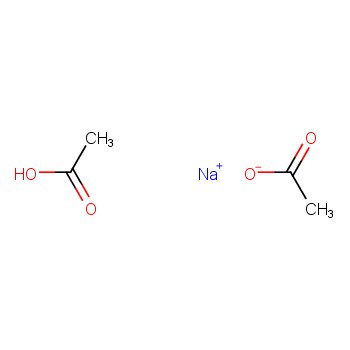
Sodium diacetate (CAS 126-96-5) is the crystalline acid salt formed by combining sodium acetate with acetic acid in a one-to-one molar ratio. It is commercialised worldwide as food additive E262(ii) and functions as a preservative, acidulant and buffering agent in bakery products, ready-to-eat meats, grain, pet food and animal feed.
Demand in 2026 is supported by three structural drivers: shelf-life extension in packaged bread, Listeria control in ready-to-eat meat and poultry, and mould management in high-moisture grain and pet food. Brand reformulation away from propionates has opened additional space for acetate-based systems, particularly in North America and Europe. Pricing follows the cost of glacial acetic acid and sodium carbonate or caustic soda, so offers move with the methanol carbonylation and chlor-alkali chains rather than with finished-food inflation.
The regulatory position is distinctive because the substance is simultaneously a food additive, a feed material, a REACH-registered industrial chemical and, in some jurisdictions, an EPA-regulated antimicrobial input. Exporters must therefore hold parallel dossiers: food additive specifications and purity criteria, food safety management certification, chemical inventory and classification documentation, and transport and packaging evidence for a hygroscopic powder.
II. Product Deep Dive: Molecular Mechanisms and Production Evolution
2.1 Physicochemical Properties and Mechanisms
Sodium diacetate has the composition CH3COONa·CH3COOH, a molecular weight of about 142.09 g/mol and a reported acetic acid content of 39.0–41.0% with sodium acetate in the 58.0–60.0% range under food chemical codex-type specifications. It presents as a white, free-flowing crystalline powder with a mild vinegar character, dissolves readily in water and gives a 10% solution pH close to 4.5–5.0.
- Undissociated Acid Diffusion Mechanism: Acetic acid has a pKa of 4.76, so at food pH between 4.0 and 5.5 a useful fraction remains un-ionised and diffuses freely across the microbial cell membrane. Once inside near-neutral cytoplasm it dissociates, acidifying the interior, forcing the cell to expend energy exporting protons and accumulating toxic anion.
- Spectrum, Matrix Effects and Synergy: Sodium diacetate is active against mould species responsible for bread spoilage, against rope-forming Bacillus subtilis in bakery goods and against Listeria monocytogenes in refrigerated ready-to-eat meats. Efficacy falls as product pH rises and as fat and protein buffer the system, so dose must be validated in the actual recipe rather than transferred between formulations.
2.2 Synthesis and Manufacturing Technologies
Industrial manufacture is a controlled acid–base reaction rather than a complex organic synthesis. Glacial acetic acid is neutralised with sodium carbonate, bicarbonate or caustic soda in the stoichiometric ratio that leaves one equivalent of free acetic acid associated with the sodium acetate formed. The neutralisation is exothermic and generates carbon dioxide when carbonate is used, so addition rate, venting and temperature control determine both safety and product consistency.
- Stoichiometric Neutralisation and Crystallisation: Producers either react acetic acid with sodium carbonate or bicarbonate in a jacketed reactor, or blend pre-formed sodium acetate with acetic acid and crystallise the adduct from a concentrated melt. Glass-lined or 316L stainless construction is required because hot acetic acid is corrosive, and bromide-containing or metal-contaminated raw materials must be excluded to keep heavy metal limits.
- Drying, Granulation and Dust Control: Fluid-bed drying, spray drying or compaction and granulation convert the wet cake into a free-flowing product with controlled particle size distribution and low dust. Because the powder is hygroscopic and organic, plants must manage dust explosion characteristics through ATEX zoning, earthing, filter selection and housekeeping, and must control acetic acid vapour in the dryer exhaust.
2.3 Core Application Matrix
- Bakery Shelf-Life and Rope Control: Sodium diacetate is dosed on a flour-weight basis in bread, buns, tortillas and cakes to delay mould growth and suppress Bacillus subtilis rope spoilage. Its buffering action keeps crumb pH and flavour closer to the untreated product than direct acetic acid addition, which supports clean-label positioning.
- Ready-to-Eat Meat and Poultry Listeria Control: Blends of sodium lactate and sodium diacetate are standard post-lethality interventions for sliced and diced ready-to-eat products, applied within the limits set by national meat inspection rules. The diacetate component contributes the acid-driven inhibition while the lactate controls water activity and extends the lag phase.
- Grain, Pet Food and Feed Hygiene: High-moisture grain, silage, complete feed and semi-moist pet food are treated to inhibit mould growth, heating and mycotoxin risk during storage and distribution. Feed-grade material is typically supplied with anti-caking aids and coarser granulometry suited to bulk handling.
III. Global Market Supply-Demand Landscape and Export Trends
3.1 Demand Drivers and Market Shifts
Shelf-life extension is the dominant demand driver because it reduces retail waste and distribution losses across long chilled and ambient chains. Reformulation away from propionate-based preservatives in bread has lifted acetate usage in several markets, supported by retailer-driven additive lists. Listeria control obligations in ready-to-eat meat keep a regulatory floor under North American demand, while pet food and aquafeed growth adds volume in Asia-Pacific.
3.2 Capacity Distribution and Export Flows
Production clusters wherever acetic acid and alkali are inexpensive, which places significant capacity in Asia-Pacific and in integrated chemical regions of North America and Western Europe. China is the largest exporter of food- and feed-grade material, with shipments moving to South-East Asia, the Middle East, Latin America and, for audited food-grade lots, into Europe. European producers compete on documentation quality, traceability and proximity to bakery and meat processors rather than on price.
3.3 Market Bifurcation and Pricing Dynamics
The market splits cleanly into food-grade, feed-grade and technical-grade material, with the price spread reflecting documentation burden and hygiene systems more than assay. Food-grade lots command a premium because they require audited GMP, restricted additive lists, contaminant testing and lot traceability, while feed-grade material tolerates anti-caking agents and wider particle distribution. Contract pricing is typically annual with quarterly reviews linked to acetic acid and alkali costs, and spot buying exposes the customer to grade substitution risk.
IV. In-depth Analysis of Global Compliance and Regulatory Barriers
Sodium diacetate sits at the intersection of food law and industrial chemicals regulation, so a single dossier is never sufficient. At substance level it must be registered and classified as a chemical; at product level it must satisfy food additive authorisation and purity criteria; and at site level the customer's plant must demonstrate that it is using an approved additive within permitted categories and levels.
4.1 European Market: REACH, CLP, and Sector-Specific Directives
- Food Additive Authorisation and Purity Criteria: Sodium diacetate is authorised as E262(ii) under Regulation (EC) No 1333/2008, with permitted categories and any quantitative limits set out in Annex II, and its identity and purity must comply with the specifications in Regulation (EU) No 231/2012. Manufacturers must be able to evidence compliance with contaminant limits laid down in Regulation (EU) 2023/915 and to support the customer's labelling declaration.
- REACH Registration and CLP Classification: The substance is registered under Regulation (EC) No 1907/2006 with an EINECS number, and the registration must cover the tonnage band and identified food and feed uses. Under Regulation (EC) No 1272/2008 it carries supplier-applied classification, most commonly for serious eye or eye and skin irritation derived from the available acetic acid fraction, with GHS pictograms and precautionary statements on the label and in section 2 of the safety data sheet.
4.2 North American Market: TSCA, EPA, and FDA Regulations
- FDA GRAS Status and FSIS Use Conditions: Sodium diacetate is affirmed as generally recognised as safe for use in food under 21 CFR 184.1754, subject to good manufacturing practice and to the Food Chemical Codex monograph where referenced. In federally inspected meat and poultry plants, its use as an antimicrobial in ready-to-eat products is governed by the food safety and inspection regulations and the corresponding compliance guidance, with validated levels and labelling declarations.
- TSCA, EPA and Antimicrobial Claim Boundaries: The substance is listed on the TSCA Inventory as an active chemical substance, and EPA regulates acetic acid and acetate salts under its own frameworks, including tolerance exemptions where the chemistry is used on raw agricultural commodities. Claims made for food-contact surface sanitation rather than food preservation cross into pesticide regulation, so marketing language must be held strictly within the food additive space. Where the material is sold for pharmaceutical, dialysis or excipient use, USP and Ph.Eur. grade expectations, cGMP production and DMF or CEP documentation may be required.
4.3 The Critical Hurdle: Quality Control and Safety Limits
Compliance Warning: Food-grade sodium diacetate should be purchased against a written specification covering acetic acid content of 39.0–41.0%, sodium acetate of 58.0–60.0%, loss on drying typically not more than 2.0%, pH of a 10% solution near 4.5–5.0, water-insoluble matter not more than about 0.1%, lead not more than 2 mg/kg and arsenic not more than 3 mg/kg. Confirm that no unauthorised anti-caking agents, flow aids or recycled mother liquor residues are present, and that the lot was produced in a campaign free from allergen and technical-grade cross-contamination. Require a lot-specific certificate of analysis, a GMP or FSSC 22000 certificate, allergen and GMO statements, and full one-up one-down traceability before release.
V. Green Trade Barriers and ESG in Manufacturing
Sustainability assessment of sodium diacetate is dominated by its two precursors rather than by the neutralisation step. Acetic acid produced by methanol carbonylation carries the footprint of the methanol chain, while sodium carbonate or caustic soda carries the energy and chloride burdens of the chlor-alkali or soda ash route. Buyers with credible Scope 3 programmes therefore trace both inputs and ask producers for product-level footprints and for evidence of renewable or bio-based acetic acid where available.
5.1 Carbon Footprint and Circular Economy
Scope 1 emissions arise from steam used in evaporation and drying and from any on-site combustion supporting the reactor and effluent treatment. Scope 2 emissions are largely electricity for fluid-bed blowers, mills, air handling and chilling. Scope 3 dominates and covers upstream acetic acid and alkali production, packaging materials, inbound and outbound freight, and the customer's use phase.
5.2 Sustainable Sourcing and Traceability
Bio-based acetic acid obtained from fermentation or from certified bio-methanol is available and can be attributed to individual lots under a chain-of-custody scheme, giving a renewable-content claim without changing the molecule. Traceability systems should link each lot to its raw material batches, production campaign and analytical release record, and should be auditable under recognised food safety schemes.
VI. Supply Chain Resilience and Export Logistics
Sodium diacetate is a low-unit-value, moisture-sensitive powder, so logistics economics often determine landed cost more than ex-works price. Shipments move in multiwall paper bags, big bags and, for large accounts, in dedicated bulk containers or silo trucks. Because the material absorbs water and slowly releases acetic acid, packaging integrity and dry storage matter throughout the chain, and caking is the most common quality complaint on arrival.
6.1 Packaging Standards and Moisture/Contamination Control
- Food-Grade Packaging and Barrier Protection: Standard supply is 25 kg multiwall kraft bags with a polyethylene liner, or 500–1000 kg big bags with an inner liner and food-contact-compliant materials conforming to Regulation (EC) No 1935/2004 and FDA food-contact requirements. Pallets are stretch-wrapped with corner protection and stored off the floor in dry, ventilated warehouses below roughly 25 °C and moderate relative humidity.
- Segregation and Contamination Prevention: The product must be segregated from strong acids, oxidisers and strongly alkaline materials, and kept away from odour-sensitive cargo because acetic acid vapour migrates readily. Food-grade consignments require validated container cleanliness, documented previous-cargo history and, where applicable, evidence that no fumigant residues remain.
6.2 Dangerous Goods Identification and Transit Protocols
Sodium diacetate is generally not classified as a dangerous good for road, sea or air transport, so consignments move as ordinary cargo with standard GHS labelling and a safety data sheet. It is nevertheless handled as a dusty organic solid, so loading and unloading operations require dust control, earthing and, in European plants, ATEX assessment of the handling area.
VII. Enterprise Global Expansion Strategy Guide
Growth in this category comes from specification and service rather than from molecule supply. Suppliers that can prove food-grade hygiene, deliver consistent granulometry and support customers with validated application data win contracts even at a price premium. The three priorities below reflect the requirements most often written into multinational ingredient agreements.
- Qualify Multiple Audited Food-Grade Sources: Approve at least two producers holding recognised food safety certification, with one located close to your main converting plant to shorten lead times. Verify acetic acid content, moisture, heavy metals and insoluble matter on every lot and retain reference samples for the full shelf life.
- Differentiate Through Application Development: Work with contract manufacturers to supply dust-free granulated grades, pre-weighed sachet dosing and lactate–diacetate or acetate–bacteriocin blends matched to specific recipes. Support each system with challenge-test data on the customer's own matrix, since published doses rarely transfer between formulations. Where pharmaceutical, dialysis or excipient use is intended, run the campaign under cGMP with ICH Q7 and Q11 aligned controls and DMF or CEP documentation.
- Build a Multi-Jurisdiction Regulatory Dossier: Maintain a single source of truth mapping EU Regulation 1333/2008 and 231/2012 requirements, REACH and CLP obligations, FDA GRAS and FSIS conditions, TSCA and EPA positions and national standards such as the Chinese GB 2760 food additive standard and GB product specifications. Update the dossier whenever a market changes purity limits or permitted categories, and align declarations with the importing country's labelling rules.
VIII. Conclusion
Sodium diacetate is a mature, well-understood preservative whose commercial performance depends on grade discipline, documentation quality and application support rather than on chemistry novelty. Its mechanism is robust, its raw material base is broad, and its regulatory position as E262(ii) and a GRAS substance is stable across the major food markets. The constraints that matter to buyers are moisture stability, audited food-grade production and lot traceability.
Looking forward, ESG expectations will reshape sourcing criteria faster than food law will. Buyers are already requesting Scope 1–3 data, bio-attributed acetic acid and recyclable packaging alongside conventional purity certificates, and are auditing against ISO 9001 and ISO 14001 as a baseline. Producers that invest in renewable feedstock options, energy-efficient drying and rigorous traceability will convert that investment into contract security.
IX. Industry Resource Connection and Supplier Ecosystem
Powered by Guidechem
This white paper is exclusively compiled by the Guidechem Intelligence Team based on global customs data, regulatory databases, and industry research. Guidechem is a leading global B2B chemical platform, dedicated to connecting global buyers with verified, high-quality manufacturers.
Relying on Guidechem's extensive global database, we have mapped the core participants in the current global Sodium diacetate supply chain:
- North America Tier: Anchored by integrated acetic acid producers and food-ingredient blenders, this tier supplies GRAS-compliant material with strong FSIS application support for ready-to-eat meat plants. It is the preferred source for customers needing validated hurdle systems, short lead times and bilingual regulatory documentation.
- Europe Tier: Built around established chemical producers operating under REACH and CLP with full E262(ii) additive documentation and audited food safety systems. This tier wins on traceability, purity consistency and proximity to bakery and meat processors, at a higher conversion cost than imported spot material.
- Asia-Pacific and China Tier: The largest volume base, supplying both food-grade and high-tonnage feed-grade material at competitive cost from integrated acetic acid complexes. It is the natural partner for bulk contracts, provided buyers enforce written specifications, independent lot testing and food-grade segregation audits at origin.
Disclaimer: The content of this white paper is compiled based on public market data and regulatory information available as of 2026. Global chemical regulations are subject to dynamic adjustments. In actual export operations, enterprises must consult professional regulatory advisors or relevant competent authorities to obtain the latest compliance guidance.


 EN
 Agricultural News
 Food News
 Industrial News
 Cosmetic News
 Pharmaceutical News
 Science News


 3YRS

