Guideview >  Articles >  Trends  > Sodium 3-nitrobenzenesulphonate:Exports & Compliance White Paper 2026

Sodium 3-nitrobenzenesulphonate:Exports & Compliance White Paper 2026

A 2026 guide to Sodium 3-nitrobenzenesulphonate (CAS 127-68-4). Explore global suppliers delivering analytical documentation, consistent purity and reliable volumes for dye and electroplating applications. Salome6 MIN READOctober 8, 2026
2026 Global Export Trends and Compliance White Paper on Sodium 3-nitrobenzenesulfonate

I. Executive Summary

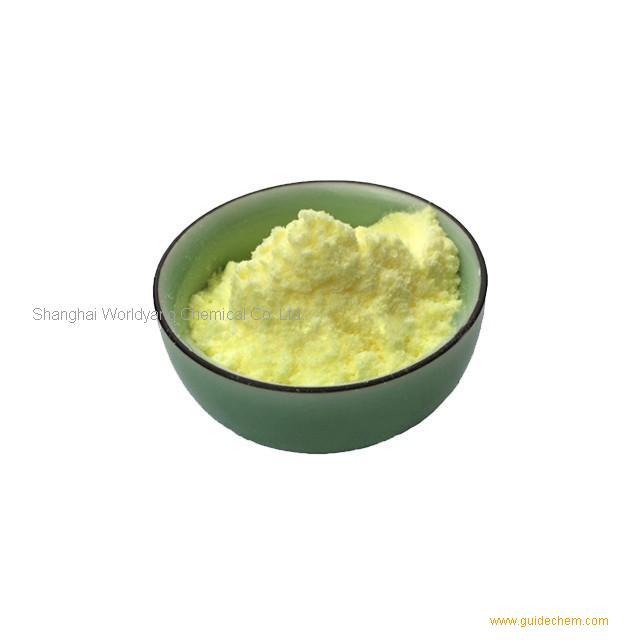
Sodium 3-nitrobenzenesulfonate (CAS 127-68-4; C6H4NO5SNa, relative molecular mass approximately 225.2) is the sodium salt of meta-nitrobenzenesulfonic acid. Its commercial value rests on three attributes: a nitro group that makes it a mild, water-soluble oxidising agent, a sulfonate that keeps it soluble and salt-tolerant in aqueous baths, and an aromatic ring that opens access to metanilic acid and the dyestuff and pharmaceutical intermediates derived from it. Supplied as a pale yellow powder or aqueous solution, it feeds electroplating additives, textile dyeing and printing auxiliaries, and organic synthesis.

Both industrial route classes are classical electrophilic aromatic substitution: sulfonation followed by nitration, or nitration followed by sulfonation, each finished by neutralisation to the sodium salt. Both deliver the meta relationship, since sulfonic acid and nitro groups are both meta-directing. The specification that decides commercial acceptability is not assay but the residue profile: ortho and para isomers, residual nitrobenzene, residual aromatic starting material, chloride and sulfate, iron, water and pH. Assay is conventionally by HPLC with UV detection.

Nitro-aromatic sulfonates are also a compliance object in their own right. REACH registration and CLP classification govern European market access, TSCA inventory listing governs the United States, and the nitro group imposes genuine industrial-hygiene obligations: nitro-aromatic compounds can be thermally sensitive and are incompatible with reducing agents and combustible material, so they warrant documented handling due diligence rather than routine treatment. Downstream, electroplating customers answer to RoHS, ELV and REACH SVHC and SCIP, while textile customers answer to the ZDHC MRSL, EU Ecolabel criteria and China's GB 21900 plating emission standard.

II. Product Deep Dive: Molecular Mechanisms and Production Evolution

2.1 Physicochemical Properties and Mechanisms

The molecule is an electron-poor aromatic system: two strongly electron-withdrawing substituents deplete the ring and stabilise it toward electrophilic attack while making the nitro group a usable, mild oxidant in aqueous media. That combination is unusual. Most oxidants used in dyeing and printing are either insoluble, metal-based or aggressive; this one is freely water-soluble, leaves no metal residue and operates in the mild potential window appropriate for protecting a dye or a plating additive from unwanted reduction.

  • The nitro group as a mild, water-soluble oxidant: In textile printing and discharge work the material functions as an oxidising resist, suppressing unwanted reduction of the dye during steaming and aftertreatment. Its advantage over chromate or chlorite systems is the absence of hexavalent chromium and of halogenated by-products. The corresponding obligation is industrial hygiene: nitro-aromatics can be thermally sensitive and must be kept away from reducing agents, combustibles and strong heat.
  • Sulfonate solubilisation and the metanilic acid gateway: The sulfonate makes the whole molecule freely water-soluble and tolerant of the high electrolyte loads found in plating baths and dyebaths, which is why it can be dosed as a solution. Reducing the nitro group gives metanilic acid, 3-aminobenzenesulfonic acid, one of the classical intermediates of azo dye chemistry, so the same substance serves as both a process auxiliary and a synthetic precursor.

2.2 Synthesis and Manufacturing Technologies

Production is mature aromatic chemistry run in dedicated nitration and sulfonation assets, because both unit operations are hazardous in their own right and are regulated accordingly. Producers differentiate on isomer control, on the completeness of quench and neutralisation, and on the removal of residual aromatic starting material, since those three factors determine whether the product can be sold into plating, textile or synthesis outlets.

  • Nitration and sulfonation in either order, then neutralisation: The sulfonate-then-nitrate sequence nitrates the aromatic sulfonic acid; the nitrate-then-sulfonate sequence sulfonates nitrobenzene. Both are strongly exothermic electrophilic substitutions requiring controlled addition, temperature management and quench before neutralisation with sodium hydroxide. Both leave ortho and para isomers alongside the meta product and both can carry residual nitrobenzene and residual aromatic hydrocarbon, so the specification must set explicit limits rather than relying on a single assay figure.
  • Isolation and the analytical release panel: Salting-out, concentration and fractional crystallisation, or spray drying for solution grades, are the standard isolation toolkit, with activated-carbon treatment for colour. Release testing is HPLC with UV detection for assay and isomer resolution, GC or GC-MS for residual nitrobenzene and residual aromatic hydrocarbon, ion chromatography for chloride and sulfate, ICP-OES for iron, Karl Fischer for water, plus pH and colour. Iron is not a cosmetic parameter: trace iron discolours pale shades and affects plating bath behaviour.

2.3 Core Application Matrix

  • Electroplating additives and intermediates: Used as a component and building block for sulfonated aromatic additives in nickel, copper and zinc systems, contributing to brightness, leveling and deposit stress control. Because plating baths are unforgiving, chloride, sulfate and iron content directly influence dosing accuracy and deposit appearance, which is why platers specify these parameters rather than accepting a standard grade.
  • Textile dyeing and printing auxiliaries: Functions as a mild oxidising and resist agent in printing, steaming and discharge processes, protecting the dye from reduction where a chrome-based oxidant would introduce hexavalent chromium. Water solubility and salt tolerance allow dosing into conventional dyebaths without reformulation.
  • Dyestuff and pharmaceutical intermediate: Reduction to metanilic acid opens the azo dye, optical brightener and sulfonamide intermediate families. In organic synthesis the substance is also used directly as a water-soluble, metal-free oxidant where homogeneous aqueous oxidation is required.

III. Global Market Supply-Demand Landscape and Export Trends

3.1 Demand Drivers and Market Shifts

Demand is pulled by two substitution processes rather than by volume expansion. In textiles, brand-restricted-substance programmes and the ZDHC roadmap are pushing printers away from chromium-based oxidants and toward metal-free alternatives. In metal finishing, growth in decorative and functional plating for automotive, electronics and hardware in Asia sustains additive consumption, while RoHS and ELV compliance pushes formulators toward fully documented, low-residue aromatic sulfonates. Neither driver is cyclical; both reward suppliers who can document residue profiles.

3.2 Capacity Distribution and Export Flows

Capacity is concentrated in China, integrated with the nitrobenzene, aniline and dye-intermediate complex, and in India, where the western colourant clusters provide both demand and aromatic feedstock. European production is smaller, higher-specification and oriented to plating-chemical and specialty synthesis customers. The resulting trade is a China-and-India-to-world flow of technical grade, with Europe retaining a premium position in low-isomer, low-residue and low-iron grades for regulated plating and technical textiles.

3.3 Market Bifurcation and Pricing Dynamics

The market splits into a technical grade bought on assay and price for bulk dye-intermediate and general auxiliary use, and a high-purity grade bought on isomer content, residual nitrobenzene, iron and chloride for plating and export-regulated textile work. Feedstock costs track aromatic hydrocarbon, sulfuric and nitric acid and caustic soda, but the more decisive cost element is waste treatment: nitro-aromatic, high-salt, high-COD effluent is expensive to treat, and producers with adequately sized treatment assets are structurally advantaged as discharge consent tightens.

IV. In-depth Analysis of Global Compliance and Regulatory Barriers

Compliance operates on four levels simultaneously, and missing any one loses a customer. First, chemical inventory and classification: REACH registration, CLP notification and a safety data sheet consistent with the dossier, and TSCA inventory listing with import certification. Second, industrial hygiene: nitro-aromatic compounds can be thermally sensitive and must be handled with documented diligence as oxidising, dust and incompatibility hazards. Third, the customer's sector regime: RoHS and ELV for plated articles, ZDHC MRSL and EU Ecolabel for textiles. Fourth, environmental: nitro-aromatic, high-COD, high-salt effluent treatment obligations.

4.1 European Market: REACH, CLP, and Sector-Specific Directives

  • REACH registration, CLP and the sensitiser question: European market access requires registration for the relevant tonnage band with exposure scenarios covering formulation, industrial use and waste stages, and CLP notification aligned to the current adaptation to technical progress. Nitro-aromatic substances are scrutinised for skin sensitisation and aquatic hazard, and any harmonised classification must be reflected in labelling, the SDS and downstream mixture calculations. Customers increasingly request the full classification basis, not merely the label elements.
  • SVHC, SCIP, RoHS and ELV for the article chain: Where residues could remain in a plated article, the customer must assess REACH SVHC communication duties and, where applicable, SCIP notification to ECHA. Plated components in electrical and electronic equipment must additionally satisfy the RoHS restriction in Directive 2011/65/EU and, where relevant, the end-of-life vehicle rules of Directive 2000/53/EC. An intermediate supplier supports this by disclosing the full metal and residue profile rather than asserting absence.

4.2 North American Market: TSCA, EPA, and FDA Regulations

  • TSCA inventory and import certification: The substance must be listed on the TSCA Inventory for the relevant commercial activity, and importers must certify positive or negative import certification under the TSCA import rule, with Chemical Data Reporting obligations attaching above exposure-based thresholds. For a non-volatile, water-soluble sulfonate the practical duties are modest, but a missing certification blocks customs clearance irrespective of product quality.
  • EPA effluent guidelines and waste obligations: Customers in metal finishing operate under EPA categorical effluent limitation guidelines for the electroplating and metal finishing categories, which constrain what a bath additive package may contribute to the waste stream, and under RCRA for the disposal of nitro-aromatic residues. Suppliers are routinely asked for composition disclosure sufficient to support permit reporting and for documented treatment routes for spent baths.

4.3 The Critical Hurdle: Quality Control and Safety Limits

Compliance Warning: The decisive quality parameters are residual nitrobenzene and residual aromatic hydrocarbon, the ortho and para nitrobenzenesulfonate isomer content, inorganic chloride and sulfate, iron, water and pH — not the headline assay. Residual aromatic hydrocarbon is a carcinogen of concern and must be controlled to a stated limit with a validated GC or GC-MS method; iron must be limited because it discolours pale shades and perturbs plating baths. Buyers should also require explicit confirmation of the hazard classification and of the thermal-sensitivity assessment for the supplied form, since nitro-aromatic salts are handled as potentially oxidising, thermally sensitive materials requiring separation from reducing agents and combustibles.

V. Green Trade Barriers and ESG in Manufacturing

For a nitro-aromatic sulfonate, the environmental story is dominated by water rather than carbon. Nitration and sulfonation generate acidic, high-salt, high-COD streams containing nitro-aromatic residues that resist conventional biological treatment without acclimation or chemical pre-treatment. Customers auditing suppliers therefore look first at effluent capability, then at carbon. A supplier with credible treatment assets and ISO 14001 certification is more bankable than one offering an attractive price and an unconsented discharge.

5.1 Carbon Footprint and Circular Economy

Cradle-to-gate emissions are driven by the aromatic feedstock, by the nitric and sulfuric acid intensity of nitration, and by the thermal duty of concentration and drying. Producers differentiate through acid recovery, heat integration between the exothermic substitution steps and the evaporators, and multi-effect evaporation. The genuine circular-economy opportunity is spent-acid recovery and salt valorisation rather than product recycling, and buyers should ask for mass-balance evidence rather than a general sustainability statement. Product carbon footprints prepared per ISO 14067 or the GHG Protocol product standard are increasingly requested by European plating-chemical customers.

5.2 Sustainable Sourcing and Traceability

The strongest sustainability argument available to this molecule is substitution: replacing chromium(VI) oxidants in textile printing removes a Substance of Very High Concern from the process and the wastewater, and ZDHC's Manufacturing Restricted Substances List and wastewater guidelines are the frameworks in which that claim is assessed. Suppliers should confirm the current MRSL version and the CAS-level treatment of nitro-aromatic substances rather than assuming a general position, since the list is revised periodically. EU Ecolabel criteria for textile products add exclusion of substances classified as carcinogenic, mutagenic or reprotoxic.

VI. Supply Chain Resilience and Export Logistics

Logistics for a nitro-aromatic sulfonate are governed by dust control, moisture control and segregation rather than by distance. The material is a coloured, water-soluble powder that stains, cakes under humid storage and generates respirable dust, so packaging integrity and warehouse segregation determine whether a shipment arrives usable. Because the substance is oxidising-capable and thermally sensitive, separation from reducing agents, combustibles and heat sources is a substantive requirement.

6.1 Packaging Standards and Moisture/Contamination Control

  • Dust-tight, moisture-barrier packaging: Standard presentation is 25 kg multiwall kraft bags with polyethylene liner or fibre drums, palletised and stretch-wrapped, shipped with container desiccant and a moisture-barrier liner; solution grades move in lined intermediate bulk containers. Buyers should specify water at release and on arrival, because caking not only complicates handling but also concentrates the residue profile in the hardened fraction.
  • Lot segregation and iron control: Because trace iron discolours pale textile shades and perturbs plating baths, dedicated or thoroughly cleaned equipment is required, and contact with carbon steel handling hardware should be avoided. Each lot should ship with a certificate of analysis covering assay and isomers, residual nitrobenzene and residual aromatic hydrocarbon, chloride and sulfate, iron, water, pH and colour, plus lot traceability and a retention sample.

6.2 Dangerous Goods Identification and Transit Protocols

Transport classification must be established for the specific supplied form against the current safety data sheet and the applicable modal regulations: oxidising properties of nitro-aromatic salts are assessed rather than assumed, and the conclusion can differ between the powder and the aqueous solution. Shipments should be stowed accordingly, with segregation from reducing agents, combustibles and acids, protection from prolonged heat exposure during tropical transhipment, and humidity logging through hot hubs. China's GB 21900 emission standard applies to the customer's plating operations rather than to transport, but it shapes which customers remain viable.

VII. Enterprise Global Expansion Strategy Guide

Suppliers should compete on documented residue control and on effluent capability rather than on price. The aromatic chemistry is mature and the feedstocks are commodities; what is scarce is a producer that can resolve isomers by HPLC, prove a residual aromatic hydrocarbon limit, hold iron low, demonstrate consented treatment of nitro-aromatic effluent, and support customer RoHS, ELV, SCIP and ZDHC submissions with real data. Three moves matter.

  1. Build the residue dossier: Validate HPLC for assay and isomer resolution and GC-MS for residual nitrobenzene and residual aromatic hydrocarbon, publish limits of quantitation, and report numeric results per lot. Add ion chromatography for chloride and sulfate, ICP for iron and Karl Fischer water. This converts a commodity powder into a qualified plating and technical-textile ingredient.
  2. Sell the chromium-free substitution: Position the oxidising resist function explicitly against hexavalent chromium chemistry, and supply the ZDHC MRSL conformance and wastewater-parameter information textile customers need. Confirm the current MRSL version and the CAS-level treatment of nitro-aromatic substances rather than generalising, and align Ecolabel declarations accordingly.
  3. Invest in effluent capability and segregation: Chemical pre-treatment and acclimated biological treatment for nitro-aromatic, high-salt, high-COD streams, spent-acid recovery and ISO 14001 certification are what keep a plant shippable as discharge consent tightens. Pair this with segregated, iron-free handling so high-specification customers receive material matching the certificate.

VIII. Conclusion

Sodium 3-nitrobenzenesulfonate is a mature aromatic intermediate whose commercial ceiling is set by documentation, not by chemistry. Nitration and sulfonation are well-understood unit operations and meta selectivity is achievable by either sequence; what separates a qualified supplier from a price-only bidder is the ability to prove isomer distribution, residual nitrobenzene and residual aromatic hydrocarbon, iron and inorganic salt, and to handle a nitro-aromatic, oxidising-capable solid with the segregation diligence the hazard profile demands.

The structural drivers are positive. Textile printers are removing hexavalent chromium under brand and ZDHC pressure, and metal finishers are consolidating on documented, low-residue additive packages to satisfy RoHS, ELV, SCIP and national emission standards. Suppliers who pair residue-level analytical capability with consented nitro-aromatic effluent treatment, ISO 9001 and ISO 14001 certification, and honest CLP and REACH documentation will serve both chains profitably through 2026.

IX. Industry Resource Connection and Supplier Ecosystem

Powered by Guidechem

This white paper is exclusively compiled by the Guidechem Intelligence Team based on global customs data, regulatory databases, and industry research. Guidechem is a leading global B2B chemical platform, dedicated to connecting global buyers with verified, high-quality manufacturers.

Guidechem Global Sodium 3-nitrobenzenesulfonate Supplier Ecosystem List

Relying on Guidechem's extensive global database, we have mapped the core participants in the current global Sodium 3-nitrobenzenesulfonate supply chain:

  • China — integrated nitro-aromatic and dye-intermediate complex: Chinese capacity sits inside the nitrobenzene, aniline and colourant-intermediate cluster, giving short feedstock logistics for aromatic hydrocarbon, sulfuric and nitric acid and caustic soda. Stronger producers combine nitration and sulfonation assets with consented nitro-aromatic effluent treatment and HPLC isomer control, and increasingly supply the domestic plating-chemical industry operating under GB 21900.
  • India — colourant-intermediate cluster and export-oriented auxiliary supply: Indian producers in the western colourant belt combine aromatic intermediate capacity with a large domestic textile printing and dyeing base, making them natural suppliers of oxidising resist agents and metanilic-acid precursors. Their export positioning increasingly depends on ZDHC MRSL conformance documentation and on demonstrating chromium-free substitution value to brand-driven customers.
  • European Union — high-specification plating and specialty synthesis: European production is smaller and specification-led, serving plating-chemical formulators and specialty synthesis customers who require full REACH dossiers, aligned CLP classification, SVHC and SCIP support for articles, RoHS and ELV documentation, and low-iron, low-residue grades. European buyers set the analytical benchmark that Asian exporters must meet to access regulated plating and technical-textile chains.

Disclaimer: The content of this white paper is compiled based on public market data and regulatory information available as of 2026. Global chemical regulations are subject to dynamic adjustments. In actual export operations, enterprises must consult professional regulatory advisors or relevant competent authorities to obtain the latest compliance guidance.

Make Guideview Preferred Source on Google
Related News