-
We detected your language preference as English. Would you like to switch to the English version for a better experience?
Switch to English
Stay here


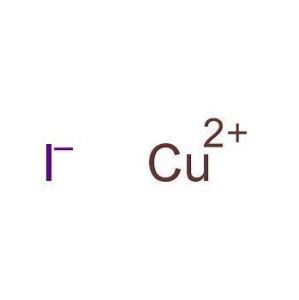
Copper iodide, CAS 1335-23-5, is an inorganic copper(I) halide generally represented as CuI. It is a white to off-white crystalline solid when pure, but light, air, moisture, trace iodine, and copper oxidation products can cause yellow, tan, or brown discoloration. Commercial grades range from technical catalyst material to high-purity semiconductor and electronic grades with tight trace-metal and particle specifications. Buyers must therefore qualify oxidation state, purity method, phase, and application performance rather than rely on nominal copper and iodide assay.
CuI combines soft Lewis-acid behavior, low solubility in water, halide chemistry, and p-type semiconducting properties. These attributes support coupling catalysis, polymer or materials additives, hole-transport layers, transparent conductors, and research devices adjacent to OLED manufacturing. Catalytic use includes Ullmann-type carbon-nitrogen, carbon-oxygen, and carbon-sulfur bond formation and broader Sonogashira-adjacent cocatalytic applications. Electronics uses demand much lower levels of silver, iron, nickel, sodium, and insoluble contamination than routine chemical synthesis.
The principal B2B risks are light-induced quality drift, oxidation, variable surface chemistry, iodide waste, and aquatic environmental hazard. Supplier safety classifications commonly warrant serious aquatic-toxicity attention, and the exact GHS, transport, and disposal status must be confirmed for each grade and jurisdiction. This paper covers structure, manufacture, applications, markets, REACH, CLP, TSCA, EPA, ESG, and protected logistics. It also clarifies that FDA, DMF, CEP, cGMP, and pharmacopoeial concepts are not default credentials for an industrial CuI grade.
Copper(I) iodide is an extended ionic-covalent solid rather than a discrete organic molecule. At ambient conditions it commonly adopts the gamma zinc-blende-type structure, while higher-temperature beta and alpha phases show increasing iodide disorder and superionic behavior. Copper vacancies and defect chemistry can create p-type conductivity, making film stoichiometry and processing atmosphere decisive in electronic applications. In catalysis, Cu(I) coordinates substrates and ligands and cycles through organocopper or mixed oxidation-state intermediates depending on the transformation.
Industrial CuI can be made by direct reaction of high-purity copper with iodine under controlled conditions or by aqueous precipitation using copper salts, iodide, and a reducing environment. In precipitation routes, iodide reduces Cu(II) to Cu(I), forms insoluble CuI, and can generate iodine that must be removed or controlled. The solid is repeatedly washed to reduce soluble salts, then dried and milled away from strong light and oxidizing conditions. Electronic grades add purified feedstocks, closed equipment, submicron classification, and trace-metal control.
Demand is divided between mature catalyst consumption and smaller high-growth electronic or energy-research niches. Fine-chemical outsourcing supports steady catalyst demand, while copper-free coupling processes can reduce use where residual-metal limits dominate. Interest in transparent p-type materials, perovskite interfaces, detectors, and flexible electronics drives high-purity qualification work. Buyers increasingly request batch-level trace metals and application tests rather than a single minimum-assay certificate.
China and broader Asia-Pacific hold substantial iodine derivatives, copper salts, fine-chemical catalyst, and electronic-material capacity. Europe contributes specialty catalysts, high-purity reagents, and advanced materials development, while North America is a major research, pharmaceutical, and electronics demand center. Export flows depend on iodine economics, copper pricing, dangerous-goods determinations, and electronic-grade quality consistency. Capacity is ample for technical material but narrower for reproducible film-grade powder with deep impurity characterization.
Technical CuI pricing follows iodine and copper feedstocks, reducing agents, wastewater treatment, energy, and freight. Premium grades add high-purity inputs, clean equipment, inert or light-controlled finishing, submicron classification, and expanded trace-element panels. Catalyst buyers should compare activity, filtration, and residual-metal outcomes, while electronics buyers should compare film performance and lot variation. Small research packs are poor benchmarks for qualified industrial campaigns.
Copper iodide is principally regulated as an industrial chemical and environmentally hazardous inorganic material. European supply requires REACH status and CLP classification, while United States supply requires TSCA inventory assessment and compliance with EPA and state environmental rules. GHS safety communication should address supported health and aquatic hazards, with particular care for long-term aquatic effects. FDA, DMF, CEP, cGMP, ICH Q7/Q11, and USP/Ph.Eur. are relevant only if a specific regulated pharmaceutical use establishes a documented need.
CuI sustainability spans copper mining, iodine extraction, chemical conversion, wash-water treatment, and end-of-life recovery. The product's aquatic hazard makes loss prevention and effluent control as important as greenhouse-gas reporting. ESG assessments should examine responsible copper sourcing, iodine provenance, worker dust exposure, wastewater metals, and waste-catalyst recovery. ISO 9001/14001 systems support consistent governance when paired with measured discharge and incident performance.
Scope 1-3 Emissions include purchased copper and iodine, reducing reagents, process heating, purified water, drying, high-purity utilities, packaging, waste treatment, and freight. Aqueous precipitation can have moderate thermal demand but high water and salt burdens, while direct synthesis changes energy and containment needs. Recovering copper from spent catalyst streams reduces both resource loss and aquatic-release risk. Comparisons should disclose recycled content, allocation methods, electricity mix, and treatment boundaries.
Traceability should connect each CuI lot to copper source, iodine or iodide source, reductant, process water, washing campaign, milling equipment, and primary packaging. Electronic customers need change notification for trace-metal sources and contact materials because parts-per-million shifts can affect films. Catalyst customers need consistent activity and impurity profiles tied to reaction outcomes. Responsible sourcing reviews should include mining standards, labor controls, and authorized recyclers for copper-bearing residues.
Copper iodide logistics must limit light, oxygen, moisture, contamination, and environmental release. Although the dry solid is not highly volatile, fine powder can disperse during damaged-package handling and contaminate drains or soil. Opaque, tightly sealed packs preserve color and Cu(I) state while also supporting spill containment. Lane procedures should segregate the product from strong oxidizers and incompatible materials identified in the safety data sheet.
Many classifications may lead to environmentally hazardous substance transport controls, potentially including UN 3077 when the criteria and shipment conditions are met. The consignor must make the current modal classification using supported aquatic data, concentration, package size, and jurisdictional provisions. Marine-pollutant marks, documentation, and limited-quantity rules should never be assumed from an old safety data sheet. Receivers need spill kits that recover solids without washing copper iodide into wastewater.
A supplier should segment technical catalyst, fine-chemical, high-purity electronic, and research grades with separate specifications and claims. Customer qualification must connect analytical data to reaction activity or film properties. Commercial agreements should define oxidation-state methods, light-protected sampling, change notification, and environmental liability. Unsupported pharmaceutical, semiconductor, or regulatory language should be removed from sales literature.
Copper iodide is a versatile Cu(I) halide whose catalytic and semiconducting value depends on oxidation state, defect chemistry, purity, and physical form. Light and oxygen can alter color and surface composition, making protected handling a genuine quality requirement. Ullmann-type, Sonogashira-adjacent, and OLED-adjacent uses have different performance tests and contamination tolerances. Market segmentation should reflect those differences rather than promote one universal grade.
Buyers should combine phase and oxidation analysis, trace-metal data, particle characterization, application testing, and audited environmental controls. REACH, CLP, TSCA, EPA, GHS, and dangerous-goods assessments must be current, especially because of aquatic toxicity. Suppliers can differentiate through consistent light-protected production, high-purity finishing, recoverable packaging, and responsible copper and iodine sourcing. Pharmaceutical terms such as FDA, DMF, CEP, cGMP, and USP/Ph.Eur. should appear only where a real regulated use supports them.
Powered by Guidechem
This white paper is exclusively compiled by the Guidechem Intelligence Team based on global customs data, regulatory databases, and industry research. Guidechem is a leading global B2B chemical platform, dedicated to connecting global buyers with verified, high-quality manufacturers.
Relying on Guidechem's extensive global database, we have mapped the core participants in the current global Copper iodide supply chain:
Disclaimer: The content of this white paper is compiled based on public market data and regulatory information available as of 2026. Global chemical regulations are subject to dynamic adjustments. In actual export operations, enterprises must consult professional regulatory advisors or relevant competent authorities to obtain the latest compliance guidance.
|
 |
 |
 |
 EN
 Agricultural News
 Food News
 Industrial News
 Cosmetic News
 Pharmaceutical News
 Science News


 14YRS


