Guideview >  Articles >  Trends  > Sodium dihydrogen phosphate dihydrate:Exports & Compliance White Paper 2026

Sodium dihydrogen phosphate dihydrate:Exports & Compliance White Paper 2026

Sourcing Sodium dihydrogen phosphate dihydrate (CAS 13472-35-0) in 2026? Food, pharma and buffer demand drives global exports. Guidechem suppliers offer food and pharma-grade documentation, REACH files and dependable bulk supply. Napoleon6 MIN READOctober 8, 2026
Sodium dihydrogen phosphate dihydrate White Paper

I. Executive Summary

Sodium dihydrogen phosphate dihydrate (CAS 13472-35-0; NaH₂PO₄·2H₂O, 156.01 g/mol) is the workhorse acidic phosphate of the inorganic chemicals trade: a low-cost, highly water-soluble, mildly acidic salt that acts at once as pH buffer, phosphorus source, sequestrant and precursor to condensed phosphates. Production is only a neutralisation and a crystallisation, yet the 2026 export market has separated into four visibly different ladders — industrial, food, pharmacopoeial and biopharmaceutical grade — with very different economics. Exporters who treat all four as one product lose tenders they should win.

Drivers differ by track. Bioprocessing — monoclonal antibodies, biosimilars, vaccines and cell and gene therapy — is the fastest-growing consumer of phosphate buffers and demands low endotoxin, low trace metals and a stable hydration state. Food and feed demand is mature and specification-driven under E339(i), FCC and EU Regulation 231/2012. Water treatment and metal surface treatment remain the tonnage anchors but face nutrient discharge limits and substitution pressure. Industrial buyers follow rock, caustic and energy costs; pharmaceutical buyers follow documentation, audit history and continuity.

Procurement must therefore be specification-first. Fix the hydration state and loss-on-drying window, the elemental impurity profile against ICH Q3D, endotoxin and bioburden limits, the food-contact or pharmacopoeial dossier and the moisture-barrier packaging before negotiating price. This paper maps the acid-base chemistry, the crystallisation and drying controls that decide hydration state, the grade ladder, the regulatory perimeter across REACH, CLP, TSCA, food additive law and pharmacopoeias, and the logistics discipline that determines whether crystals arrive free-flowing or as a consolidated block.

II. Product Deep Dive: Molecular Mechanisms and Production Evolution

2.1 Physicochemical Properties and Mechanisms

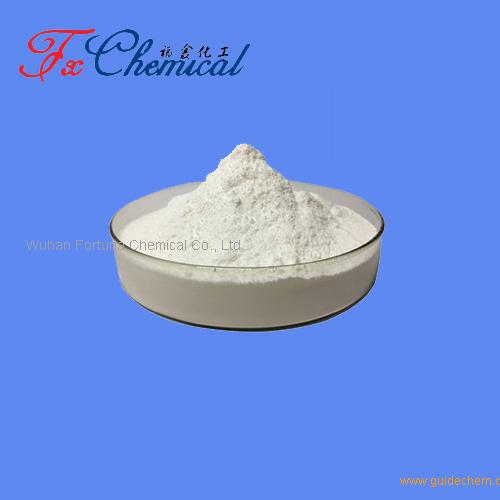
The molecule is the monosodium salt of the first dissociation step of orthophosphoric acid, isolated as the dihydrate: white, odourless, free-flowing crystals with bulk density around 0.8 to 1.1 kg/L, crystal density near 1.91 g/cm³ and solubility of roughly 85 g per 100 g of water at 20 °C. A 1% solution reads pH 4.2 to 4.5; the salt loses crystal water on heating, melting incongruently near 60 °C before condensing to sodium acid pyrophosphate. Performance in every application follows from two coupled properties: the three-step phosphate dissociation equilibria and the lability of two waters of crystallisation.

  • Buffering Behaviour and Ionic Speciation: With pKa values near 2.15, 7.20 and 12.35, the H₂PO₄⁻ anion pairs with HPO₄²⁻ for the classic pH 6.0 to 8.0 buffer and with H₃PO₄ for capacity near pH 2.1 to 3.1. Two behaviours matter in practice: phosphate buffer pH drifts by about -0.0028 units per °C, and phosphate precipitates with calcium and magnesium, excluding it from hard-water and divalent-rich systems.
  • Crystal Water and Physical Stability: The two waters represent about 23.1% of molar mass, so hydration state is an assay issue, not a cosmetic one. The dihydrate effloresces in dry air, generating the fines and liquid bridges that cause caking, and can deliquesce under sustained high humidity. Thermal dehydration near 200 °C yields sodium acid pyrophosphate (E450(i)); further condensation gives metaphosphate.

2.2 Synthesis and Manufacturing Technologies

Production is stoichiometric neutralisation of phosphoric acid with sodium hydroxide followed by controlled crystallisation, but grade is decided upstream by the choice of acid and caustic and downstream by the crystallisation and drying window. Furnace-grade thermal acid, made by burning elemental phosphorus, is intrinsically lowest in anionic and metallic impurities; purified wet-process acid from sulfuric acid digestion with defluorination and solvent extraction is the volume backbone for technical and food grades.

  • Stoichiometric Neutralisation and Impurity Management: Reactors run to a Na-to-P molar ratio of 1.00 held within about one percent, with the end point tracked by pH and conductivity around 4.2 to 4.5 rather than by indicator colour. Chloride enters with the caustic; fluoride, sulfate and arsenic enter with the acid and are removed by defluorination, precipitation and polish filtration. Iron, copper and manganese matter most downstream because they catalyse oxidation in biopharmaceutical formulations.
  • Crystallisation Window and Drying Control: The dihydrate crystallises in the lower-temperature window, roughly ambient to 42 °C, while hotter liquors favour the monohydrate. Plants use vacuum or controlled-cooling crystallisation with seeding and mother-liquor recycle, then low-temperature fluid-bed drying that preserves hydration while removing surface moisture, followed by classification and, for free-flowing grades, conditioning to raise the caking threshold.

2.3 Core Application Matrix

  • Pharmaceutical and Biopharmaceutical Buffering: The highest-value track — phosphate-buffered saline, cell culture media, chromatography equilibration and elution, diafiltration, and injectable or vaccine formulation. Buyers specify endotoxin by LAL, bioburden per USP <61> and <62>, absence of DNase, RNase and protease, and tight iron, copper and manganese limits.
  • Food, Feed and Analytical Use: As E339(i) the salt serves as acidity regulator, sequestrant and emulsifying salt in processed cheese, meat brines, bakery and beverages under EU Regulation 231/2012, the FCC monograph and FDA listings, with JECFA's phosphorus intake ceiling guiding use levels. Feed grades supply available phosphorus; reagent grades serve HPLC and ion chromatography, where UV transparency and low chloride, nitrate and sulfate discriminate.
  • Water and Metal Surface Treatment: Industrial tonnage goes to boiler and cooling-water pH and corrosion control, dispersancy in cleaners, detergent building where phosphate bans do not apply, and phosphating, conversion coating and passivation of steel, zinc and aluminium. It is also feedstock for sodium acid pyrophosphate and polyphosphate chains; here assay and particle size matter more than trace metals.

III. Global Market Supply-Demand Landscape and Export Trends

3.1 Demand Drivers and Market Shifts

Three shifts define 2026. Biomanufacturing capacity keeps expanding across Asia, Europe and North America, and every new train adds recurring, specification-inelastic buffer demand tied to validated processes. Nutrient discharge regulation — wastewater treatment requirements, eutrophication programmes, effluent consent limits — pushes industrial users toward closed-loop water and non-phosphorus alternatives, capping growth in the lowest-margin track. And procurement behaviour has changed: regulated buyers now require dual sourcing, regional stock and documented change control, favouring exporters holding inventory near the customer.

3.2 Capacity Distribution and Export Flows

Capacity follows rock, sulfuric acid or elemental phosphorus and energy, not the neutralisation step. China's Yunnan, Guizhou, Hubei and Sichuan districts integrate mining, acid and, at some sites, yellow phosphorus furnaces, giving the largest and most competitive export base. Western Europe concentrates high-specification capacity in Germany, Belgium and the Netherlands close to food and pharmaceutical formulators; North America tracks Florida and Gulf Coast acid with chlor-alkali caustic; Morocco, Jordan and Saudi Arabia leverage rock and sulfur positions. Flows are regional for bulk technical grades and documentation-heavy for pharmacopoeial grades.

3.3 Market Bifurcation and Pricing Dynamics

Price is a ladder with widening multiples at the top. Industrial grade tracks rock, sulfur, caustic and energy; food grade adds a premium for additive conformity and certified packing; pharmacopoeial grade adds more for monograph conformity and audit exposure; biopharmaceutical grade commands the largest premium because endotoxin, trace-metal and change-control performance are effectively a service product. Freight is decisive at the bottom, since a dense, low-value solid cannot absorb long inland hauls.

IV. In-depth Analysis of Global Compliance and Regulatory Barriers

Because one molecule serves four regulated markets, the perimeter is a stack of parallel dossiers that must stay consistent with the real production route. A change of acid supplier, drying temperature or packing line can invalidate a food-contact declaration or a pharmacopoeial claim. Exporters win by treating specification, route and documentation as a controlled system and by notifying customers before changes reach shipments.

4.1 European Market: REACH, CLP, and Sector-Specific Directives

  • REACH Registration and CLP Status: The substance is REACH-registered and, in most registrations, is not harmonised-classified under CLP, so it generally ships as non-dangerous goods. Buyers must still verify the specific dossier, since some notifications carry acute oral toxicity or eye-irritation classifications, and must confirm that the SDS matches the physical form and hydration state delivered and that registration covers the imported tonnage band.
  • Food, Feed and Pharmacopoeial Law: Food use runs through Regulation (EC) No 1333/2008 with purity criteria in Regulation (EU) No 231/2012 covering fluoride, arsenic, cadmium and lead; feed use follows the feed additive and feed hygiene framework. Pharmaceutical use requires Ph.Eur. or USP conformity, and excipient buyers increasingly demand IPEC-PQG GMP or EXCiPACT certification, TSE/BSE and allergen statements, and confirmation of any EDQM certificate of suitability.

4.2 North American Market: TSCA, EPA, and FDA Regulations

  • TSCA Inventory and EPA Programmes: The substance is listed active on the TSCA inventory, so import is straightforward provided the importer's Chemical Data Reporting obligations are met. Drinking-water applications usually require NSF/ANSI 60 certification of the treatment chemical as a contractual prerequisite, and phosphate-bearing discharge is governed by NPDES permit conditions and state nutrient criteria.
  • FDA Food and GMP Expectations: Food use rests on FDA additive and GRAS listings plus the Food Chemicals Codex monograph, with production and packing under a recognised food-safety system. Pharmaceutical buyers apply GMP expectations through supplier qualification: a certificate of analysis against the USP monograph, elemental impurity risk assessment aligned to ICH Q3D, endotoxin testing where parenteral contact occurs, and evidence of change control and complaint handling.

4.3 The Critical Hurdle: Quality Control and Safety Limits

Compliance Warning: The costliest failure in this market is grade misapplication — substituting food or industrial material into a biopharmaceutical buffer. Screen every lot against ICH Q3D Class 1 and Class 2A elements and against the arsenic and fluoride residuals characteristic of wet-process acid. Verify hydration by loss on drying rather than by product name, because efflorescence shifts assay and pH silently. Confirm endotoxin, bioburden and nuclease absence for regulated use. Remember that phosphate is incompatible with calcium and magnesium at high concentration and that its pH is temperature-dependent, so buffer performance must be validated at the temperature of use.

V. Green Trade Barriers and ESG in Manufacturing

Phosphate chemistry sits in the resource-intensive end of the inorganic sector and is now assessed on carbon, water and residue metrics rather than price alone. Two upstream choices dominate the profile: thermal furnace versus purified wet-process phosphorus, and how phosphogypsum, fluoride and nutrient discharges are managed. Exporters who quantify these choices are increasingly preferred in European and multinational tenders.

5.1 Carbon Footprint and Circular Economy

The thermal route reduces rock with carbon in an electric furnace to elemental phosphorus, which is burned to furnace acid — extremely electricity-intensive and carbon-heavy on fossil grids. The wet-process route substitutes sulfuric acid digestion and solvent purification, shifting the burden to acid production and phosphogypsum. Downstream, evaporation and crystallisation dominate energy use, where mechanical vapour recompression, multi-effect evaporation and heat integration give the largest gains, followed by low-temperature drying with heat recovery. Buyers increasingly request product carbon footprints to ISO 14067 or Together for Sustainability guidance, with cradle-to-gate boundaries covering rock extraction and acid production.

5.2 Sustainable Sourcing and Traceability

Traceability here means rock origin, impurity inheritance and residue stewardship. Cadmium is inherited from rock and controlled through EU fertilising-product limits and customer specifications for food and feed grades; naturally occurring radionuclides in phosphogypsum require controlled disposal under national waste rules. Being mineral-derived, the substance falls outside the EU Deforestation Regulation, but responsible-sourcing due diligence consistent with OECD guidance still applies to mining inputs. Food and pharmaceutical buyers add non-GMO, allergen-free, TSE/BSE-free, kosher and halal statements and FSSC 22000 or BRCGS packing certification.

VI. Supply Chain Resilience and Export Logistics

Logistics is the least glamorous and most commercially decisive part of this trade: a low-unit-value, high-density, moisture-sensitive crystalline solid shipped mainly in 25 kg bags and 1000 kg flexible intermediate bulk containers, twenty to twenty-five tonnes per twenty-foot container. The failure mode is physical rather than chemical — caking, surface hydration, dust and container condensation — so packaging and storage discipline decide whether the customer can use the material directly or must re-mill it.

6.1 Packaging Standards and Moisture/Contamination Control

  • Moisture-Barrier Packaging Architecture: The standard build is a multiwall kraft sack with a polyethylene liner or PE-coated barrier ply, palletised and stretch-hooded; bulk builds use a PE-lined FIBC with spout top and discharge bottom on a pallet. Pharmaceutical and food grades should be packed on dedicated or validated-clean lines with documented clearance. Container desiccants and moisture indicators are cheap insurance against container rain, the most common cause of arrival-condition claims.
  • Anti-Caking and Storage Discipline: Store dry and ventilated, generally between 5 and 30 °C with humidity below the level at which surface hydration accelerates, and avoid temperature cycling that drives moisture migration inside a pallet. Limit stacking height, rotate stock on a first-expiry-first-out basis, and re-test loss on drying and flowability after long storage or any packaging breach. Keep regulated grades physically segregated from technical material.

6.2 Dangerous Goods Identification and Transit Protocols

The salt is not classified as dangerous for transport under ADR, the IMDG Code or the IATA Dangerous Goods Regulations when supplied in its usual non-hazardous form, so it moves as general cargo, though shipping papers must identify it unambiguously and any supplier SDS carrying a hazard classification must be reconciled before booking. Classification under HS heading 2835, the mono- and disodium phosphate subheadings, should be confirmed per destination because duty and trade remedies depend on it. Spill response is environmental rather than safety-critical: phosphate is a nutrient, so washings must not reach surface water and spillage should be recovered dry.

VII. Enterprise Global Expansion Strategy Guide

Export success comes from deliberate segmentation rather than scale. Compete on delivered cost and reliability in the industrial track and on documentation, audit readiness and technical service in the regulated tracks, keeping the two physically and procedurally separate so that a commodity campaign can never contaminate a pharmacopoeial claim.

  1. Build a Four-Tier Grade Ladder with Hard Segregation: Define industrial, food, pharmacopoeial and biopharmaceutical specifications as separate products with separate bills of materials, crystallisation and drying campaigns, packing lines and lot-numbering schemes. Feed regulated tiers from qualified acid and caustic, and never reclassify material between tiers, because auditors test exactly this boundary and documentary segregation alone will not survive inspection.
  2. Industrialise Documentation and Change Control: Issue certificates of analysis cited clause by clause to the monograph or customer specification, backed by ICP-MS elemental screening aligned to ICH Q3D, endotoxin and bioburden results, TSE/BSE and allergen statements, REACH and TSCA declarations and food-contact statements. Retain samples for the full shelf life and commit contractually to notifying customers before any raw-material, equipment or site change takes effect.
  3. Differentiate on Logistics and Carbon Data: Position inventory in bonded or consignment warehouses near pharmaceutical and food clusters so regulated customers can draw from regional stock. Validate shelf life on the actual packaging build, publish product carbon footprints with declared boundaries, document cadmium and radionuclide stewardship, and index industrial contracts to transparent input costs so cost volatility is shared rather than absorbed.

VIII. Conclusion

Sodium dihydrogen phosphate dihydrate looks like a commodity and behaves like a portfolio. Its chemistry is fixed by the phosphoric acid dissociation triad and by the lability of two waters of crystallisation; its commercial outcome is fixed by decisions far from the reactor — which acid and caustic are qualified, which crystallisation and drying window is held, which packing line is used and which dossier is maintained. Demand grows fastest where specification discipline is highest and is most price-sensitive where environmental pressure is greatest.

Through 2026 and beyond, the premium will keep migrating toward verified conformity: pharmacopoeial and food documentation, ICH Q3D elemental control, endotoxin and bioburden performance, validated moisture-barrier packaging and quantitative carbon data. The lowest price per tonne rarely delivers the lowest cost of ownership once re-milling, re-testing, failed audits and buffer drift are counted. The route to value is a documented specification matched to the real end use.

IX. Industry Resource Connection and Supplier Ecosystem

Powered by Guidechem

This white paper is exclusively compiled by the Guidechem Intelligence Team based on global customs data, regulatory databases, and industry research. Guidechem is a leading global B2B chemical platform, dedicated to connecting global buyers with verified, high-quality manufacturers.

Guidechem Global Sodium dihydrogen phosphate dihydrate Supplier Ecosystem List

Relying on Guidechem's extensive global database, we have mapped the core participants in the current global Sodium dihydrogen phosphate dihydrate supply chain:

  • China — Yunnan, Guizhou, Hubei and Sichuan Phosphate Belt: The export centre of gravity, combining captive rock, sulfuric acid and, at some sites, yellow phosphorus furnaces. Suppliers span technical crystals to FCC and food-grade material, increasingly with purified wet-process acid trains, low-temperature drying and dedicated packing halls, competing on delivered cost, container loading density and short lead times.
  • Western Europe — Germany, Belgium and the Netherlands Specialty Corridor: The high-specification cluster, pairing purified acid with pharmacopoeial and food portfolios, EXCiPACT or IPEC-aligned excipient quality systems and short-haul delivery to formulators. Participants differentiate on monograph conformity, audit readiness, elemental impurity dossiers, carbon data and technical service rather than price, and set the benchmark regulated buyers use.
  • North America — United States Acid and Chlor-Alkali Corridor: Capacity anchored on rock and sulfuric acid integration in Florida and the Gulf Coast alongside chlor-alkali caustic, serving water treatment, metal treatment and food formulators. The cluster is characterised by strong NSF/ANSI 60 positioning, tight nutrient-discharge permitting and contracts indexed to rock, sulfur and energy.

Disclaimer: The content of this white paper is compiled based on public market data and regulatory information available as of 2026. Global chemical regulations are subject to dynamic adjustments. In actual export operations, enterprises must consult professional regulatory advisors or relevant competent authorities to obtain the latest compliance guidance.

Make Guideview Preferred Source on Google
Related News