-
We detected your language preference as English. Would you like to switch to the English version for a better experience?
Switch to English
Stay here


Octapeptide-2, identified by CAS 1374396-34-5, belongs to the fast-growing class of synthetic oligopeptides supplied to the cosmetics industry as functional raw materials. Unlike botanical extracts, its identity is not defined by source or extraction but by primary structure: a declared eight-residue sequence, a defined terminal state, and a counter-ion balance established during purification. That makes it analytically tractable and, for professional buyers, unusually transparent — provided the commercial file treats the molecule as what it is, a chemical entity with a CAS number and a measured composition, and not as whatever brand-facing designation may appear in consumer marketing.
Supply is dominated by Fmoc solid-phase peptide synthesis followed by cleavage, precipitation and preparative reversed-phase purification, with salt-form exchange and lyophilisation determining the finished powder's behaviour. The practical purchasing questions are therefore not simply "what purity" but net peptide content versus trifluoroacetate or acetate counter-ion, residual solvent and trifluoroacetic acid levels, deletion and truncated sequences arising from incomplete coupling, moisture, and microbiological status. Two materials with identical HPLC purity can differ by twenty percent in actual peptide delivered, which is why experienced buyers purchase against a peptide-content assay rather than a chromatogram alone, and why counter-ion disclosure belongs in every quotation rather than only in the technical file.
Compliance is the real gatekeeper. As a cosmetic ingredient, Octapeptide-2 must be supported by a responsible person, a safety assessment, notification and claim substantiation in each target market, and the regulatory boundary between cosmetic and drug intended use must be respected absolutely. This white paper is written for raw-material manufacturers, CDMOs, ingredient distributors and formulation buyers. The material discussed is a cosmetic raw material and laboratory substance; it is not a medicinal product, has no approved therapeutic indication, is not intended for injection or any medical use, and no therapeutic, clinical or physiological efficacy claim is made or supported here.
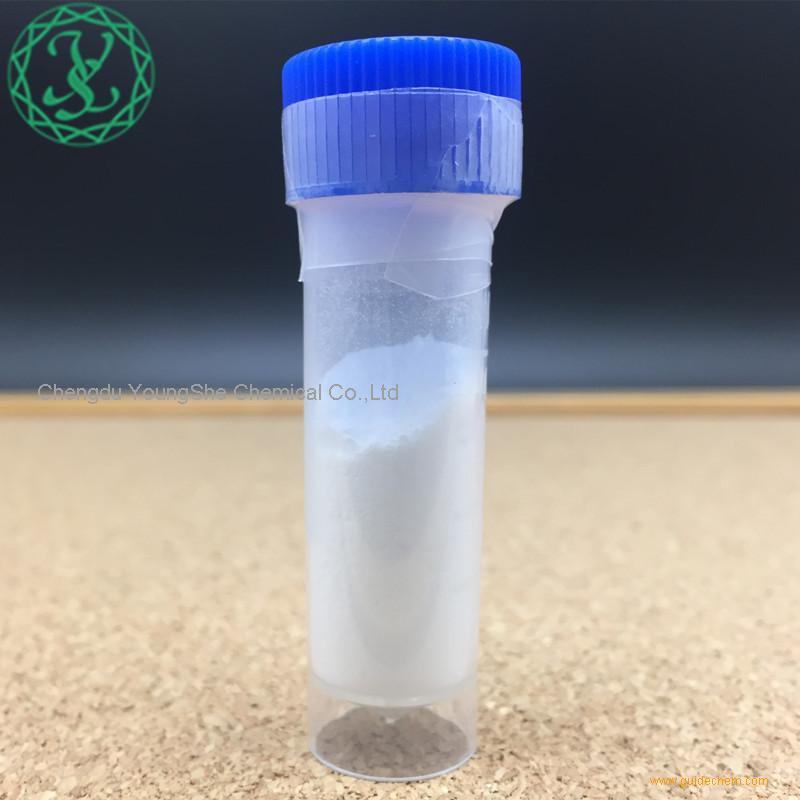
A synthetic octapeptide is an oligomeric amide carrying ionisable terminal groups and, depending on sequence, acidic or basic side chains; the result is a hygroscopic, water-soluble amorphous solid that is essentially insoluble in non-polar media and prone to moisture-driven hydrolysis and microbial growth once reconstituted. Typical lots arrive as white to off-white lyophilised cakes or free-flowing powders that dissolve readily in water and aqueous polyol mixtures, though measured addition and pH adjustment are needed in many emulsion frameworks. Identity rests on three orthogonal measurements: intact-mass determination and sequence confirmation by tandem mass spectrometry, amino acid analysis giving molar ratios consistent with structure, and reversed-phase or ion-exchange chromatography giving area-normalised purity. Because counter-ions and water are invisible to UV detection, an honest specification always separates chromatographic purity from net peptide content — typically leading suppliers to quote both a purity figure and a peptide-content assay obtained by quantitative amino acid analysis or nitrogen determination.
Fmoc solid-phase synthesis remains the industrial standard. Assembly runs on a functionalised polymer support, with base-mediated removal of the fluorenylmethyloxycarbonyl group between cycles and activation of each protected amino acid by uronium or carbodiimide-type coupling reagents; washing removes excess reagent after every step. Cleavage from the resin with acid and scavengers generates the crude peptide, which is precipitated, isolated and then purified. The defining scale-up realities are solvent consumption per cycle, heat removal during coupling and resin loading, swelling behaviour in the chosen solvent system, and the resolution achievable during preparative chromatography, rather than the underlying amidation chemistry, which is well understood. Even small gains in average stepwise coupling efficiency compound dramatically over eight residues, which is why yields and impurity profiles diverge sharply between superficially identical campaigns.
Demand for cosmetic peptides has risen on brand interest in biotechnologically derived, low-inclusion, high-claim-value actives, and on the commercial advantage of ingredients that can be described by structure rather than by extract. However, procurement has simultaneously professionalised: responsible persons and brand quality teams now demand full impurity and solvent disclosure before admitting an octapeptide into a formula, and some markets refuse material whose documentation cannot support a safety assessment. Growth therefore accrues to suppliers with dossier capability rather than merely synthesis capacity, and the market has begun to punish suppliers whose certificates omit solvent and metallic data.
China supplies the largest share of peptide active material from dedicated peptide plants with high installed synthesizer and preparative chromatography capacity, serving domestic cosmetic manufacturers and export distributors from clusters that pair peptide synthesis with solvent recovery and validated cold storage. South Korea and Japan contribute peptide research, formulation know-how and high-specification cosmetic trade, frequently importing bulk peptide for finishing or distributing finished formulations. Europe and North America host specialist CDMO and ingredient houses supplying documented cosmetic-grade material and, where required, higher-assurance grades to customers whose audits emphasise data rather than tonnage. Campaign booking rather than spot purchasing is the norm, so new-partner qualification should be planned well in advance of product launch timelines.
Quoted prices are best normalised to delivered grams of net peptide rather than grams of powder, because counter-ion and water content vary widely between suppliers. Purification yield, solvent recovery obligations and analytical release cost dominate unit economics at cosmetic volumes, while documentation packages, stability programmes and small-lot filling drive cost at development volumes. Buyers who consolidate analytical requirements into a single agreed specification typically obtain better pricing than those who request bespoke testing lot by lot.
This molecule is sold into cosmetic supply chains, so compliance is measured at the level of the finished product as well as the substance. Three questions determine marketability: whether the substance is admitted on the relevant cosmetic inventory or requires new-ingredient registration; whether the finished product can be supported by a responsible person, safety assessment and notification; and whether the accompanying claims stay inside cosmetic intended use. No member of the ingredient supplier's team should be asked to draft claims that imply treatment of disease, and documentation must nowhere extend to promote this peptide for any therapeutic, injectable or other medical purpose, since it is supplied exclusively as a cosmetic raw material and laboratory substance.
Solid-phase synthesis carries one of the highest process mass intensities in fine chemicals, because each cycle consumes multiple resin-bed volumes of solvent. Environmental performance is therefore a purchasing argument in its own right, and customers with Scope 3 programmes increasingly audit solvent recovery rates, restricted-solvent substitution and waste disclosure rather than accepting general sustainability statements.
Energy demand concentrates in solvent distillation and recovery, lyophilisation and cleanroom operation, while the largest absolute waste stream is spent coupling and washing solvent. Credible improvement programmes measure solvent use per gram of purified peptide, install recovery distillation, substitute highly restricted polar aprotic solvents with greener alternatives where resin performance permits, and report these figures per campaign so that reductions can be verified rather than asserted. Transparency here also pre-empts most requests for environmental data, since many brand owners now expect cradle-to-gate disclosure commitments from raw-material suppliers.
Traceability expectations centre on amino-acid starting materials: origin, animal-free declaration where vegan positioning is claimed, absence of animal-derived enzymes in any biocatalytic step, and documentation sufficient to support ISO 16128 natural and organic index calculations for the finished formulation. Documentation of animal-test-free status, batch genealogy from resin lot to finished filled vial, and retained-sample availability round out the files that downstream safety assessors actually request.
Peptide logistics are simpler from a dangerous-goods perspective than most fine chemicals, since lyophilised octapeptide is normally non-hazardous, yet they are demanding in practice because the failure modes are moisture uptake, temperature abuse and microbial contamination rather than leakage or reaction.
Lyophilised material is normally consigned as non-dangerous goods under sea, road and air rules, and Air shipping with gel packs avoids the complexities of dry ice; where dry ice is used, UN1845 Class 9 provisions including vented packaging and correct marking apply under air rules. Recommended practice is temperature monitoring with calibrated data loggers, insulated cartons validated for the route's seasonal profile, customs-friendly documentation that states net rather than gross peptide mass, and a written excursion procedure agreed in advance between supplier and buyer.
Dossier quality, not price leadership, is the durable differentiator in cosmetic peptide supply, and the investment order should follow accordingly.
Octapeptide-2 is a straightforward molecule to make and a demanding product to sell. The chemistry of solid-phase assembly and preparative purification is mature, so competitive advantage has migrated to the parts of the value chain that brands can actually feel: honest net-peptide reporting, control of related peptides and residual solvents, reliable cold chain, and a dossier that lets a responsible person sign without a prolonged correspondence.
Suppliers who invest there will find sustained demand as formulators continue to replace loosely defined extracts with structurally defined actives. All material discussed is a cosmetic raw material and laboratory substance supplied for formulation and research use, not a medicinal product, not for injection or any medical or clinical application, and no therapeutic or medicinal efficacy claim is made.
Powered by Guidechem
This white paper is exclusively compiled by the Guidechem Intelligence Team based on global customs data, regulatory databases, and industry research. Guidechem is a leading global B2B chemical platform, dedicated to connecting global buyers with verified, high-quality manufacturers.
Relying on Guidechem's extensive global database, we have mapped the core participants in the current global Octapeptide-2 supply chain:
Disclaimer: The content of this white paper is compiled based on public market data and regulatory information available as of 2026. Global chemical regulations are subject to dynamic adjustments. In actual export operations, enterprises must consult professional regulatory advisors or relevant competent authorities to obtain the latest compliance guidance.
|
 |
 |
 |
 EN
 Agricultural News
 Food News
 Industrial News
 Cosmetic News
 Pharmaceutical News
 Science News


 1YR

