
I. Executive Summary
Ethyl acetate (CAS 141-78-6) is the workhorse oxygenated solvent sitting between commodity petrochemicals and consumer-facing formulations. Its combination of moderate polarity, fast evaporation and comparatively low toxicity keeps it in demand across coatings, inks, adhesives, pharmaceutical processing and flavourings. That substitution logic, rather than volume growth alone, shapes the market in 2026.
Production economics depend entirely on route selection. Esterification, acetaldehyde dimerisation, acetic acid addition to ethylene and ethanol dehydrogenation each tie cost to different raw materials, so regional cost curves diverge sharply. Trade flows therefore follow acetic acid and ethanol markets, with Chinese capacity expanding on coal-based intermediates while Western producers defend positions through service and specification, regulatory pressure favouring lower-toxicity alternatives.
This white paper sets out what sourcing and compliance teams need when buying a high-volume flammable solvent. The closing sections address dangerous goods classification, packaging and strategy, since ethyl acetate is in practice several distinct products sharing one CAS number.
II. Product Deep Dive: Molecular Mechanisms and Production Evolution
2.1 Physicochemical Properties and Mechanisms
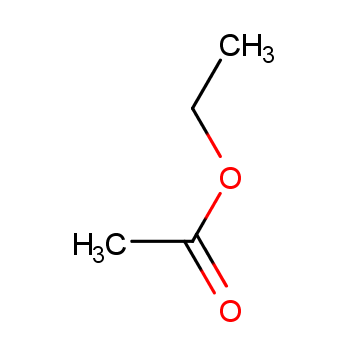
Ethyl acetate is the ethyl ester of acetic acid, with formula C4H8O2 and molecular weight 88.11 g/mol. The colourless mobile liquid boils near 77 °C, shows a flash point around minus 4 °C, and has a density close to 0.90 g/cm3. Its moderately polar molecule accepts hydrogen bonds without donating them, which explains its solvency for nitrocellulose, acrylics and many resins. It forms azeotropes with both water and ethanol, shaping every drying and recovery strategy.
- Solvency Profile and Evaporation Behaviour: Its solubility parameters place it between ketones and hydrocarbons, giving strong solvency for film formers while remaining compatible with cheaper diluents. A fast evaporation rate reduces oven residence and energy use in printing and coating lines, although rapid drying also raises blistering and flow defects.
- Chemical Stability and Reactivity: The ester hydrolyses slowly in water and much faster under acid or base catalysis, releasing ethanol and acetic acid, so rising acidity in storage is the classic complaint. It undergoes Claisen condensation under strong base to give ethyl acetoacetate, linking this solvent to acetoacetate chemistry downstream.
2.2 Synthesis and Manufacturing Technologies
Four commercial routes dominate world supply, and route selection determines both cost exposure and impurity profile. Esterification or dehydrogenation wins where ethanol is cheap, direct addition to ethylene suits abundant petrochemical acetic acid, and dimerisation remains competitive where acetaldehyde is available on site. All are energy-intensive in separation rather than reaction, because azeotropic behaviour makes drying the costly step. Knowing which route a producer uses tells a buyer which impurities to expect.
- Esterification, Tishchenko and Ethylene Addition: Classical esterification reacts ethanol with acetic acid over strong acid catalysts or acidic ion exchange resins, increasingly in reactive distillation columns removing water as it forms. The Tishchenko route dimerises acetaldehyde over aluminium alkoxide catalysts and remains attractive where acetaldehyde comes from ethanol oxidation. Addition of acetic acid to ethylene over supported heteropoly acid catalysts avoids water formation entirely, giving high selectivity at large single-train scale.
- Ethanol Dehydrogenation and Bio-Based Grades: Single-step dehydrogenation over copper-based catalysts converts ethanol directly into ester with hydrogen as a valuable co-product, which improves economics where that hydrogen has a nearby user. Because fermentation ethanol can feed the route, it underpins renewable grades certified under recognised sustainability and mass-balance schemes. Operators control acetaldehyde and related carbonyl by-products, whose traces distinguish this route analytically from esterification products.
2.3 Core Application Matrix
- Coatings, Inks and Adhesives: The largest consumption sits in nitrocellulose lacquers, flexographic and gravure inks, polyurethane adhesives and industrial coatings, where the solvent balances resin dissolution against rapid release. Formulators adopt it to replace toluene, xylene and certain ketones on toxicity grounds, although it still counts toward volatile organic compound inventories in most jurisdictions.
- Pharmaceutical and Fine Chemical Processing: Because it is Class 3 under ICH Q3C with a permitted daily exposure of fifty milligrams per day, ethyl acetate is accepted for extraction, crystallisation and tablet film coating without heavy justification. Its benign profile relative to chlorinated solvents supports continued use despite worker exposure considerations. Specifications invoke residual solvent testing following USP <467>, plus control of ethanol, acetic acid and potential denaturant residues.
- Flavourings, Food Contact and Consumer Products: It is permitted as a synthetic flavouring substance in the United States under 21 CFR 172.515 and appears on the European Union flavouring list, with long-standing JECFA and Codex recognition. The ester contributes fruity notes at low levels and serves as an extraction solvent for botanical preparations. It is also familiar through nail polish removers and household adhesives, so documented purity and clean odour matter commercially.
III. Global Market Supply-Demand Landscape and Export Trends
3.1 Demand Drivers and Market Shifts
Demand tracks coatings and printing output, pharmaceutical production and packaged food volumes rather than any single end market. The structural driver is substitution away from aromatic and halogenated solvents, reinforced by occupational exposure limits and by brand-owner restrictions on particular substances. Volatility arrives through feedstock markets and through energy prices affecting drying-intensive users.
3.2 Capacity Distribution and Export Flows
Capacity concentrates near acetic acid and ethanol production, with China building the largest integrated position on coal-derived intermediates and exporting across Asia and beyond. The United States Gulf Coast benefits from low-cost acetic acid made by methanol carbonylation, while Europe faces structurally higher energy costs and continues to rationalise older assets. India has added dehydrogenation capacity, although its ethanol blending programme creates competing demand for the same feedstock. Flows therefore run from low-cost acetic acid regions toward formulation centres worldwide.
3.3 Market Bifurcation and Pricing Dynamics
Pricing follows feedstock cost plus conversion margin, so acetic acid availability, ethanol prices and energy explain most movement. Differentiation appears at the specification margin rather than in commodity terms: flavour grades, low-odour grades and certified renewable grades command stable premiums, since switching them requires customer requalification.
IV. In-depth Analysis of Global Compliance and Regulatory Barriers
For a high-volume flammable solvent, regulation divides between general chemical control and use-specific food or pharmaceutical rules. Industrial material is governed by registration, classification and workplace exposure obligations, while material entering food or medicines must additionally trace back to permitted feedstocks. Transport classification applies regardless of grade, and storage facilities face engineering requirements because of the low flash point.
4.1 European Market: REACH, CLP, and Sector-Specific Directives
- REACH Registration and Harmonised CLP Classification: The solvent is registered under REACH in the highest tonnage band, supported by an extensive dataset covering mammalian toxicity and environmental fate. Its harmonised classification identifies a highly flammable liquid and vapour, serious eye irritation and possible drowsiness or dizziness, with repeated exposure potentially causing skin dryness. Because harmonisation applies across the Union, labelling must reflect those statements without national variation. Importers should verify that extended safety data sheets cover the intended downstream uses.
- Seveso, Industrial Emissions and Solvent Controls: Large storage installations fall within the Seveso III regime for flammable liquids, requiring safety management documentation, emergency planning and land-use planning provisions. Emissions are controlled through the Industrial Emissions Directive and associated best available techniques conclusions, which typically require abatement such as thermal oxidation, carbon adsorption or condensation. Formulators should note that replacing aromatic solvents improves hazard profile but does not exempt an installation from volatile organic compound accounting.
4.2 North American Market: TSCA, EPA, and FDA Regulations
- TSCA Status, Workplace Limits and VOC Rules: The substance is listed on the TSCA inventory as active, and manufacturers and importers above threshold report under the four-yearly Chemical Data Reporting cycle. Occupational exposure is governed by an OSHA permissible exposure limit of four hundred parts per million as a time-weighted average, with NIOSH recommending similar figures. Volatile organic compound controls apply largely through state implementation plans and sector rules, so coating formulators must verify regional requirements rather than assume federal uniformity.
- FDA Framework for Flavourings and Residual Solvents: Food use relies on listing as a synthetic flavouring substance permitted under 21 CFR 172.515, applied within good manufacturing practice limits on quantity. Pharmaceutical use relies on ICH Q3C, which places it in Class 3 with a permitted daily exposure of fifty milligrams per day, verified by testing to USP <467>. Buyers should additionally confirm that ethanol-derived grades use undenatured alcohol, since denaturant residues are unacceptable in food and pharmaceutical applications.
4.3 The Critical Hurdle: Quality Control and Safety Limits
Compliance Warning: Three issues cause most disputes. First, hydrolysis during storage raises acidity and odour, because the ester slowly breaks down to acetic acid, so drums stored warm or partly full rarely meet specification at re-test. Second, material made from denatured alcohol can carry methanol or other denaturant residues, making it unusable for food and pharmaceutical applications even when every other parameter passes. Third, a flash point near minus four degrees means transfer operations generate ignitable atmospheres at ordinary temperatures, so bonding, grounding and ventilation are not optional. Finally, transport must always be declared as UN1173, Class 3, Packing Group II, since some shippers mistakenly treat this familiar solvent as an ordinary industrial liquid.
V. Green Trade Barriers and ESG in Manufacturing
Sustainability discussions around this solvent centre on renewable feedstock rather than on hazard. Because it can be made from fermentation ethanol, suppliers offer bio-based grades certified under mass-balance schemes, with bio-carbon content verified by radiocarbon methods. Route choice nevertheless determines whether those claims are credible, since some nominally renewable grades emerge from complexes using fossil-derived acetic acid.
5.1 Carbon Footprint and Circular Economy
Emissions concentrate in distillation and drying rather than in reaction, because azeotropic separation demands multiple energy-intensive columns. Efficiency gains come from heat integration, vapour recompression and membrane dehydration replacing entrainer-based drying. The dehydrogenation route improves the balance when co-produced hydrogen displaces hydrogen from elsewhere on site, although steam and electricity remain the dominant contributors. Buyers requesting product carbon footprints should expect cradle-to-gate figures reflecting ethanol origin, since agriculture and fermentation energy are material.
5.2 Sustainable Sourcing and Traceability
Traceability is most demanding for renewable and food-grade material, where chain of custody must be demonstrated rather than asserted. Recognised certification schemes provide mass-balance accounting, supported by radiocarbon testing to confirm bio-based carbon content. Land-use documentation also matters under voluntary schemes and, where applicable, Union rules addressing deforestation risk for agricultural feedstocks.
VI. Supply Chain Resilience and Export Logistics
Ethyl acetate is a fully regulated flammable liquid, so its logistics are shaped by dangerous goods rules as much as by commercial considerations. Bulk and packed shipments require certified packaging, trained personnel and correct documentation, and any error can stop a consignment at a terminal.
6.1 Packaging Standards and Moisture/Contamination Control
- Certified Packaging and Material Compatibility: Bulk moves typically in stainless steel road tankers or ISO tank containers, while packed material ships in UN-certified steel or composite drums and intermediate bulk containers with compatible internal linings. Because the solvent attacks many elastomers and certain plastics, gaskets, hoses and seals must be selected deliberately rather than inherited from other service. Drums should be stored upright under cover, since prolonged exposure promotes heat cycling and atmospheric contamination.
- Moisture Control and Quality Retention: Although shipped as a low-water product, ethyl acetate absorbs moisture wherever drums are vented or headspace repeatedly exchanged. Ingress accelerates hydrolysis, so acidity is the parameter most often failed at destination rather than overall assay. Operators should therefore limit headspace exposure, rotate stock by campaign, and re-test acidity on receipt for any lot stored beyond an agreed interval.
6.2 Dangerous Goods Identification and Transit Protocols
The solvent is assigned UN1173 as a Class 3 flammable liquid in Packing Group II, regulated for road, rail, sea and air transport under the corresponding dangerous goods codes. Sea carriage follows the IMDG Code with emergency response information and segregation from oxidisers, while air freight limits quantity per package and requires dangerous goods declarations. Because vapour forms ignitable mixtures at ordinary temperatures, loading requires bonding, grounding and exclusion of ignition sources.
VII. Enterprise Global Expansion Strategy Guide
Buyers of such a widely available solvent usually compete on logistics reliability rather than on price discovery. Three decisions nevertheless materially affect total delivered cost and supply risk.
- Match Grade to Application Precisely: Do not buy the tightest specification by default, because coatings users paying for flavour-grade purity waste money. Conversely, food buyers accepting technical grade inherit denaturant risk that no certificate of analysis can cure. Define the end use first and let it determine both specification and the documentation package required.
- Contract on Feedstock-Indexed Terms: Since price tracks acetic acid and ethanol, index-linked contracts with defined adjustment mechanisms reduce disputes and shorten negotiation cycles. Such agreements should state explicitly which feedstock movement triggers review, and should treat dangerous goods freight as separately indexed rather than buried inside delivered price.
- Build Regional Optionality before Disruption: Maintain qualified sources in at least two producing regions, since plants are feedstock-linked and outages tend to affect whole regions rather than single units. Reserve tank capacity and qualified ISO containers in advance for long lanes, and confirm that each source's packaging certification covers the modes actually used.
VIII. Conclusion
Ethyl acetate is one of the few solvents whose position is strengthened rather than weakened by regulatory pressure. Substitution away from aromatic and halogenated options favours it in most formulations, while its pharmaceutical and food positions rest on long-established acceptance rather than novelty. Its weaknesses lie elsewhere: dependence on acetic acid and ethanol markets, high energy cost in azeotropic separation, and the logistical burden of shipping a low-flash liquid.
The practical agenda is straightforward. Specify grade by end use, treat acidity rather than assay as the leading re-test parameter, and verify chain of custody wherever renewable content is claimed. Then treat transport as a core part of the sourcing decision, because UN1173 classification shapes packaging availability, freight cost and terminal acceptance. Handled this way, ethyl acetate becomes predictable, documented and resilient to the feedstock swings that periodically reshape the market.
IX. Industry Resource Connection and Supplier Ecosystem
Powered by Guidechem
This white paper is exclusively compiled by the Guidechem Intelligence Team based on global customs data, regulatory databases, and industry research. Guidechem is a leading global B2B chemical platform, dedicated to connecting global buyers with verified, high-quality manufacturers.
Relying on Guidechem's extensive global database, we have mapped the core participants in the current global Ethyl acetate supply chain:
- North America Supplier Ecosystem: North America is anchored by Gulf Coast integration with low-cost acetic acid from methanol carbonylation, giving a structural cost advantage and a net export position. The tier offers well-developed tank terminal networks with reliable rail and barge access, so inland lanes are short and dependable. Weather events nevertheless periodically disrupt coastal production and shipments.
- Europe Supplier Ecosystem: Europe retains integrated production tied to regional acetic acid assets, although high energy and feedstock costs have pushed it toward specialty and high-specification grades. Strict oversight under REACH and industrial emissions rules makes its producers strong on documentation and stewardship support. Buyers here pay for shorter lead times and technical service rather than for commodity cost.
- Asia-Pacific and China Supplier Ecosystem: Asia-Pacific, led by China, holds the largest and fastest-growing capacity, often integrated with coal-derived acetic acid and expanding toward bio-ethanol routes. Cost advantage is substantial and export volumes reach every major consuming region, although freight economics limit how far inland low-cost material competes. Buyers should verify specification consistency, packaging certification and route transparency before committing volume.
Disclaimer: The content of this white paper is compiled based on public market data and regulatory information available as of 2026. Global chemical regulations are subject to dynamic adjustments. In actual export operations, enterprises must consult professional regulatory advisors or relevant competent authorities to obtain the latest compliance guidance.



 EN
EN
 Agricultural News
 Food News
 Industrial News
 Cosmetic News
 Pharmaceutical News
 Science News

 1YR
1YR


