-
We detected your language preference as English. Would you like to switch to the English version for a better experience?
Switch to English
Stay here


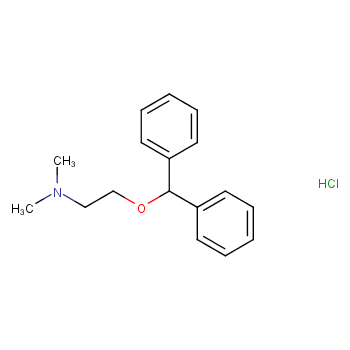
Diphenhydramine hydrochloride (CAS 147-24-0) is the hydrochloride salt of 2-(diphenylmethoxy)-N,N-dimethylethanamine, a first-generation antihistamine of the ethanolamine class. Its formula is C17H21NO·HCl with a molecular weight of 291.82 g/mol, typical of the low-molecular-weight actives found in mature generic portfolios. The substance remains one of the most widely produced antihistaminic APIs worldwide, serving both prescription and over-the-counter dosage forms. In 2026, competitiveness rests on manufacturing consistency, dossier completeness, and disciplined cost per kilogram. Buyers therefore weigh impurity strategy and file readiness alongside headline price.
Supply is bifurcated between integrated API plants in Asia-Pacific and multipurpose cGMP facilities in Europe and North America serving branded generics, tenders, and low-volume programmes. Demand is inelastic because the molecule sits in essential-medicine lists, retail allergy franchises, and paediatric lines. Volume growth is modest, tracking respiratory allergy seasons rather than therapeutic innovation. Differentiation has therefore shifted decisively to quality-system maturity and regulatory asset depth. Suppliers holding an active DMF, an EDQM certificate of suitability, and China registration-platform listing capture disproportionate tender share.
This white paper examines physicochemical behaviour and receptor pharmacology, reviews synthesis and process control, and maps the global market and its compliance perimeter. Particular focus falls on genotoxic-impurity control around benzhydryl halide intermediates and on solvent and elemental impurities governed by ICH Q3C and Q3D. Misuse surveillance and occupational-exposure controls are also addressed, since the anticholinergic profile imposes handling duties despite non-scheduled legal status. The closing sections set out strategies for qualification, dual sourcing, and sustainable international expansion.
Physically, diphenhydramine hydrochloride is a white crystalline powder with a bitter, mildly numbing taste, melting with decomposition near 167 °C to 172 °C. The salt dissolves freely in water and ethanol but is practically insoluble in non-polar solvents, reflecting protonation of the dimethylamino group whose conjugate acid has a pKa near 8.9. The free base carries a calculated logP close to 3.3, explaining rapid membrane permeation and marked central nervous system penetration.
Industrial production is mature and proceeds through benzhydrol formation, activation, condensation, and salt formation. The mainstream route reduces benzophenone to benzhydrol with sodium borohydride or catalytic hydrogenation, converts it to a reactive benzhydryl chloride or bromide, and condenses the halide with 2-dimethylaminoethanol under basic conditions. The hydrochloride forms in anhydrous alcoholic or ketonic solvent and is purified by controlled crystallisation. Alternative designs couple benzhydrol directly with dimethylaminoethyl chloride hydrochloride under phase-transfer conditions, reducing halide exposure.
Demand reflects demographic and epidemiological fundamentals rather than therapeutic expansion, notably rising atopic prevalence, urban air-quality pressure, and ageing populations with chronic urticaria burden. Volumes track seasonal pollen cycles and respiratory virus waves, producing predictable but sharp quarterly ordering peaks. Generic substitution policies, reference pricing, and tenders keep realised prices falling even as compliance costs rise.
Capacity concentrates in Asia-Pacific, where integrated plants combine benzhydrol supply, halogenation, condensation, and high-throughput finishing on permitted sites backed by solvent-recovery infrastructure. China and India account for most exported tonnage, shipping oral-grade material to Europe, North America, Latin America, the Middle East, and Africa for generic finished-dosage manufacture. Europe retains a narrow but strategic footprint serving registered-source continuity and regional provenance requirements, while North American capacity remains multipurpose.
The market splits into a compliance-critical tier and a price-driven tier. Supported by an active DMF, an EDQM certificate of suitability, USP and Ph.Eur. conformance, and documented ICH Q7 certification, the former commands a durable premium of roughly twenty to forty percent because dossier and audit costs are capitalised into price. The latter competes on cash cost around distributor tender lots, where plant utilisation rather than unit profit determines behaviour.
Because diphenhydramine hydrochloride serves almost exclusively as an active substance, its regulatory burden is pharmaceutical rather than purely industrial-chemical, though chemical-inventory duties persist where non-drug handling occurs. Manufacturers must operate under ICH Q7 cGMP, maintain documented impurity and solvent rationale aligned to ICH Q3A, Q3C, Q3D, and M7, and provide ICH Q1A stability evidence supporting the retest period.
Environmental, social, and governance performance has moved from voluntary reporting to a determinant of supplier eligibility in API sourcing. European customers increasingly request cradle-to-gate carbon disclosures aligned with Scope 1, 2, and 3 accounting, verified ISO 14001 management systems, and evidence of solvent-recovery and wastewater performance.
Dominant contributors to cradle-to-gate emissions are purchased precursors, alcohol-solvent production and recovery, distillation energy, and drying operations. Abatement therefore begins with solvent circularity, since fractional recovery and reuse of methanol, ethanol, and ketones offsets a substantial share of footprint while improving unit economics. Site-level measures include heat integration across the distillation train, lower-carbon steam supply, variable-speed vacuum drives, and containment that reduces solvent-laden exhaust volumes.
Responsible sourcing begins with visibility into the upstream chain: the origin of benzophenone and benzhydrol, the provenance of halogenating agents, and the metallurgical history of any hydrogenation catalyst. Leading producers apply supplier codes of conduct covering labour practice, anti-corruption, and environmental compliance, reinforced by second-party audits aligned to ISO 9001 and ISO 14001 frameworks.
Resilience depends less on inventory size than on visibility, redundancy, and demand-signal accuracy. Because margins are thin, most producers run campaigns rather than dedicated continuous lines, so allocation priority during shortages follows strategic relationships rather than spot price. Buyers mitigate this by qualifying several sources across at least two regions, holding destination-market safety stock, and contracting explicit priority-allocation clauses.
Diphenhydramine hydrochloride in normal commercial form is generally not assigned a United Nations dangerous-goods number and moves as routine cargo under most modal regimes, although GHS hazard communication still applies in the workplace. That position is not universal: intermediate streams such as benzhydryl halide solutions, concentrated dimethylaminoethanol, and recovered solvents are themselves regulated dangerous goods requiring correct classification, UN specification packaging, and trained declarations.
Successful international expansion requires sequencing regulatory investment ahead of commercial activity, because dossier preparation, audit readiness, and file maintenance consume resources long before the first profitable shipment. Companies should begin by selecting the few markets whose volume, price level, and regulatory friction best match plant capability and quality-system maturity.
Diphenhydramine hydrochloride illustrates the economics of a mature off-patent API: the chemistry is well understood, the synthesis is straightforward, and true differentiators are regulatory asset depth, impurity-science rigour, and supply reliability. Through 2026 we expect modest tonnage growth driven by allergy prevalence and seasonal illness rather than new indications, while price erosion continues in the commodity tier.
For buyers, the actionable conclusion is that qualification is a multi-year investment: qualify dual sources across regions, negotiate explicit priority-allocation and change-notification clauses, and audit impurity strategy rather than certificates of analysis. For manufacturers, the strategic path combines ICH Q7 discipline, proactive ICH M7 control of benzhydryl halide genotoxic impurities, solvent-recovery-driven decarbonisation, and expansion into parenteral, topical, and veterinary segments that diversify demand risk.
Powered by Guidechem
This white paper is exclusively compiled by the Guidechem Intelligence Team based on global customs data, regulatory databases, and industry research. Guidechem is a leading global B2B chemical platform, dedicated to connecting global buyers with verified, high-quality manufacturers.
Relying on Guidechem's extensive global database, we have mapped the core participants in the current global Diphenhydramine Hydrochloride supply chain:
Disclaimer: The content of this white paper is compiled based on public market data and regulatory information available as of 2026. Global chemical regulations are subject to dynamic adjustments. In actual export operations, enterprises must consult professional regulatory advisors or relevant competent authorities to obtain the latest compliance guidance.
|
 |
 |
 |
 |
 EN
 Agricultural News
 Food News
 Industrial News
 Cosmetic News
 Pharmaceutical News
 Science News


 1YR

