-
We detected your language preference as English. Would you like to switch to the English version for a better experience?
Switch to English
Stay here


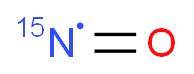
Nitric-15N oxide (15NO, CAS 15917-77-8) is the stable nitrogen-15 isotopologue of nitric oxide, a colourless gas boiling near −152 °C and supplied in pressurised cylinders at enrichments typically stated as atom percent 15N. It is a specialist material in the truest sense: annual volume is measured in litres of gas rather than tonnes, the value per cylinder is high, and the specification that matters most is not chemical purity alone but the certified isotopic enrichment and the impurity profile in the cylinder. Principal uses are isotopic tracer work in environmental and atmospheric science, research into nitric-oxide donor and metal-nitrosyl chemistry, the preparation of certified calibration mixtures, and specialty synthesis of 15N-labelled compounds.
Two properties define the commercial and operational picture. The first is isotopic: 15N is stable, so no radioactive licensing is involved, but enrichment capacity is globally limited and the marginal cost of each additional atom percent of enrichment is steep, which makes residual-gas recovery and cylinder-return logistics a genuine cost driver rather than an administrative detail. The second is chemical: nitric oxide is a toxic, oxidising gas that is acutely toxic by inhalation, forms methaemoglobin in blood, and reacts with oxygen to give nitrogen dioxide, a considerably more toxic and corrosive species. Every element of production, packaging, transit and use is shaped by that reactivity.
This white paper reviews 15NO production and verification, its application matrix, market and pricing structure, the regulatory and dangerous-goods perimeter, ESG and cylinder-lifecycle considerations, transit protocols, and the stable-isotope supplier ecosystem for 2026. It is written for procurement, regulatory and laboratory-management audiences. It deliberately provides no inhalation, clinical or medical-use protocol content: medical-grade nitric oxide is a separately regulated prescription product supplied under its own regime and is outside the scope of this document.
Nitric oxide is an odd-electron diatomic radical. Substituting 15N for 14N shifts the molecular mass from 30 to 31 and introduces an infrared and mass-spectrometric signature that can be followed through chemical and biological systems without altering the underlying chemistry — which is precisely why the material is useful as a tracer. The radical character drives its reactivity: NO binds transition-metal centres to form metal nitrosyls, is oxidised to nitrite and nitrate in aqueous and biological matrices, and is rapidly converted to nitrogen dioxide in the presence of oxygen.
Production begins with nitrogen-15 enrichment, which is itself an industrial process — classically chemical exchange or cryogenic distillation of nitrogen oxides — and continues with conversion of an enriched 15N-labelled nitrate or nitrite precursor to nitric oxide by a reduction route class. The gas is then purified, analysed and filled into passivated cylinders under controlled conditions.
Demand is grant- and programme-driven. Nitrogen-cycle research, air-quality and emissions-source attribution work, and instrument-calibration requirements generate most orders, and they arrive in irregular, small-quantity batches that are difficult to forecast. Three trends are visible for 2026: growing demand for certified calibration mixtures as isotope-ratio instrumentation spreads, growing preference for smaller cylinders that reduce in-house toxic-gas inventory, and growing documentation expectations — buyers now routinely ask for enrichment certificates with stated uncertainty and for reference-material traceability rather than a simple purity statement.
Enrichment and finishing capacity is concentrated in a small number of stable-isotope producers and specialty-gas houses. The United States combines isotope-production infrastructure with mature isotopic gas filling and distribution; Europe hosts dedicated isotope producers and gas companies serving research and industry; China is expanding stable-isotope and specialty-gas capability and increasingly supplies domestic research demand, while Japan and Korea remain important high-specification import markets. Because the product is a toxic gas, export is constrained less by production capacity than by qualified cylinders, approved packaging and carriers willing to accept Class 2.3 shipments.
Price is a function of enrichment above all: moving from natural-abundance to high atom-percent 15N multiplies cost, and the relationship is nonlinear because enrichment is energy- and capital-intensive. Beyond enrichment, the structural cost elements are cylinder rental or deposit, requalification and maintenance, hazmat freight surcharges for toxic-gas consignments, and — critically — the recovery value of residual gas. Suppliers and customers increasingly treat cylinder return and residual-gas reclamation as commercial terms rather than as afterthoughts, because recovered 15N is worth more than the freight cost of returning it.
15NO sits at the intersection of chemicals regulation, toxic-gas transport law and pressure-equipment rules, with an additional layer of institutional control because it is an isotope-labelled material supplied to verified research and industrial users. Because the isotope is stable, no radioactive-material licensing applies — a point worth stating explicitly, since buyers new to the category often assume otherwise.
The environmental profile of 15NO is dominated by enrichment energy and by cylinder lifecycle management. Because the product is a gas whose release is both a hazard and a loss of isotopic value, containment and recovery are simultaneously safety, environmental and economic measures.
Most embedded emissions arise in nitrogen-15 enrichment, which is energy-intensive, and in cylinder manufacture and requalification. The circular-economy lever is therefore the cylinder fleet: cylinders are filled, returned, inspected and refilled over decades, and residual-gas recovery converts what would be waste into the most valuable stream in the process. Suppliers with return and reclamation programmes document both a lower footprint and a lower effective cost.
Traceability in this market means chain-of-custody for an isotopically valuable, toxic material. Reputable suppliers verify the purchasing institution, record the intended application through an end-use declaration, maintain cylinder and batch genealogy from enrichment feedstock to filled cylinder, and document that vented or waste gas has been abated rather than released. Avoiding nitrous oxide and nitrogen oxide releases matters in its own right, since nitrogen oxides are air pollutants and nitrous oxide is a potent greenhouse gas.
Logistics for 15NO are gas-industry logistics constrained by toxic-gas classification. Supply models range from small lecture bottles and single cylinders to cylinder quads or bundles for larger users, and in every case the cylinder is owned, tracked, requalified and returned rather than consumed.
Nitric oxide is consigned as UN 1660, nitric oxide compressed, a Class 2.3 toxic gas with subsidiary oxidising and corrosive hazards, and movements follow ADR, RID, the IMDG Code or the IATA Dangerous Goods Regulations depending on mode, with air carriage subject to strict quantity and aircraft-type limits. Practical consequences include restricted carrier acceptance, hazmat surcharges, segregation from flammable and incompatible gases, and consignees able to accept toxic gas in ventilated, monitored locations. Cylinder requalification and periodic inspection regimes apply throughout the cylinder's life, and rental or deposit terms with defined return windows are standard, because the isotopic value of residual gas makes timely return commercially material.
Suppliers competing in 15NO should focus on the certificate, the cylinder and the customer qualification, in that order.
15NO is a material in which value, hazard and logistics are tightly coupled. Its worth is set by isotopic enrichment and verified by mass spectrometry; its hazard is set by the toxicology of nitric oxide and by the nitrogen dioxide that forms whenever oxygen is allowed in; and its economics are set by a cylinder fleet that must be filled, tracked, requalified and returned, with residual gas reclaimed rather than discarded. Suppliers who treat those facts as one system deliver a trusted product and a renewable service.
For buyers, the discipline is to specify enrichment and impurity profile together, to verify institution and end use before ordering, to insist on stainless-steel and dedicated regulator practice, and to accept that medical-grade nitric oxide for clinical use is a separate, separately regulated product. As isotope-ratio instrumentation spreads and nitrogen-cycle research expands, demand for well-certified 15NO should remain steady, with the winning suppliers distinguished by documentation quality, gas-handling competence and cylinder-lifecycle management.
Powered by Guidechem
This white paper is exclusively compiled by the Guidechem Intelligence Team based on global customs data, regulatory databases, and industry research. Guidechem is a leading global B2B chemical platform, dedicated to connecting global buyers with verified, high-quality manufacturers.
Relying on Guidechem's extensive global database, we have mapped the core participants in the current global Nitric-15N oxide (15NO) supply chain:
Disclaimer: The content of this white paper is compiled based on public market data and regulatory information available as of 2026. Global chemical regulations are subject to dynamic adjustments. In actual export operations, enterprises must consult professional regulatory advisors or relevant competent authorities to obtain the latest compliance guidance.
|
 |
 |
 |
 EN
 Agricultural News
 Food News
 Industrial News
 Cosmetic News
 Pharmaceutical News
 Science News


 1YR


