-
We detected your language preference as English. Would you like to switch to the English version for a better experience?
Switch to English
Stay here


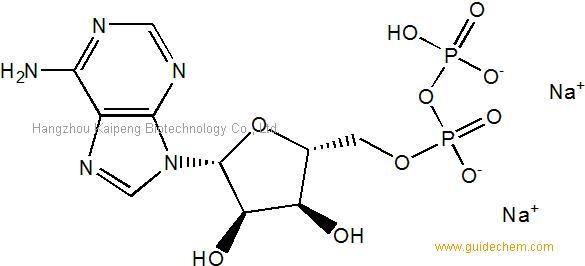
Adenosine-5'-diphosphate disodium salt, abbreviated ADP-Na2, CAS 16178-48-6, has molecular formula C10H13N5Na2O10P2 and a relative molecular mass near 471.17 on the anhydrous basis. Commercial lots are usually at least partly hydrated, so the hydration state and the Karl Fischer water result must be declared and the assay basis stated. The molecule sits at the centre of cellular energy metabolism and purinergic signalling, giving it an unusually wide spread of industrial destinations: diagnostic reagents and enzymology, life-science research, food and pharmaceutical intermediate use, and cosmetic raw materials.
Supply is shaped by two competing manufacturing philosophies. The fermentation and enzymatic route starts from yeast ribonucleic acid, hydrolyses it to 5'-mononucleotides and reprocesses them enzymatically, giving an aqueous, low-solvent process with a biological impurity burden. The chemical route relies on selective 5'-phosphorylation of adenosine with phosphorus oxychloride in trialkyl phosphate, producing a mixture of mono-, di- and triphosphate that must be resolved chromatographically. Buyers choose on that basis.
Compliance is a question of declared use rather than molecular identity. The same substance may be traded as a reagent-grade research chemical, a diagnostic-reagent component, a food-grade nucleotide, a pharmaceutical intermediate under good manufacturing practice, or a cosmetic ingredient, and each track carries different obligations on microbial quality, endotoxin, elemental impurities, licensing and documentation. Across all of them no therapeutic or efficacy claim may be made.
ADP is the biochemical node between ATP and AMP: hydrolysis of the terminal phosphoanhydride bond of ATP releases ADP and inorganic phosphate, and ADP is a substrate and product of kinases, ATPases and ADPases, an allosteric regulator of metabolic enzymes, and an agonist at P2Y purinergic receptors that triggers platelet activation. Physicochemically it is polyanionic at neutral pH, freely soluble in water and practically insoluble in organic solvents, and is supplied as the disodium salt for defined sodium load and solubility. The phosphate groups chelate divalent cations strongly, which is why magnesium control is central to enzymology and trace-metal control central to quality.
Two route families supply the market, and the choice between them determines not only cost but impurity profile, microbial quality and the regulatory tracks a lot may enter. Fermentation-derived material dominates food and research grades because it avoids phosphorus oxychloride and high-boiling solvents; chemical phosphorylation remains attractive where tight control of nucleotide distribution and low biological burden are required.
Demand is pulled by kinase drug discovery and high-throughput screening, the installed base of ADP-detection assay platforms, platelet-function and clinical chemistry testing, and growth in cell-culture and molecular-diagnostic consumables, with Asian food-nucleotide and cosmetic use adding a further layer. The shift across 2025 into 2026 is from generic purchasing to qualification-based sourcing: buyers now specify endotoxin, nuclease activity, elemental profile and AMP and ATP content rather than a single purity figure.
China holds the largest share of fermentation-derived nucleotide capacity, in Shandong, Jiangsu and Zhejiang, where ribonucleic-acid extraction and nuclease hydrolysis sit close to fermentation feedstock, established nucleotide production and export-oriented finishing and repacking operations. Japan retains a distinct position in high-purity reagent and diagnostic grades, drawing on a long enzymatic heritage and tight analytical culture. Europe and North America concentrate diagnostic-grade standardisation and cold-chain distribution.
Pricing is three-tier. Reagent grade behaves close to a commodity and tracks the economics of co-produced ATP, AMP and food-grade nucleotides. Molecular-biology and diagnostic grades command a premium for controlled endotoxin, nuclease freedom, elemental impurities and related-nucleotide limits. Pharmaceutical and food grades command a further premium for licensing, audits and documentation. Because the material is hydrated and hygroscopic, contracts should always state whether assay is expressed on an anhydrous or as-is basis.
The molecule is identical across markets, but obligations follow declared use. A lot sold for reagent research is not evidence that the same lot may be sold for food or pharmaceutical use, because those tracks require their own establishment approvals, licensing and quality systems. Suppliers who fail to keep the tracks separate expose themselves and their customers to enforcement, and the separation must be visible in ordering, labelling and documentation.
Environmental performance differs sharply between the two route families and the differences are increasingly visible in customer scorecards. Fermentation and enzymatic production generates spent yeast biomass and high-chemical-oxygen-demand aqueous effluent, plus significant water and energy demand for isolation. Chemical phosphorylation generates phosphorus-containing waste and a high-boiling trialkyl phosphate solvent load, with the resulting recovery and disposal duties.
The largest gains are process-integrated rather than end-of-pipe. Anaerobic digestion of spent yeast biomass with biogas recovery turns a waste liability into energy; water recovery in resin regeneration cuts freshwater intake; enzymatic cofactor regeneration sharply reduces reagent excess and phosphate waste; and renewable electricity for lyophilisation, spray drying and frozen storage addresses the dominant energy load. Reporting energy and water per kilogramme, solvent-recovery rate and Scope 1, 2 and 3 emissions under ISO 14001, substantiated in customer audit, wins tenders.
Traceability requirements are sector-specific and demanding. Diagnostic and pharmaceutical customers want full batch genealogy from yeast or adenosine feedstock to released container, screening against substances of very high concern, documented statements on genetically modified or animal-derived processing aids, and allergen and transmissible-spongiform-encephalopathy status. Food customers additionally require approved-establishment documentation. Electronic batch records with audit trails, retained reference samples and documented chain of custody are now the qualification baseline, and data integrity is routinely examined during audit.
ADP-Na2 is not a transport hazard, but it is demanding to ship intact because it is strongly hygroscopic and degrades if warm or wet. Consignments fail on moisture ingress and temperature excursion far more often than on any classification issue. Air freight is standard for high-value diagnostic and research grades, while sea freight in refrigerated containers serves larger food and reagent volumes, where in-container humidity control matters more than transit time. Humidity-controlled warehousing and qualified refrigerated-container settings are therefore part of the specification rather than optional service elements.
Nucleotide salts are normally consigned as non-hazardous chemicals and no fixed United Nations number should be assumed; the consignor must confirm the position against the current safety data sheet for the specific grade, since residual solvent or solution formulations can change it. Dry ice used for temperature control is itself a Class 9 dangerous good, UN 1845, shipped under IATA packing instruction 954 with declaration, marking and vented packaging. Trade papers usually place it under HS heading 2934 for nucleic acids and their salts.
Because the molecule is widely available, differentiation cannot come from access to material. It must come from grade discipline, analytical credibility and cold-chain reliability: delivering the declared hydration state, the declared related-nucleotide profile and an intact temperature record wins repeat business across all four tracks.
ADP-Na2 is a mature nucleotide whose commercial difficulty lies in execution rather than chemistry. Route choice fixes the impurity and biological burden, grade definition fixes which market a lot may lawfully enter, and packaging and cold chain determine whether it arrives in specification. Suppliers who master those three serve diagnostic, research, food and cosmetic customers from one asset while keeping each regulatory track separate.
The 2026 priorities follow directly. Confirm REACH and TSCA status with documentary evidence and issue compliant CLP documentation. Define grades explicitly and state declared use in every contract. Control AMP and ATP, inorganic phosphate and pyrophosphate, heavy metals and water, and declare hydration state and assay basis on every certificate. Make no therapeutic or efficacy claim. Qualify the minus 20 degrees Celsius cold chain and moisture barrier, and report water and temperature records as standard deliverables.
Powered by Guidechem
This white paper is exclusively compiled by the Guidechem Intelligence Team based on global customs data, regulatory databases, and industry research. Guidechem is a leading global B2B chemical platform, dedicated to connecting global buyers with verified, high-quality manufacturers.
Relying on Guidechem's extensive global database, we have mapped the core participants in the current global Adenosine-5'-diphosphate disodium salt (ADP-Na2) supply chain:
Disclaimer: The content of this white paper is compiled based on public market data and regulatory information available as of 2026. Global chemical regulations are subject to dynamic adjustments. In actual export operations, enterprises must consult professional regulatory advisors or relevant competent authorities to obtain the latest compliance guidance.
|
 |
 |
 |
 EN
 Agricultural News
 Food News
 Industrial News
 Cosmetic News
 Pharmaceutical News
 Science News


 1YR

