-
We detected your language preference as English. Would you like to switch to the English version for a better experience?
Switch to English
Stay here


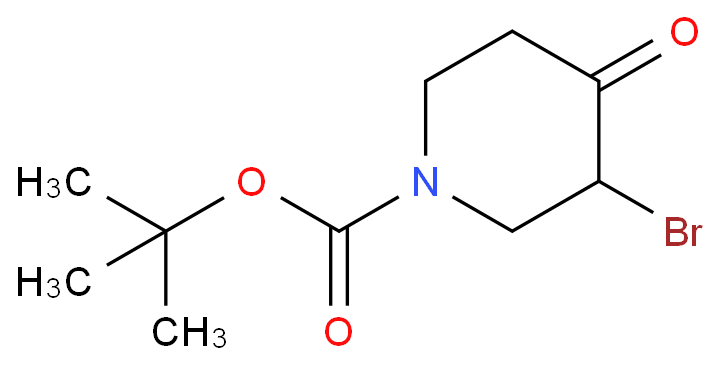
tert-Butyl 3-bromo-4-oxopiperidine-1-carboxylate (CAS 188869-05-8; C10H16BrNO3, MW 278.15) is a Boc-protected α-bromoketone of the piperidin-4-one family whose commercial value rests on one motif: the C3 bromide sits α to the C4 carbonyl and acts as a hard electrophile, giving direct entry into fused aminothiazole-piperidine and 3-aminopiperidine scaffolds used in kinase, protease and CNS discovery programmes. The same feature makes it a bifunctional alkylator with a recognised genotoxicity alert. There is no approved therapeutic indication for this compound; it is supplied exclusively as a Research Use Only intermediate for custom synthesis, not for human or veterinary administration.
Through 2026 the demand pool has separated into two clearly priced tiers. Discovery-phase buyers purchase gram to hundred-gram quantities of RUO-grade material with a 95–97% assay and a routine certificate of analysis, weighting lead time far above documentation depth. Late-preclinical and clinical buyers purchase kilo-scale campaigns requiring ICH Q7 starting-material qualification, a validated chiral assay, an ICH M7 genotoxic-impurity assessment with a compound-specific acceptable intake, and a documented occupational exposure band with an assigned HBEL. Suppliers serving only the first tier lose the account when a programme matures, so documentation capability rather than nameplate capacity is the binding constraint on export growth.
This white paper reviews the route classes that generate the molecule, the impurity and thermal-stability profile that governs its specification, the REACH, CLP, TSCA and FDA-facing instruments that gate entry into the European Union and the United States, and the packaging and cold-chain practices that determine landed cost. It is written for sourcing managers, regulatory officers and CDMO partners who must qualify a supplier against CAS 188869-05-8 and defend that qualification to an auditor. Process discussion is held at the level of legitimate industrial practice: route class, purification strategy, containment and quality systems, with no procedural instruction.
Mechanistically the compound behaves as a textbook α-haloketone: the C3–Br bond is activated by the adjacent ketone toward SN2 displacement, while the carbonyl acts as a condensation partner. The dominant industrial application is Hantzsch-type cyclocondensation with thioamides or thioureas, giving a thiazole annulated onto the piperidine ring and delivering 4,5,6,7-tetrahydrothiazolo[5,4-c]pyridine derivatives in one dehydrative operation. The product is a pale off-white crystalline solid that darkens as hydrogen bromide is eliminated, and it is moisture- and acid-sensitive because of the Boc carbamate.
Commercial supply converges on a few route classes, all beginning from N-Boc-piperidin-4-one, an article of commerce produced at multi-tonne scale in China and India. The engineering challenge is not the bromination itself but suppression of 3,5-dibromination, avoidance of hydrogen-bromide-mediated Boc cleavage during quench, and removal of dehydrohalogenated by-products.
Demand for CAS 188869-05-8 tracks discovery spending on sp3-rich nitrogen heterocycles rather than any single commercial launch. Three shifts define 2026: the migration of medicinal chemistry away from flat heteroaromatics has raised per-programme consumption of brominated piperidones; buyers increasingly outsource the hazardous bromination step to specialist CDMOs, converting captive capacity into traded volume; and enquiry converts to orders only when the supplier can present a defensible purge argument. Documented kilo-scale material remains the tightest segment of the market.
Nameplate capacity is abundant; qualified capacity is not. Chinese producers in Shandong, Jiangsu and Zhejiang supply most catalogued lots from shared multipurpose plants with dedicated bromination suites. Indian CDMOs in Hyderabad, Bengaluru and Ahmedabad compete on documented GMP campaigns and English-language dossiers rather than on price. EU and US custom houses hold smaller capacity but win on OEB containment and ICH Q7 packages. Flows run east to west, with repackaging and analytical release activity concentrated in Singapore and the Netherlands.
The market bifurcates sharply. Catalogued RUO material at 95–97% assay trades on a spot basis with thin margins and high substitutability between brokers. Documented material — chiral assay, validated genotoxic-impurity method, ICH Q7 documentation, thermal-stability data and validated cold chain — commands multiples of that price under annual agreements with adjustment clauses tied to bromine, solvent and energy costs. Buyers specifying only an assay number invite substitution of under-documented lots.
Four themes decide whether a shipment clears its destination: the genotoxic-impurity argument, the EU registration position, the US inventory position, and the occupational-exposure and containment evidence downstream pharmaceutical customers audit. None is satisfied by a generic certificate of analysis, and all surface during supplier qualification rather than at customs.
ESG scrutiny of halogenated intermediates has intensified alongside the European chemicals sustainability agenda. Material issues here are bromination mass efficiency, solvent and bromide waste load, the energy burden of sub-ambient processing and cold storage, and the credibility of emissions and waste-chain documentation.
Dominant contributors are low-temperature enolate chemistry, solvent recovery by distillation and continuous refrigeration through warehousing and transport. Suppliers running semi-continuous bromination with high solvent recovery and high-efficiency refrigeration document materially lower kg CO2e per kg than batch operators venting solvent and incinerating mother liquors. Buyers feeding supplier factors into Scope 3 category 1 should request ISO 14001 or ISO 50001 certification and a product-level footprint to ISO 14067 or the GHG Protocol Product Standard.
Expectations now extend past the immediate supplier to bromine and solvent provenance and to waste-treatment chain of custody. Responsible suppliers maintain batch genealogy linking each lot to raw-material certificates, document treatment of bromination by-products and bromide brine, and operate a code of conduct audited under ISO 9001. Because REACH and customer questionnaires both ask for upstream site identification, brokers who cannot name the plant are progressively disqualified.
Logistics for this CAS are governed by thermal instability rather than transport classification. The α-bromoketone eliminates hydrogen bromide or disproportionates on prolonged exposure to warmth or base, and the carbamate is cleaved by acid; both are invisible on a release certificate. Time-temperature budget is therefore the controlling specification for the whole lane.
Classification is dossier-dependent: many suppliers ship as a non-regulated solid on available data, while others apply a Class 8 corrosive solid, organic, n.o.s. entry where corrosion data support it. Buyers should require the classification rationale and SDS section 14 data and confirm the applicable ADR, IMDG and IATA provisions rather than accepting a courier default. Protocol: refrigerated or frozen transport, no consolidation with acids or amines, avoidance of summer lanes without reefer capability, and a written excursion procedure defining re-test and rejection.
For exporters, durable advantage comes from converting a commodity bromination into a documented, auditable service. Three actions deliver most of the available value.
tert-Butyl 3-bromo-4-oxopiperidine-1-carboxylate is a small-volume, high-scrutiny intermediate whose trajectory is set by documentation depth rather than synthesis difficulty. Route chemistry is well understood and capacity is plentiful; what is scarce is the combination of stereochemical control, genotoxic-impurity reasoning, thermal-stability data and cold-chain discipline that lets a customer defend the material inside a regulatory filing. Suppliers treating those as product features will take share through 2026.
Buyers should specify the molecule in full — CAS 188869-05-8, assay, enantiomeric excess where applicable, water content, residual solvent, individual limits for the enone and 3,5-dibromo impurities, and storage temperature — and audit thermal-stability, containment and purge data before the first order. The compound has no approved therapeutic indication and is supplied for research and development use only; its value lies entirely in what a competent, containment-capable CDMO partner can build from it under controlled, documented conditions.
Powered by Guidechem
This white paper is exclusively compiled by the Guidechem Intelligence Team based on global customs data, regulatory databases, and industry research. Guidechem is a leading global B2B chemical platform, dedicated to connecting global buyers with verified, high-quality manufacturers.
Relying on Guidechem's extensive global database, we have mapped the core participants in the current global 3-Bromo-4-oxo-piperidine-1-carboxylic acid tert-butyl ester supply chain:
Disclaimer: The content of this white paper is compiled based on public market data and regulatory information available as of 2026. Global chemical regulations are subject to dynamic adjustments. In actual export operations, enterprises must consult professional regulatory advisors or relevant competent authorities to obtain the latest compliance guidance.
|
 |
 |
|
 EN
 Agricultural News
 Food News
 Industrial News
 Cosmetic News
 Pharmaceutical News
 Science News


 4YRS

